

The Quick Update
What Happened:
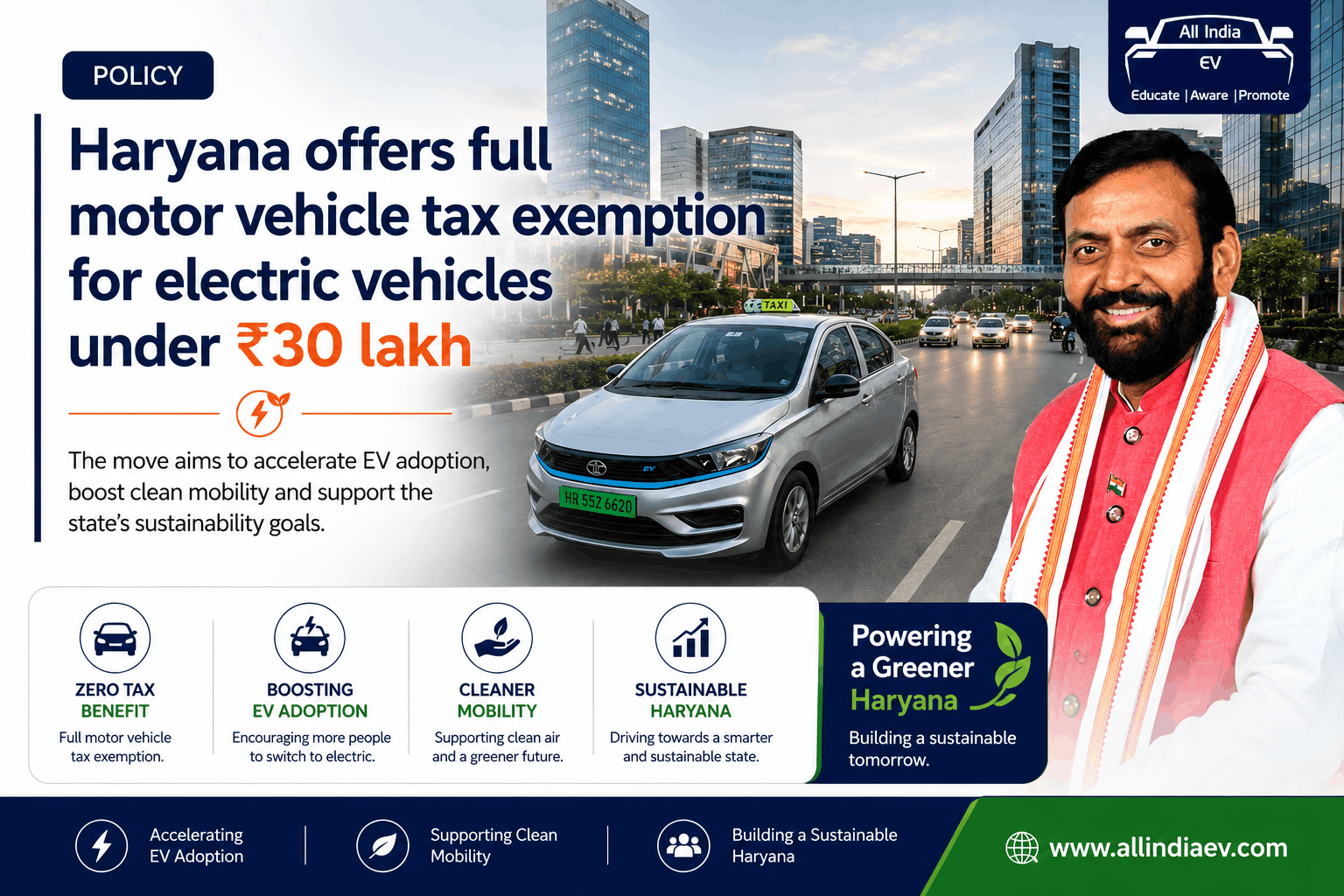
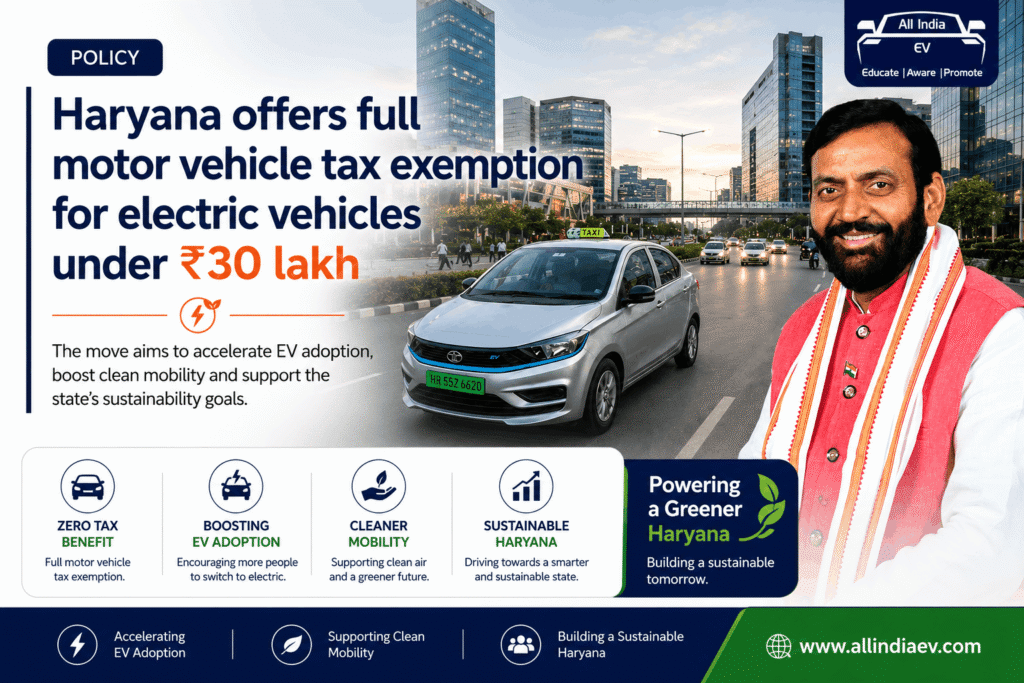
The Haryana Cabinet has approved a 100% exemption from motor vehicle tax on the registration of new battery electric vehicles (BEVs) priced up to ₹30 lakh (ex-showroom). EVs priced above ₹30 lakh will now receive a 50% tax exemption, replacing the state’s earlier 20% rebate for eligible electric vehicles.
The Key Number:
₹30 lakh — the ex-showroom price threshold up to which new electric vehicles qualify for a full motor vehicle tax exemption.
Why It Matters:
The revised incentive significantly lowers the upfront ownership cost of electric vehicles in Haryana, making the state one of the more competitive EV markets in India while supporting faster adoption of cleaner mobility solutions.
The Core News
Haryana Electric Vehicle Tax Exemption Gets a Major Boost
The Haryana government has substantially strengthened its Haryana electric vehicle tax exemption policy by approving a complete waiver of motor vehicle tax for new electric two-wheelers, three-wheelers, and four-wheelers with an ex-showroom price of up to ₹30 lakh. The decision was approved by the state Cabinet chaired by Chief Minister Nayab Singh Saini and fulfils a commitment made during the 2026–27 state Budget. Battery electric vehicles priced above ₹30 lakh will continue to receive a 50% exemption on motor vehicle tax, while the existing 20% concession for CNG vehicles remains unchanged.
The policy revision comes as Indian states continue competing to accelerate electric mobility through fiscal incentives. Haryana previously offered only a 20% one-time motor vehicle tax rebate for eligible EVs, a benefit that was increasingly viewed as less competitive compared to neighbouring regions such as Delhi and Chandigarh. The enhanced exemption is expected to discourage buyers from registering vehicles outside Haryana solely to benefit from lower registration costs while reinforcing the state’s broader clean mobility strategy.
Beyond reducing acquisition costs, the revised incentive is expected to strengthen EV adoption across personal mobility segments by improving affordability for mainstream electric cars, SUVs, two-wheelers and commercial three-wheelers. Lower registration costs could encourage higher sales volumes, support OEM expansion plans, improve local vehicle registrations, and contribute to Haryana’s long-term goals of reducing vehicular emissions and improving urban air quality
Breaking Down the Update
- Tax Exemption: 100% motor vehicle tax exemption for new EVs priced up to ₹30 lakh.
- Premium EVs: Electric vehicles above ₹30 lakh receive a 50% motor vehicle tax exemption.
- Vehicle Coverage: Applicable to battery electric two-wheelers, three-wheelers, autos, e-rickshaws and four-wheelers.
- Previous Policy: Replaces the earlier 20% one-time tax rebate for eligible EVs.
- CNG Policy: Existing 20% motor vehicle tax concession for CNG vehicles remains unchanged.
- Women’s Incentive: A separate 1% motor vehicle tax rebate applies to non-transport vehicles up to ₹20 lakh registered in a woman’s name.
- Policy Objective: Increase EV registrations, reduce pollution, and retain vehicle registrations within Haryana.
How Haryana Electric Vehicle Tax Exemption Will Help the Indian EV Market
The revised Haryana electric vehicle tax exemption is expected to strengthen India’s transition toward electric mobility by reducing one of the largest upfront ownership costs associated with purchasing an EV. Since registration taxes directly influence the on-road price of a vehicle, a full exemption for models priced up to ₹30 lakh makes a significant portion of India’s mass-market electric vehicle portfolio more affordable.
For vehicle manufacturers, the policy improves the attractiveness of Haryana as a key retail market while supporting higher sales volumes across passenger vehicles, electric SUVs, two-wheelers and commercial electric three-wheelers. The incentive may also encourage OEMs to expand dealership networks, after-sales infrastructure and charging partnerships within the state.
From a policy perspective, Haryana joins a growing list of states using fiscal incentives to accelerate EV adoption alongside central government initiatives promoting cleaner transportation. Lower registration costs can improve consumer confidence, particularly among first-time EV buyers evaluating the total cost of ownership.
The measure also has broader environmental and economic implications. Higher EV penetration can contribute to reduced tailpipe emissions, improved urban air quality and lower dependence on fossil fuels. In the long term, sustained state-level incentives combined with expanding charging infrastructure and domestic manufacturing are likely to support India’s ambition of becoming one of the world’s largest electric mobility ecosystems while encouraging greater investment across the EV value chain.
Conclusion & Next Steps
The enhanced Haryana electric vehicle tax exemption represents one of the state’s strongest fiscal measures to date in support of electric mobility. The next key milestone will be the effective implementation of the revised taxation framework and its impact on vehicle registrations over the coming months. If the policy successfully drives higher EV adoption while retaining registrations within Haryana, it could encourage other Indian states to introduce similar incentives, further accelerating the country’s transition towards cleaner and more sustainable transportation