

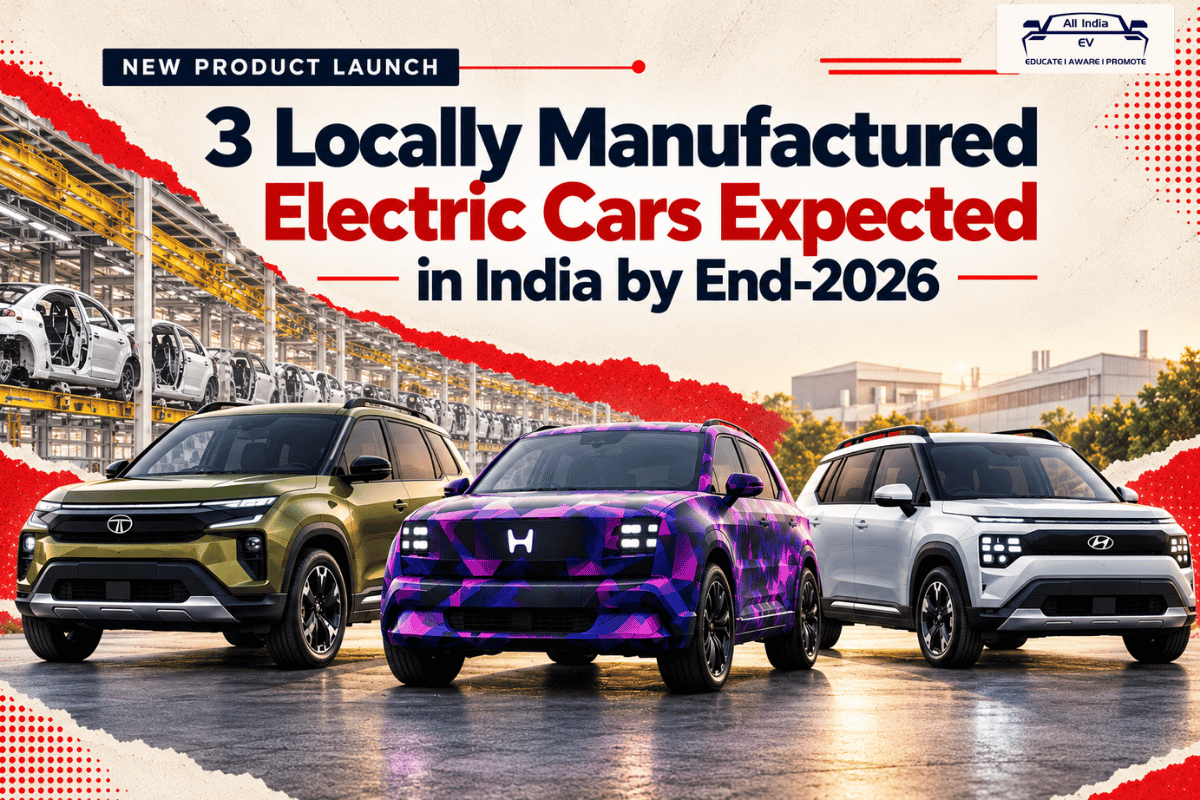
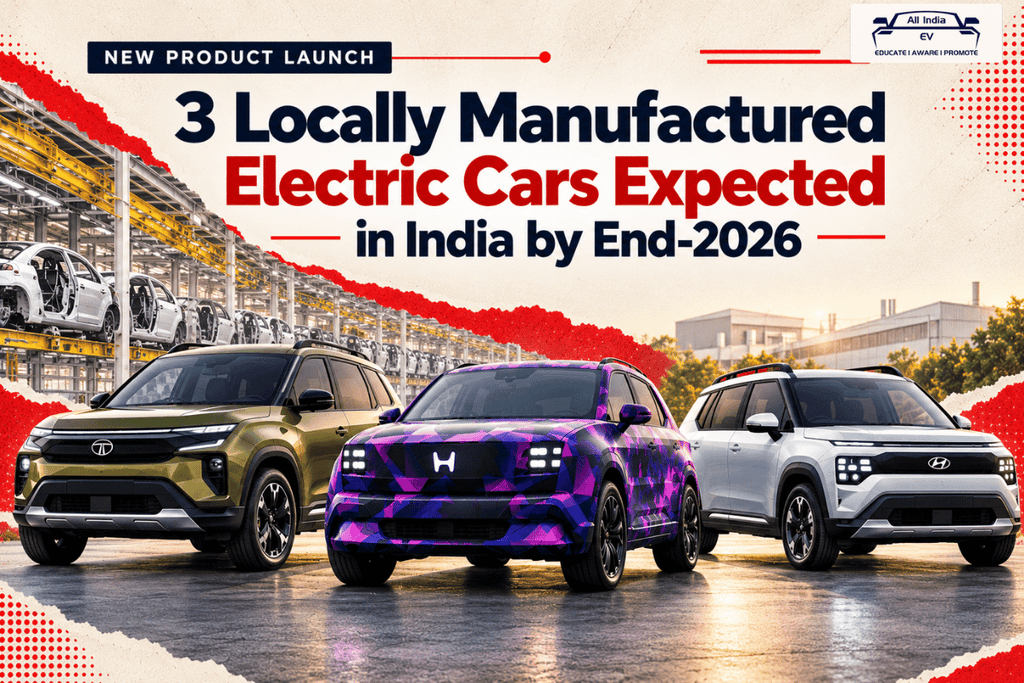
India’s electric vehicle market is preparing for another major wave of new launches, with Tata Motors, Honda and Hyundai expected to introduce three locally manufactured electric cars by the end of 2026. The upcoming models will target different customer segments, ranging from spacious family SUVs to compact electric SUVs, giving Indian buyers more options in the growing EV market.
With manufacturers focusing on local production, advanced technology and improved driving ranges, these launches could further strengthen India’s electric mobility ecosystem. The three upcoming electric vehicles include the Tata Safari EV, Honda 0 Alpha-based electric SUV and Hyundai’s new compact electric SUV, internally codenamed HE1i.
1. Tata Safari EV: A New Electric SUV for Families
Tata Motors is expected to expand its electric vehicle portfolio with the introduction of the Safari EV, potentially in November 2026. Positioned as a flagship electric SUV, the upcoming model will cater to families seeking a spacious vehicle with zero tailpipe emissions.
The Safari EV is expected to compete with upcoming electric SUVs, including the Mahindra XEV 9S and MG Hector Tomahawk EV. It could be offered in six-seat and seven-seat configurations, making it suitable for larger families and long-distance journeys.
Recent spy shots suggest that the electric SUV will feature a significantly updated cabin with three dashboard displays, including a dedicated touchscreen for the front passenger. This display could support entertainment, music controls, navigation and gaming. An independent rear suspension is also expected to improve ride comfort.
Regarding performance, Tata Motors could offer standard-range rear-wheel-drive, extended-range rear-wheel-drive and extended-range all-wheel-drive variants. The extended-range rear-wheel-drive version is expected to deliver a driving range of approximately 600 km on a single charge.
However, the final battery specifications, driving range, features and pricing have not yet been officially confirmed.
2. Honda 0 Alpha-Based Electric SUV
Honda is preparing to enter India’s locally manufactured electric car segment with an SUV derived from its 0 Alpha concept. The company is expected to unveil the India-made electric SUV on December 2, 2026, with its market launch potentially following in January 2027.
The upcoming model will feature a modern exterior design focused on aerodynamic efficiency and a distinctive road presence. Its interior is also expected to introduce a new design direction for Honda’s Indian portfolio, featuring a flat-bottom steering wheel, a tablet-style infotainment screen and a fully digital instrument cluster.
The electric SUV is anticipated to offer two front-wheel-drive variants powered by lithium iron phosphate (LFP) battery packs with capacities of approximately 65 kWh and 75 kWh. The top variant could deliver a claimed range of around 650 km on a full charge.
These specifications remain expectations and are subject to official confirmation. Local manufacturing could help Honda position the new electric SUV competitively in India’s expanding electric passenger vehicle market.
3. Hyundai HE1i: A New Compact Electric SUV
Hyundai is also preparing a new compact electric SUV, internally codenamed HE1i, which is expected to be unveiled in December 2026.
The upcoming model will feature a boxy, rugged exterior combined with modern styling elements, including Hyundai’s signature pixel-inspired lighting. Inside, the SUV is expected to introduce the brand’s new global interior design language, featuring a 9.9-inch digital instrument cluster and a 12.9-inch infotainment touchscreen.
Hyundai has confirmed that the electric SUV will feature Level 2 advanced driver assistance systems (ADAS). Buyers are also expected to get two battery options, with cells initially sourced from China’s Svolt.
The larger battery pack could provide a driving range of approximately 500 km on a full charge. The model is expected to strengthen Hyundai’s position in the compact electric SUV segment, although its final specifications and pricing remain undisclosed.
The expected arrival of the Tata Safari EV, Honda’s 0 Alpha-based electric SUV and Hyundai’s HE1i could make the final months of 2026 significant for India’s electric car market.
While Tata Motors is targeting customers seeking a spacious, three-row electric SUV, Honda is preparing to enter the locally manufactured EV segment, and Hyundai is focusing on compact electric SUV buyers.
The success of these models will depend on their final pricing, real-world driving range, charging capabilities and feature offerings. If competitively positioned, these upcoming electric cars could help accelerate EV adoption and strengthen India’s transition towards cleaner mobility.