

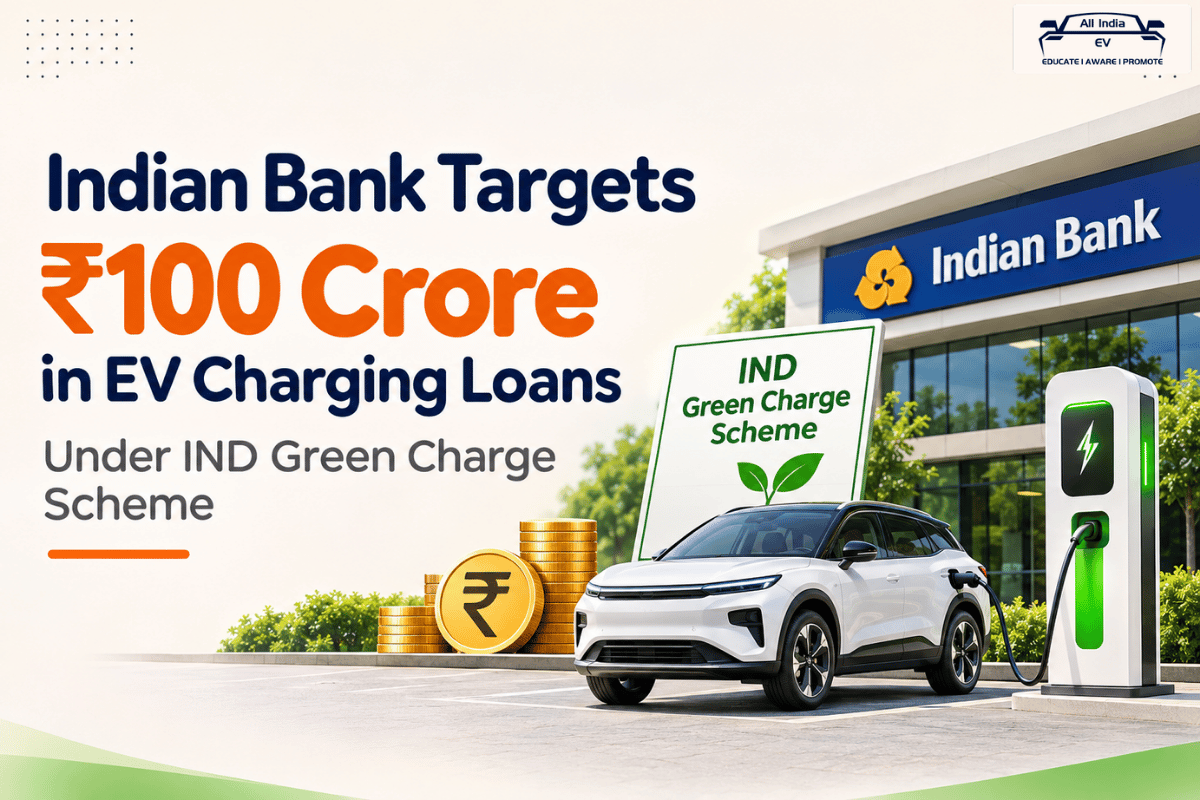
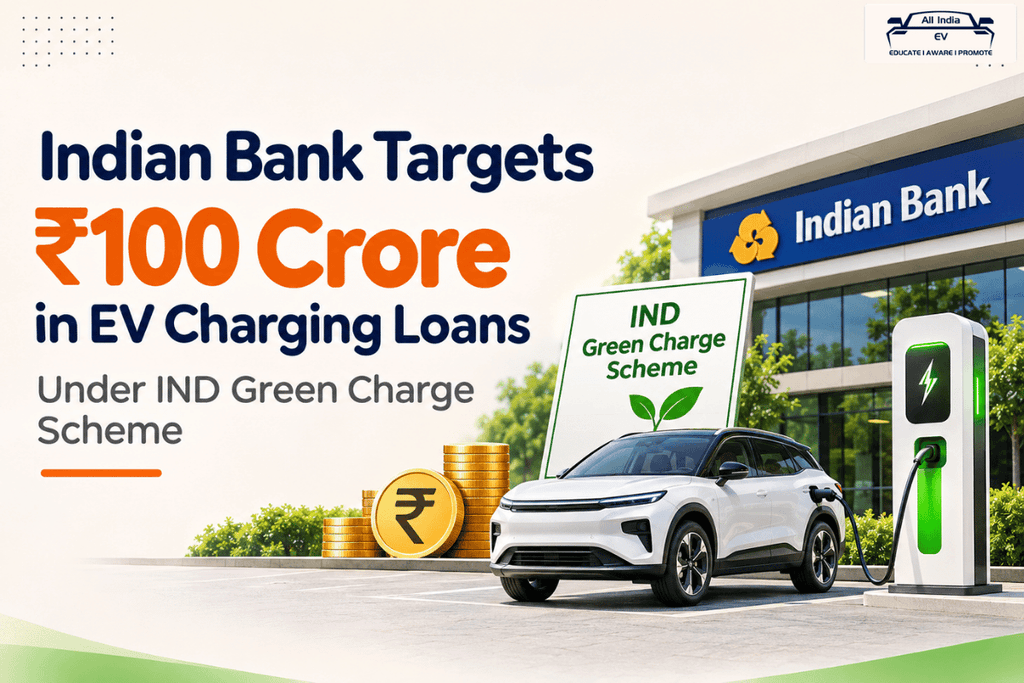
India’s electric vehicle (EV) charging infrastructure sector is set to receive a financial boost as public sector lender Indian Bank has announced a lending target of ₹100 crore for FY2027 under its dedicated EV charging infrastructure financing scheme. The initiative aims to encourage investments in charging networks, support small businesses and accelerate the country’s transition towards sustainable mobility.
The bank has introduced a specialised financing programme called IND Green Charge, designed to provide financial assistance to businesses and entrepreneurs looking to establish electric vehicle charging stations across India. The scheme will cover public, captive and fleet charging infrastructure through both standalone and franchise-based business models.
According to Indian Bank Managing Director and CEO Binod Kumar, the bank plans to offer loans of up to ₹10 crore under the scheme, with a maximum repayment tenure of eight years. The financing facility is expected to make it easier for entrepreneurs and Micro, Small and Medium Enterprises (MSMEs) to enter the growing EV charging business.
Indian Bank Sets ₹100 Crore Lending Target for FY2027
Indian Bank has established a lending target of ₹100 crore for the remaining five months of FY2027 under its IND Green Charge initiative. The lender has also outlined an ambitious target of ₹250 crore for the following financial year.
The financing programme is expected to attract businesses interested in developing charging infrastructure for electric cars, two-wheelers, three-wheelers and commercial EV fleets.
By providing access to long-term credit, Indian Bank aims to reduce financial barriers for businesses planning to invest in EV charging facilities. The initiative is also expected to encourage entrepreneurship and create employment opportunities in India’s expanding electric mobility ecosystem.
IND Green Charge to Support Multiple EV Charging Models
One of the major highlights of the IND Green Charge scheme is its coverage of different charging infrastructure requirements. The programme will support public charging stations, captive charging facilities and fleet-based charging infrastructure.
The scheme also offers flexibility through standalone and franchise-based business models. This approach could help smaller businesses establish charging stations independently or operate through established charging network franchises.
Indian Bank has evaluated the commercial viability of different charging infrastructure projects, including AC chargers, DC fast chargers and high-capacity DC charging systems. The bank has also conducted stress tests under different charger utilisation scenarios to assess the financial sustainability of such projects.
This assessment reflects the growing recognition of EV charging infrastructure as a potential long-term business opportunity rather than simply an environmental investment.
Focus on Smaller Cities and Semi-Urban Markets
Indian Bank is also looking beyond major metropolitan areas to support the development of EV charging infrastructure in smaller cities and semi-urban regions.
The bank will evaluate financing proposals based on local EV charging demand, location suitability, expected charger utilisation and the applicant’s repayment capacity.
Expanding charging infrastructure beyond major cities will be important for improving EV adoption across India. Better charging accessibility can address range-related concerns among potential EV buyers and support the wider use of electric vehicles for personal transportation and commercial operations.
Growing EV Market Creates New Investment Opportunities
India’s EV industry continues to expand, creating increasing demand for reliable and accessible charging facilities. According to the figures cited in the report, EV sales increased by 29.7% to reach 26.59 lakh units during FY2026.
Meanwhile, India’s EV charging station market is projected to grow from approximately ₹6,139 crore in 2025 to ₹21,940 crore by 2030.
Against this backdrop, Indian Bank’s IND Green Charge initiative represents an important step towards improving access to finance for charging infrastructure developers.
With a ₹100 crore lending target for FY2027 and ₹250 crore planned for the following financial year, the initiative could encourage greater private-sector participation in India’s EV charging ecosystem.
The scheme is expected to support charging network expansion, strengthen MSME participation and contribute to the country’s broader green mobility ambitions.