

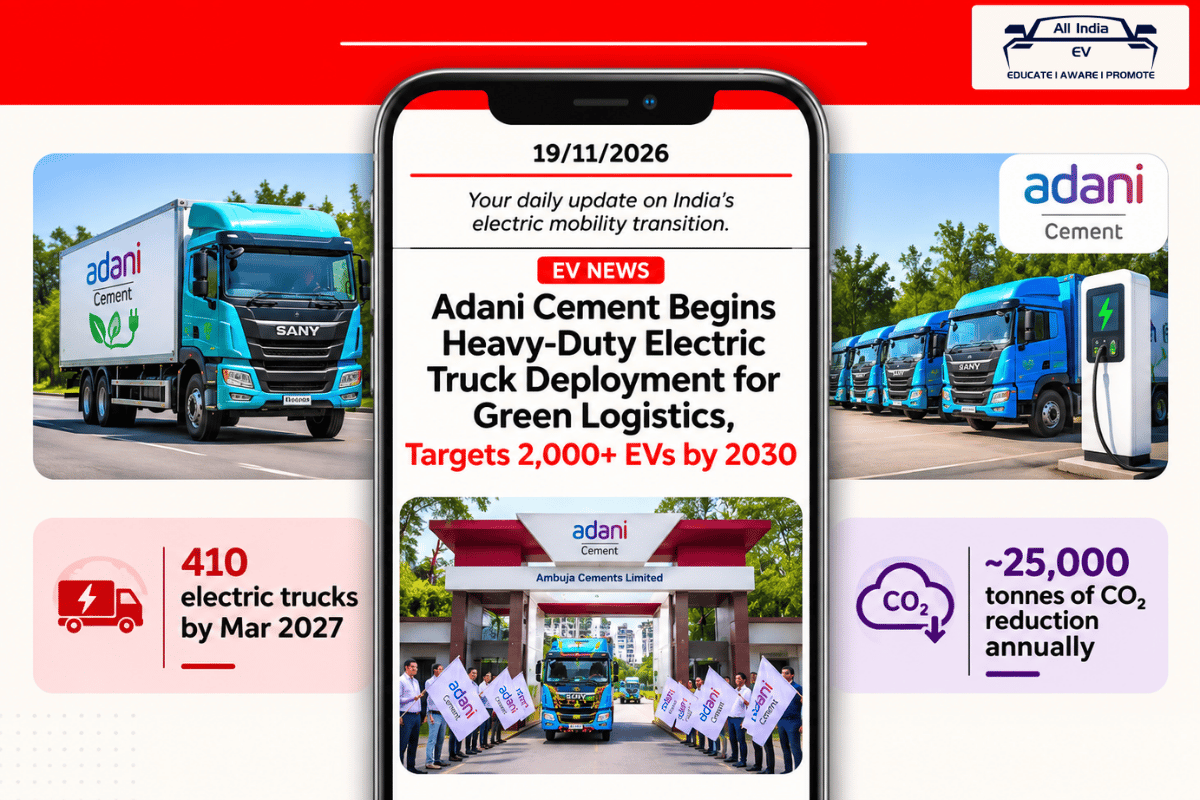
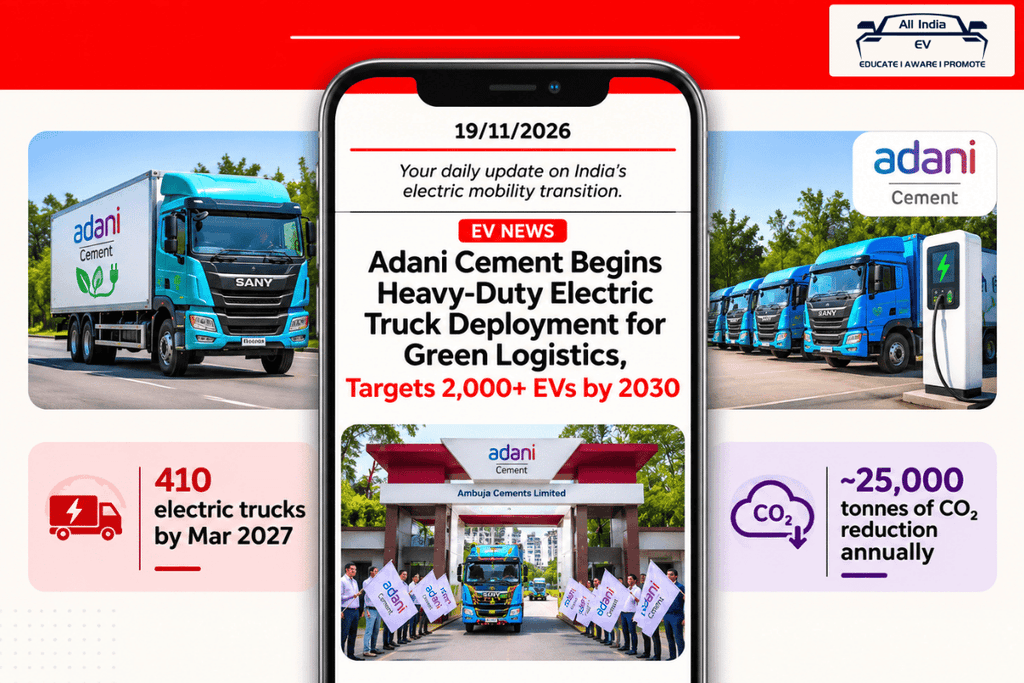
Adani Cement has initiated the deployment of heavy-duty electric trucks at its Sanghi Plant in Gujarat for transporting clinker and cement. The company plans to introduce 410 electric trucks by March 2027, targeting over 2,000 EV trucks by 2030 to reduce logistics emissions and diesel dependency.
Adani Cement has taken a major step towards sustainable transportation by flagging off its first fleet of heavy-duty electric trucks at the Sanghi Plant in Gujarat. The initiative marks the company’s first deployment of electric trucks for clinker and cement transportation and forms part of its broader strategy to decarbonise logistics operations and reduce its carbon footprint.
As part of the first phase, Adani Cement plans to deploy 410 electric trucks by March 2027. The company aims to gradually expand this initiative across multiple transportation routes and manufacturing facilities in India. By 2030, Adani Cement is targeting more than 2,000 electric trucks, with an objective of moving 10% of its total road logistics volume through electric vehicles.
The deployment is expected to strengthen the adoption of electric heavy commercial vehicles in India’s industrial transportation sector, where diesel-powered trucks continue to play a significant role in moving raw materials and finished products.
Adani Cement Targets Major Carbon Emission Reductions
One of the key objectives of the electric truck deployment is to reduce carbon emissions associated with cement transportation. According to the company, its planned fleet of 410 electric trucks is expected to reduce more than 25,000 tonnes of CO₂ emissions annually.
The electric fleet is also projected to replace diesel consumption equivalent to approximately 11 million litres every year. This could significantly reduce the environmental impact of transporting limestone, clinker and finished cement across the company’s supply chain.
Adani Cement highlighted that conventional diesel trucks generate approximately 0.7375 kg of CO₂ per kilometre. However, electric trucks operating on renewable energy can eliminate up to 100% of these freight-related emissions, depending on the electricity source.
The company believes that combining electric transportation with renewable energy can make industrial logistics considerably cleaner and support its long-term decarbonisation objectives.
Falling Battery Costs Improve Electric Truck Economics
The growing economic viability of electric heavy-duty trucks is another important factor behind Adani Cement’s decision.
Over the past decade, diesel prices have increased by approximately 60%, while lithium-ion battery pack costs have declined by around 70%. Solar energy tariffs have also fallen by approximately 47%.
These developments are improving the business case for electric commercial vehicles, particularly for companies operating large transportation fleets.
For cement manufacturers, transportation represents an important part of operational expenditure. Replacing diesel trucks with electric alternatives could help reduce fuel-related costs, improve energy efficiency and minimise exposure to fluctuations in diesel prices.
Speaking about the initiative, Vinod Bahety, CEO – Cement Business, Adani Group, said the deployment at Sanghi Plant is only the beginning. The company has identified multiple routes across India for transporting clinker and cement using electric trucks.
He also highlighted that electrifying transportation would help reduce the company’s carbon footprint while making its logistics operations more competitive and less dependent on diesel.
Electric Trucks to Support Adani Cement’s Net-Zero Ambitions
Adani Cement’s electric truck initiative is part of its broader sustainability strategy and efforts to reduce Scope 3 emissions. These emissions include indirect greenhouse gas emissions generated across a company’s value chain, including transportation and distribution activities.
The company has committed to achieving net-zero emissions by 2050, with several initiatives focused on renewable energy, energy efficiency and low-carbon cement manufacturing.
Adani Cement comprises Ambuja Cements Limited, ACC Limited and Orient Cement Limited, with an installed cement manufacturing capacity of 113.5 MTPA.
Its decarbonisation plans also include investments in 1 GW of renewable energy capacity and 376 MW of waste heat recovery systems by FY2028.
Electric Heavy-Duty Trucks Could Transform India’s Cement Logistics
India is the world’s second-largest cement producer, making transportation an essential part of the industry’s supply chain. Moving raw materials, clinker and finished cement across long distances creates considerable fuel consumption and transportation-related emissions.
Adani Cement’s plan to introduce more than 2,000 electric trucks by 2030 could encourage wider adoption of electric heavy commercial vehicles in the industrial sector.
The initiative also highlights the growing potential of electric trucks beyond conventional urban delivery and passenger transportation applications. With large-scale fleet deployment, renewable energy integration and expanding charging infrastructure, heavy-duty EVs could become an important part of India’s cleaner freight transportation ecosystem.