

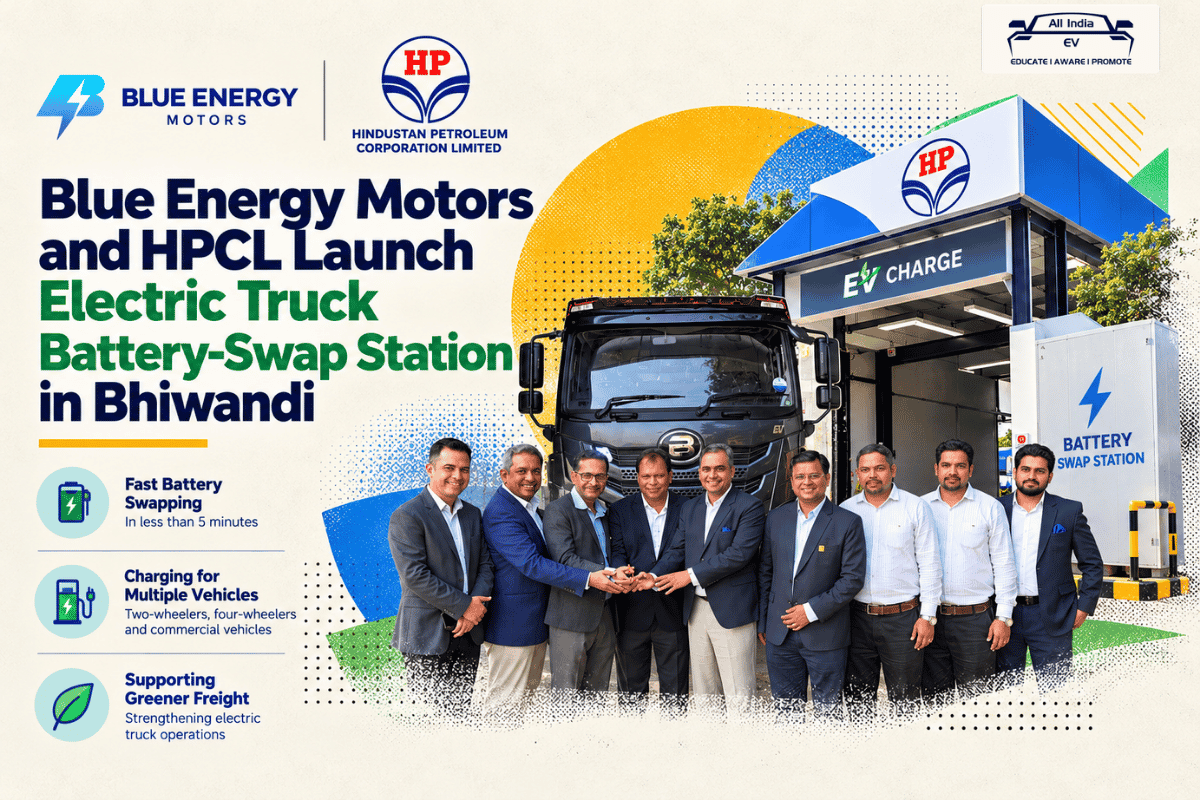
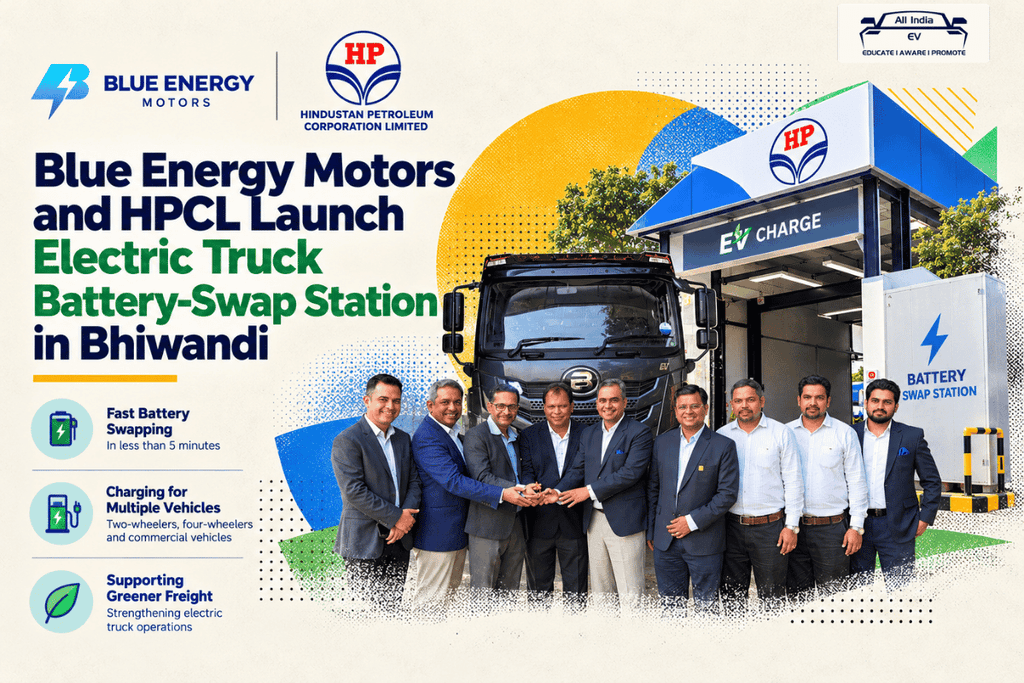
Blue Energy Motors (BEM) and Hindustan Petroleum Corporation Limited (HPCL) have operationalised Bhiwandi’s first battery-swapping station for electric heavy-duty trucks, marking a significant development in India’s electric freight transportation sector. The facility aims to reduce vehicle downtime, improve fleet utilisation and strengthen the infrastructure supporting electric commercial vehicles along the Mumbai–Pune Electric Freight Corridor.
Announced on October 26, 2026, the new facility represents an important step in the partnership between the two companies, established in January 2026. Located in Bhiwandi, a major warehousing and logistics hub in the Mumbai Metropolitan Region, the station is designed to meet the energy requirements of electric freight vehicles operating on busy transportation routes.
Battery Swapping Enables Faster Electric Truck Operations
The newly operational facility allows Blue Energy Motors’ electric heavy-duty trucks to replace depleted batteries with fully charged ones in less than five minutes. Unlike conventional charging, which can require vehicles to remain stationary while their batteries recharge, battery swapping enables trucks to return to operations more quickly.
Reducing charging-related downtime is particularly important for commercial fleet operators, who depend on vehicle availability to maintain delivery schedules and improve operational efficiency. Faster battery replacement can help increase vehicle utilisation and make electric trucks more practical for long-distance freight transportation.
The technology also addresses a major infrastructure requirement for heavy-duty electric vehicles, where charging time and access to reliable energy facilities can influence fleet adoption.
Integrated EV Charging Infrastructure for Multiple Vehicles
In addition to battery swapping for heavy-duty electric trucks, the Bhiwandi facility incorporates a public EV charging station catering to electric two-wheelers, four-wheelers and commercial vehicles.
By combining battery-swapping services with conventional EV charging, the facility creates a multi-segment energy hub within HPCL’s existing retail network. This approach can improve access to charging infrastructure while supporting different categories of electric vehicles at a single location.
The initiative also highlights the potential of established fuel retail networks to accelerate electric mobility by integrating alternative energy services into existing infrastructure.
Mumbai–Pune Electric Freight Corridor Gets a Boost
Blue Energy Motors launched the Mumbai–Pune Electric Freight Corridor in October 2025 to support the adoption of electric heavy-duty trucks. The Bhiwandi battery-swapping station extends the infrastructure supporting this corridor and strengthens the energy network required for electric freight operations.
According to Blue Energy Motors, more than 1,400 of its green heavy-duty trucks are operating across key freight routes in India. The company reports that these vehicles have collectively covered over 150 million green kilometres, helping avoid more than 44,000 tonnes of carbon dioxide emissions.
The company manufactures electric and liquefied natural gas (LNG)-powered heavy-duty trucks, focusing on lower-emission solutions for India’s commercial transportation sector.
Blue Energy Motors and HPCL Plan Infrastructure Expansion
Anand Mimani, CEO of EV and New Energy Business at Blue Energy Motors, highlighted the importance of developing reliable energy infrastructure to make electric freight transportation practical and scalable. He identified Bhiwandi’s substantial logistics activity as an important market for the company.
HPCL is also expanding its alternative-energy infrastructure alongside its conventional fuel operations. Under its HP e-Charge brand, the company operates more than 5,800 EV charging stations and over 150 battery-swapping stations across India, according to the companies.
The Bhiwandi facility demonstrates how collaboration between electric truck manufacturers and established energy companies can support the development of India’s commercial EV ecosystem. As Blue Energy Motors and HPCL work towards expanding their network, additional battery-swapping and charging facilities could help address operational challenges and encourage wider adoption of electric heavy-duty trucks across major freight corridors.