

Heritage Foods has partnered with TVS Motor Company to introduce electric vehicles for village-level milk collection, marking another step towards the adoption of electric mobility in India’s dairy and agricultural supply chains. The initiative aims to reduce transportation costs, improve operational efficiency and lower carbon emissions associated with milk procurement.
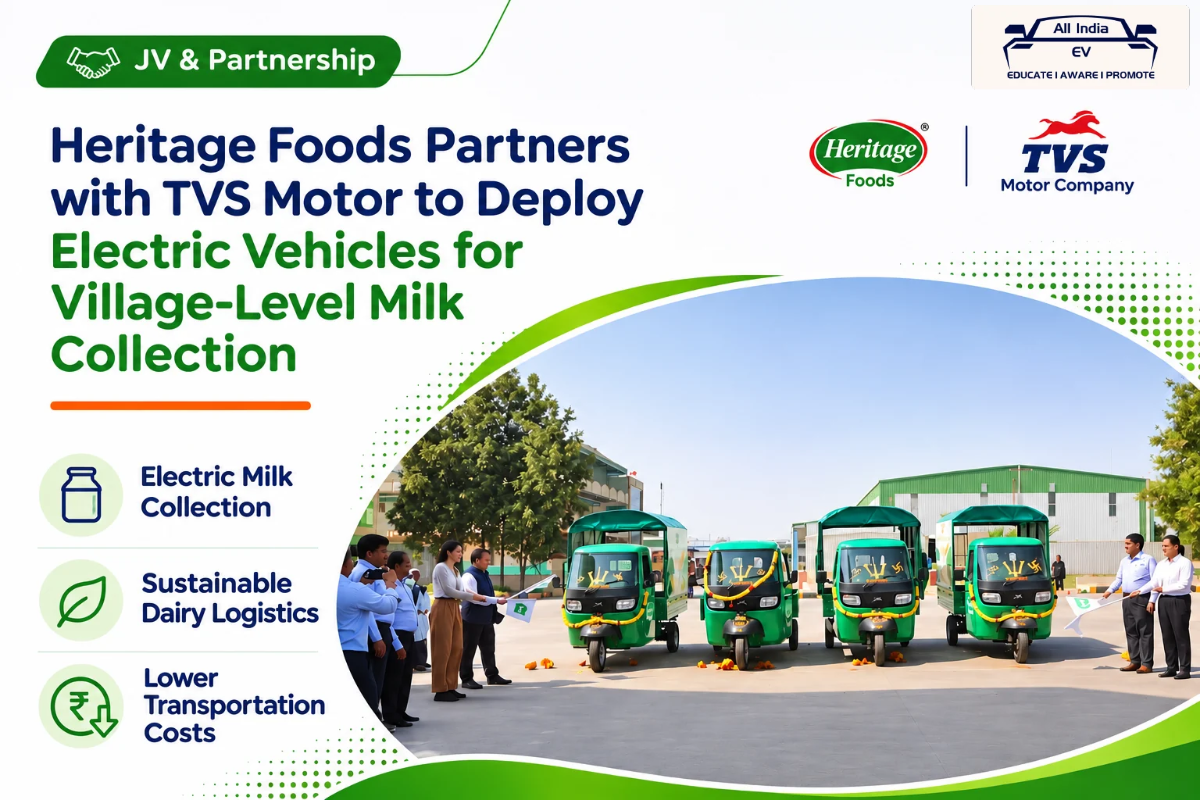
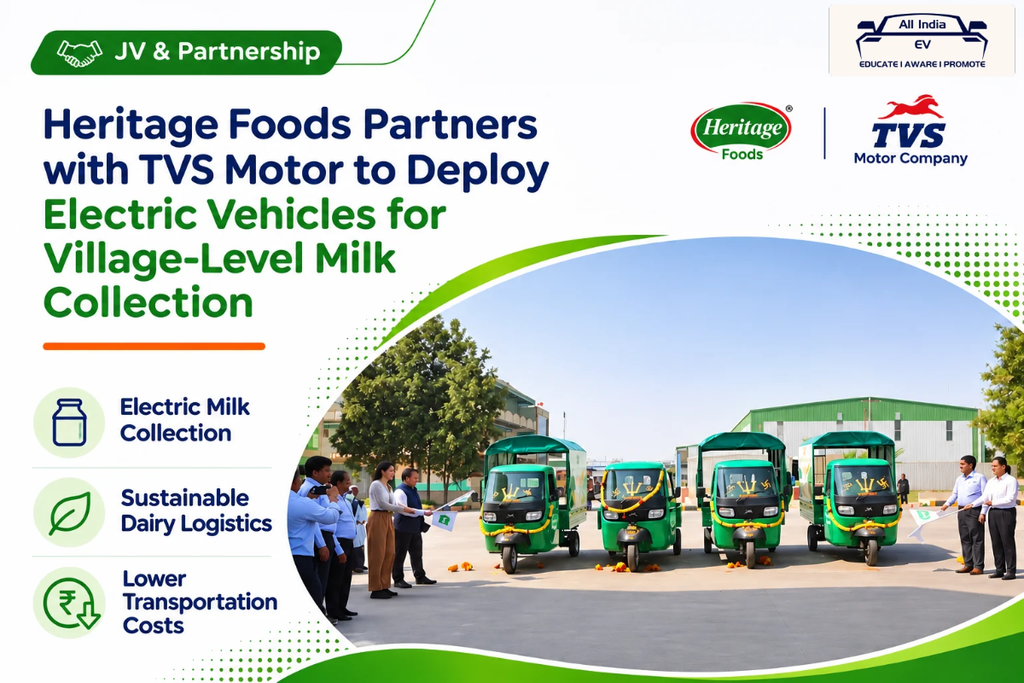
The electric vehicles were officially flagged off on November 23, 2026, at Heritage Foods’ Shamirpet plant, located on the outskirts of Hyderabad, Telangana. The initiative is focused on strengthening the company’s first-mile milk collection operations by replacing conventional diesel-powered vehicles with electric alternatives.
The launch ceremony was attended by Brahmani Nara, Executive Director of Heritage Foods; Samba Murthy Jangam, Chief Operating Officer of Heritage Foods; and Rajat Gupta, Vice President and Commercial Mobility Business Head at TVS Motor Company.
According to Brahmani Nara, the vehicles deployed under the initiative are TVS King Kargo EVs, designed to support the transportation of milk from village collection points to the company’s procurement and processing network.
TVS King Kargo EVs to Support Dairy Transportation
The deployment of TVS King Kargo EVs is expected to support regular transportation between village-level milk collection centres and nearby processing facilities. These vehicles will play an important role in the first-mile logistics segment, where milk is collected from farmers and transported for chilling and further processing.
Milk procurement requires a reliable transportation network because raw milk is a perishable product. Timely transportation is essential to maintain its quality, particularly during India’s summer months when higher temperatures can increase the risk of spoilage.
By introducing electric cargo vehicles, Heritage Foods aims to make these frequent transportation operations more economical and environmentally responsible. Electric vehicles also offer the advantage of zero tailpipe emissions, helping reduce local air pollution in the rural communities where milk collection activities take place.
Focus on Lower Transportation Costs and Sustainability
One of the major objectives of the partnership is to reduce the operating expenses associated with diesel-powered transportation. Fuel costs represent an important component of commercial fleet operations, particularly for businesses that depend on frequent short-distance vehicle movements.
Electric vehicles can help businesses manage these expenses through potentially lower energy and maintenance costs compared with conventional internal combustion engine vehicles. Their suitability for regular village-level routes could also help improve the overall efficiency of dairy procurement operations.
Heritage Foods Executive Director Brahmani Nara said that building a sustainable dairy ecosystem requires rethinking every stage of operations, including the transportation of milk from farmers.
She highlighted that introducing electric vehicles for village-level milk procurement is an important step towards creating a more efficient, cost-effective and environmentally responsible supply chain. The collaboration with TVS Motor is also expected to generate long-term value for farmers, the company and the communities it serves.
However, Heritage Foods has not yet disclosed the total number of electric vehicles being deployed, their operating routes or the estimated reduction in fuel consumption and carbon emissions.
Electric Mobility Expands into India’s Dairy Supply Chain
The partnership between Heritage Foods and TVS Motor highlights the growing application of electric mobility beyond passenger transportation and conventional last-mile delivery services.
India’s dairy industry depends on extensive transportation networks connecting farmers, village collection centres, chilling facilities and processing plants. Electrifying these operations could create new opportunities for commercial electric three-wheelers and other electric cargo vehicles.
The adoption of EVs in dairy logistics also demonstrates how businesses can integrate cleaner transportation into their everyday operations while working towards sustainability targets.
Heritage Foods plans to explore additional sustainable mobility solutions to strengthen its milk procurement network. The latest initiative could encourage other dairy companies and agricultural businesses to consider electric vehicles for regular transportation requirements.
For TVS Motor, the collaboration represents another commercial application for its electric three-wheeler portfolio, extending electric mobility into India’s rural supply-chain ecosystem.
As companies increasingly focus on reducing logistics expenses and environmental impact, partnerships such as this could help accelerate the adoption of electric commercial vehicles across India’s dairy, agriculture and food transportation sectors.