
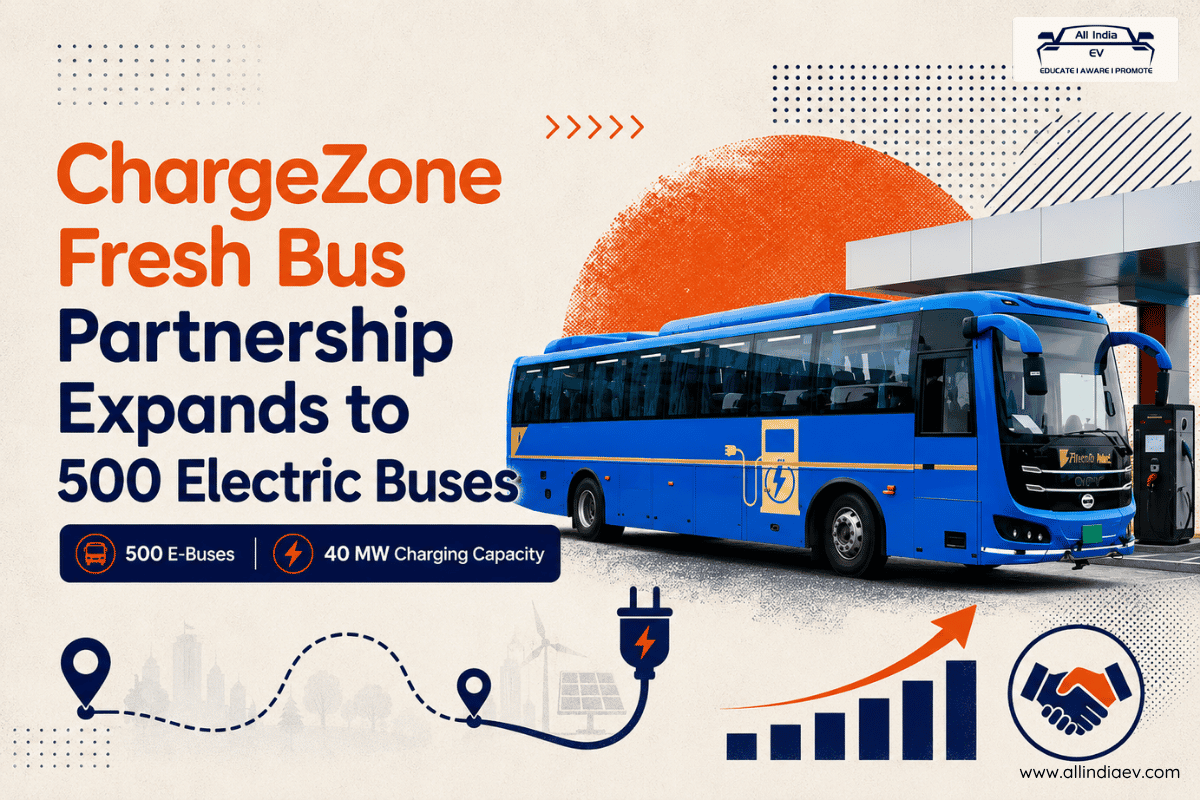
ChargeZone and Fresh Bus have expanded their electric mobility partnership, with Fresh Bus planning to add 400 all-electric intercity buses to ChargeZone’s charging network over the next 15 months.
The expansion will increase the Fresh Bus fleet supported by ChargeZone infrastructure from the existing 100 buses to 500 electric buses, creating one of the more substantial charging-linked intercity electric bus deployments currently being developed in India.
The expanded network is expected to connect 20 cities and 17 additional towns across Tamil Nadu, Karnataka, Andhra Pradesh and Telangana.
ChargeZone to Build 40 MW Charging Network
The vehicle expansion is being accompanied by a significant increase in dedicated charging capacity.
ChargeZone currently has around 10 MW of charging infrastructure supporting Fresh Bus operations. Under the expanded partnership, another 30 MW will be deployed, taking the total dedicated capacity to 40 MW.
This additional infrastructure will also contribute to ChargeZone’s broader plan to add approximately 200 MW of charging capacity across its national network.
At full scale, the companies expect the Fresh Bus partnership to supply around 100 million units of electricity annually and support more than 20,000 passenger journeys per day.
For electric bus operations, this infrastructure component is particularly important.
Unlike passenger EV charging, where vehicles can often tolerate flexible charging schedules, intercity buses operate around fixed departure times and route requirements. Charging infrastructure therefore needs sufficient power capacity, charger availability and operational redundancy to keep buses moving without disrupting schedules.
Fleet-Led Charging Could Improve Charger Utilisation
The ChargeZone-Fresh Bus model also demonstrates an important shift emerging in India’s EV charging market.
Instead of developing charging stations first and waiting for utilisation to increase, infrastructure is being built alongside a committed electric fleet.
Fresh Bus provides predictable demand for electricity, while ChargeZone provides the charging network required to support that demand.
This can potentially improve the economics of charging infrastructure because a large fleet offers more predictable charger utilisation than relying entirely on individual EV owners.
With 500 buses planned across multiple intercity routes, energy demand can also be distributed across charging hubs according to operating schedules.
Electric Intercity Bus Market Starts Scaling
Electric buses have so far gained greater visibility within city transport systems, particularly through government-backed deployments. Intercity electric bus operations, however, create a different opportunity.
Longer routes require reliable high-power charging infrastructure, careful energy planning and close coordination between fleet operators and charging companies.
The ChargeZone Fresh Bus partnership shows how those two parts of the ecosystem are beginning to scale together.
Fresh Bus is not simply adding another 400 vehicles. ChargeZone is simultaneously building the energy infrastructure required to operate those assets.
That distinction matters as India’s electric commercial vehicle market grows.
Deploying buses without sufficient charging capacity creates stranded assets. Building large charging hubs without vehicle demand creates underutilised infrastructure.
By tying fleet expansion directly to charging deployment, ChargeZone and Fresh Bus are attempting to solve both sides of that equation together.
The next 15 months will show whether this model can provide a replicable blueprint for scaling electric intercity transportation across other major Indian corridors.