

India’s electric truck transition is beginning to move from isolated pilots toward corridor-based commercial deployment.
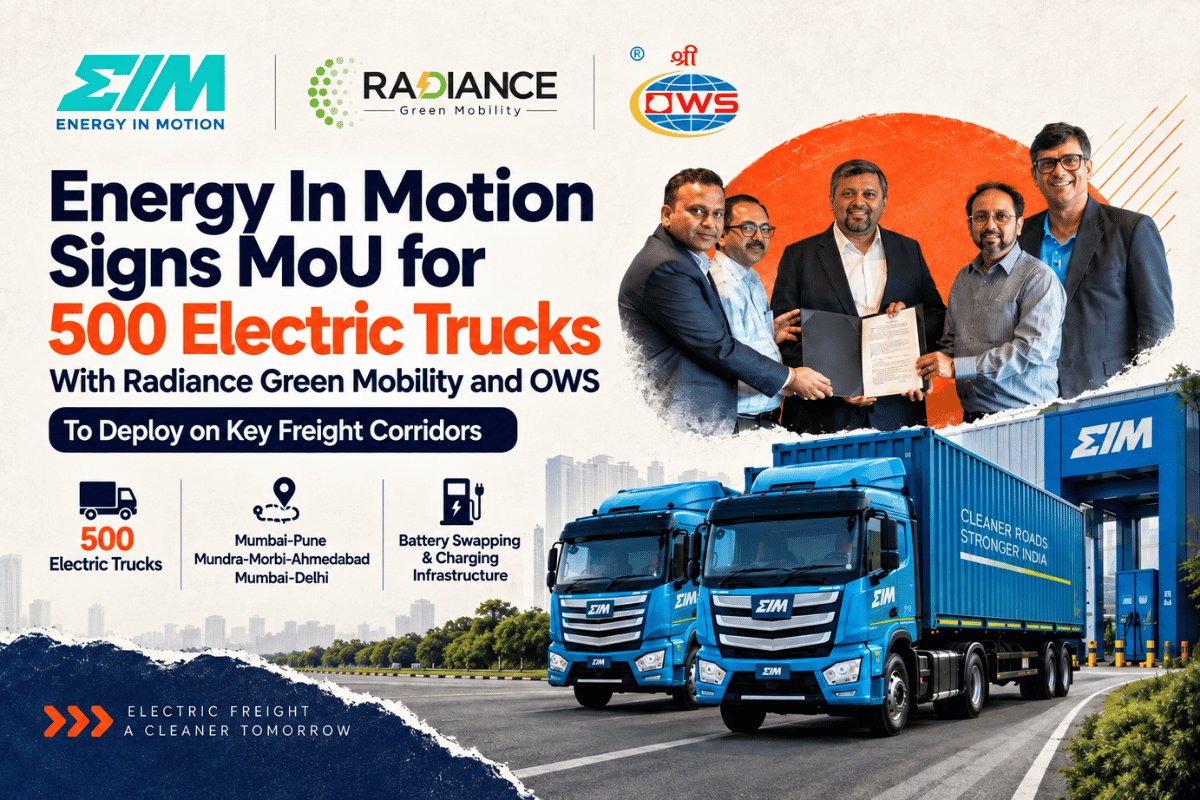
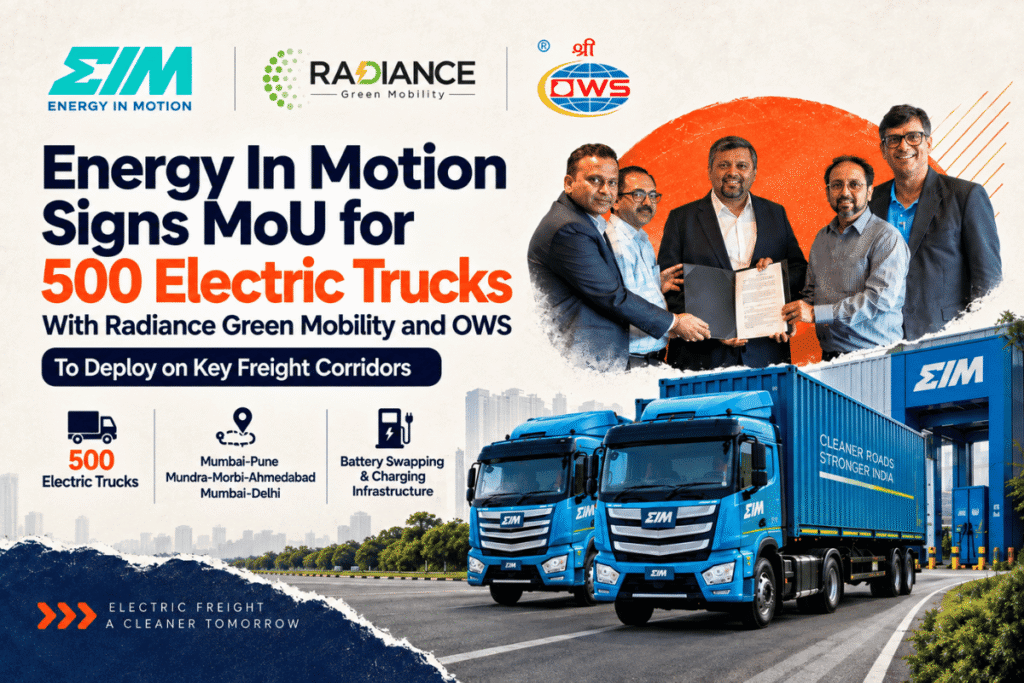
Energy In Motion Ltd (EIM) has signed a strategic memorandum of understanding with Radiance Green Mobility Pvt Ltd and Oil Field Warehouse & Services Ltd (OWS) to deploy 500 electric heavy commercial vehicles across some of India’s major freight corridors.
The Energy In Motion partnership will cover the Mumbai–Pune, Mundra–Morbi–Ahmedabad and Mumbai–Delhi corridors, combining electric trucks with dedicated battery-swapping, charging and energy infrastructure.
Importantly, the entire 500-truck fleet will not be deployed immediately. The first phase will begin with 50 electric trucks on the Mumbai–Pune corridor in October 2026, followed by a phased expansion as the required energy infrastructure is completed.
50 Electric Trucks to Start on Mumbai–Pune Corridor
The Mumbai–Pune route will serve as the first commercial deployment under the agreement.
After the initial 50-vehicle rollout, EIM plans to expand operations across the Mundra–Morbi–Ahmedabad and Mumbai–Delhi freight routes as its battery-swapping network becomes operational.
The choice of corridors is important. These routes connect major industrial, manufacturing, port and consumption centres where commercial trucks operate frequently and often follow predictable routes.
That operating pattern can make freight corridors particularly suitable for electrification because energy infrastructure can be positioned around known vehicle movements rather than requiring charging coverage everywhere.
EIM Will Build the Energy Infrastructure Too
The partnership is not limited to supplying electric trucks.
Under the MoU, Energy In Motion will provide the electric heavy commercial vehicles along with battery-swapping, charging and supporting energy infrastructure. Radiance Green Mobility and OWS will support the commercial deployment and operation of the fleet.
This integrated approach addresses one of the biggest challenges facing heavy-duty electrification: vehicle uptime.
For a commercial truck, long charging stops directly affect asset utilisation. Building energy infrastructure alongside the fleet therefore becomes as important as the vehicle itself.
EIM’s heavy electric vehicle portfolio includes the 55-tonne Ashwa electric tractor, and the company has secured homologation for a version equipped with a 350 kWh battery pack.
Battery Swapping Could Be Central to the Economics
EIM Managing Director Narendra Murkumbi said the company expects its model to enable electric freight movement at a cost significantly below diesel transportation. That remains a company claim and the commercial economics will ultimately depend on utilisation, energy costs, infrastructure investment and operational uptime.
This is where battery swapping could become important.
Rather than keeping a heavy truck stationary while a large battery charges, swapping can potentially return the vehicle to operation faster. For predictable freight corridors, dedicated swap locations can also be planned around fleet schedules.
The bigger question will be whether utilisation is high enough to justify the infrastructure investment.