

India’s food-delivery EV transition is increasingly becoming less about convincing gig workers to buy electric scooters and more about giving them reliable access to vehicles without taking on the cost of ownership.
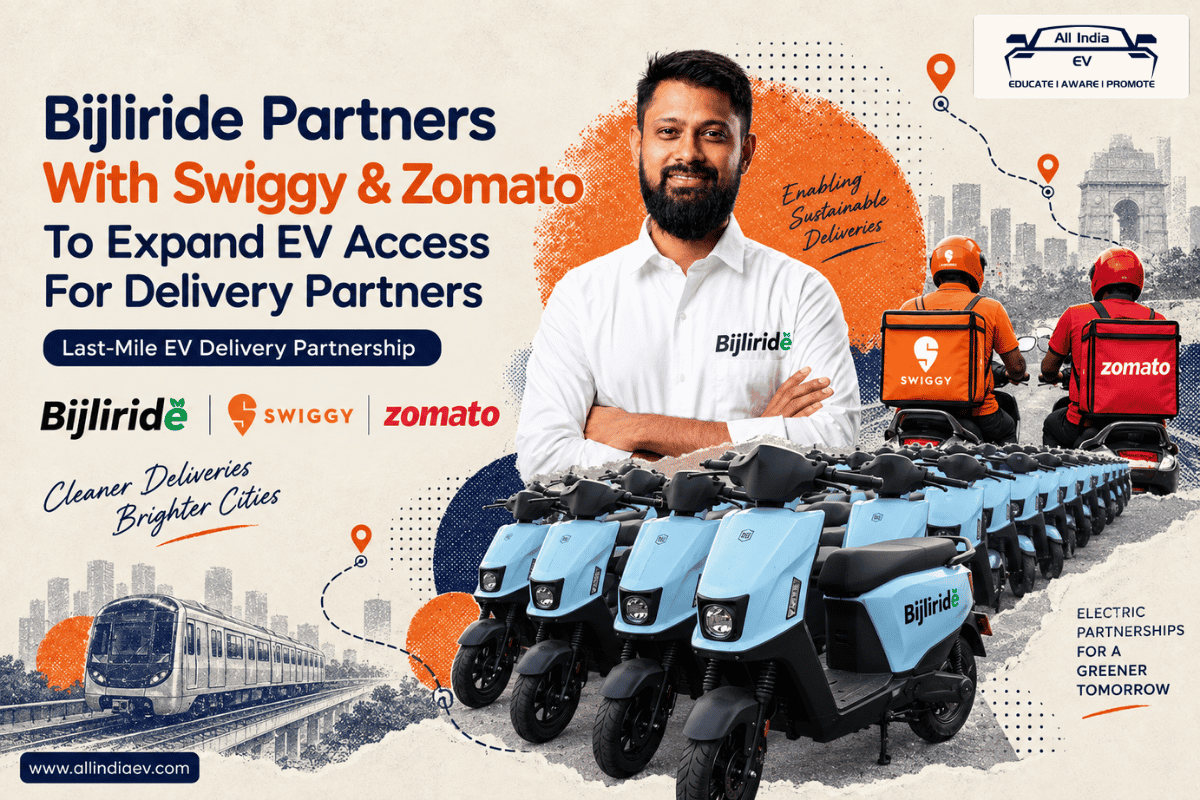
The Bijliride Swiggy Zomato partnership takes that approach directly into the delivery ecosystem. EV mobility platform Bijliride has partnered with Swiggy and Zomato to provide delivery partners access to electric two-wheelers through its rental platform, supported by battery swapping, battery delivery and on-road assistance.
The model targets one of the biggest barriers to EV adoption among gig workers: the upfront cost of buying a vehicle.
Delivery Riders Can Access EVs Without Buying Them
Under the partnership, delivery partners can rent electric two-wheelers through Bijliride rather than purchasing their own EV.
For a delivery rider, however, affordability is only one part of the equation. The vehicle is an earning asset. If it is unavailable because of charging, maintenance or battery issues, income can stop as well.
Bijliride is therefore building the rental offering around an operational support layer that includes battery swapping, doorstep battery delivery, maintenance and 24/7 roadside assistance.
The company said it had deployed more than 5,500 electric vehicles when the partnership was announced. It also reported completing more than 35,000 battery swaps, around 9,000 battery deliveries and recording over 200,000 app downloads.
Bijliride Is Operating Across Five Major Cities
Bijliride currently operates across Hyderabad, Bengaluru, Delhi, Mumbai and Pune, giving the partnership an existing operational footprint rather than starting as a single-city pilot.
The company is positioning itself as more than an EV rental operator. Its broader model combines vehicle rentals with fleet management, battery infrastructure, maintenance, roadside support and technology for commercial mobility operators.
That distinction matters in last-mile delivery.
Providing the scooter is relatively straightforward. Keeping thousands of vehicles available every day while managing batteries, servicing and rider support is where the operational complexity — and potentially the defensibility — of the business sits.
Why Swiggy and Zomato Matter for EV Fleet Economics
Food-delivery platforms generate something EV fleet operators need: repeatable and high vehicle utilisation.
Delivery riders can cover significant distances each day, meaning the running-cost advantage of an electric two-wheeler can accumulate much faster than it would for a low-mileage private owner.
Bijliride says a previous Hyderabad deployment involving 500 EVs used by Zomato partners achieved 98% uptime and reduced monthly operating costs per vehicle from approximately ₹12,500 to ₹7,500. These are company-reported figures rather than independently audited industry benchmarks, but they illustrate the economics Bijliride is trying to replicate at scale.
The partnership also gives Bijliride access to a concentrated user base without having to acquire every rider independently.