

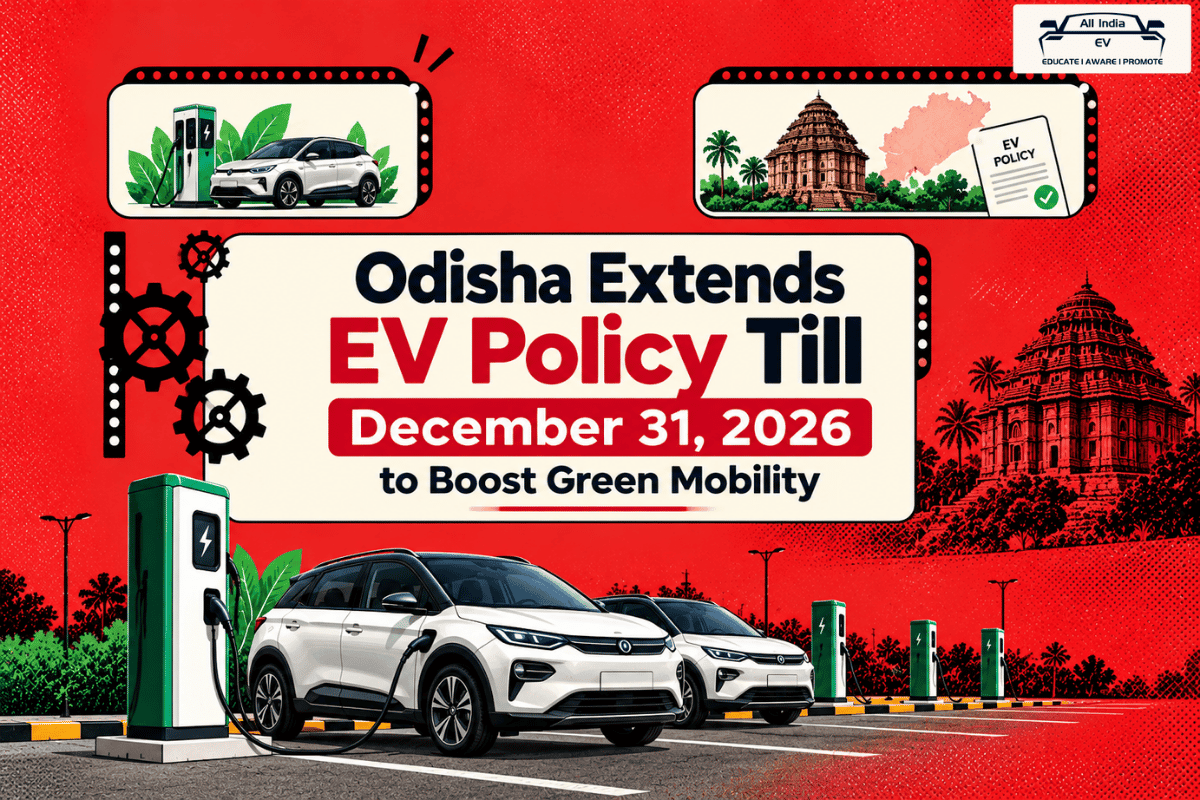
Odisha has extended the validity of its Electric Vehicle (EV) Policy, 2021, until December 31, 2026, to accelerate electric vehicle adoption, promote sustainable transportation and support the state’s transition towards cleaner mobility. The extension provides additional time for consumers and industry stakeholders to benefit from the policy’s incentives.
The state government’s decision reflects its continued focus on reducing carbon emissions and encouraging the shift from conventional petrol and diesel vehicles to electric alternatives. The policy, originally introduced in 2021, aims to increase EV adoption while developing Odisha as a destination for electric vehicle and component manufacturing.
Odisha EV Policy Offers Tax Exemptions and Purchase Subsidies
One of the key benefits of the Odisha EV Policy is the 100% exemption from road tax and vehicle registration fees for eligible electric vehicles. These concessions help reduce the upfront cost of purchasing an EV, making electric mobility more accessible to individual buyers and commercial operators.
The policy also provides financial assistance across multiple vehicle categories, including electric two-wheelers, three-wheelers, four-wheelers, passenger buses and goods carriers. In addition to consumer subsidies, it includes incentives for manufacturing industries, vehicle scrapping incentives and interest subvention on loans, supporting the broader electric mobility ecosystem.
The extension is particularly relevant for prospective EV buyers considering switching to electric vehicles but concerned about the initial purchase price. By retaining the policy framework through the end of 2026, Odisha aims to sustain momentum in electric vehicle adoption.
EV Subsidies Under Odisha’s Policy
The policy outlines purchase incentives for different electric vehicle categories. The reported subsidy structure includes the following benefits:
- Electric two-wheelers: A subsidy of 15% of the vehicle cost, subject to a cap of ₹5,000, with reported battery-capacity-linked limits reaching ₹20,000.
- Electric three-wheelers: A subsidy of 15% of the vehicle cost, capped at ₹10,000, or a flat subsidy of ₹30,000, as reported under the policy.
- Electric four-wheelers: A subsidy of 15% of the vehicle cost, capped at ₹50,000, or ₹10,000 per kWh, subject to a maximum subsidy of ₹1.5 lakh.
- Electric passenger buses: A subsidy of 10% of the vehicle cost, ranging from ₹4 lakh to ₹20 lakh depending on vehicle specifications.
- Electric goods carriers: A reported subsidy of ₹30,000 for the initial eligible units.
Actual benefits depend on applicable eligibility conditions and vehicle categories. Prospective buyers should verify the latest official guidelines before making a purchase.
Support for EV Manufacturing and Green Logistics
Beyond encouraging consumers to purchase electric vehicles, Odisha’s EV Policy, 2021, seeks to strengthen the state’s domestic EV industry. Incentives for manufacturing industries are intended to encourage investment in electric vehicles and their components, potentially supporting employment and the development of related supply chains.
The inclusion of scrapping incentives and interest subvention on loans also broadens the policy’s scope beyond purchase subsidies. These measures can help address some of the financial barriers associated with vehicle replacement and EV adoption.
Electric buses and goods carriers are particularly important to the state’s wider clean-mobility ambitions. Greater electrification of public transport and commercial fleets could help reduce tailpipe emissions, improve urban air quality and lower dependence on conventional fuels.
What the Extension Means for Odisha’s EV Market
The extension provides continuity for Odisha’s electric mobility initiatives through December 2026. For EV buyers, businesses, manufacturers and fleet operators, the continuation of the existing policy framework offers an opportunity to evaluate eligible incentives and plan investments.
However, the extension should be understood as a continuation of the 2021 policy rather than an announcement of entirely new subsidy rates. The immediate focus remains on sustaining EV adoption and supporting the wider ecosystem through the existing incentive structure.
The long-term impact will depend on implementation, consumer awareness, vehicle availability and the development of reliable charging infrastructure across the state. Better coordination between the government, manufacturers, charging operators and commercial fleet owners will be important to maintaining adoption momentum.
As India continues to expand its electric mobility sector, Odisha’s decision to extend its EV policy reinforces the role of state-level incentives in supporting the transition towards cleaner transportation. The extension keeps the existing framework in place until December 31, 2026, giving stakeholders additional time to pursue electric mobility opportunities.