

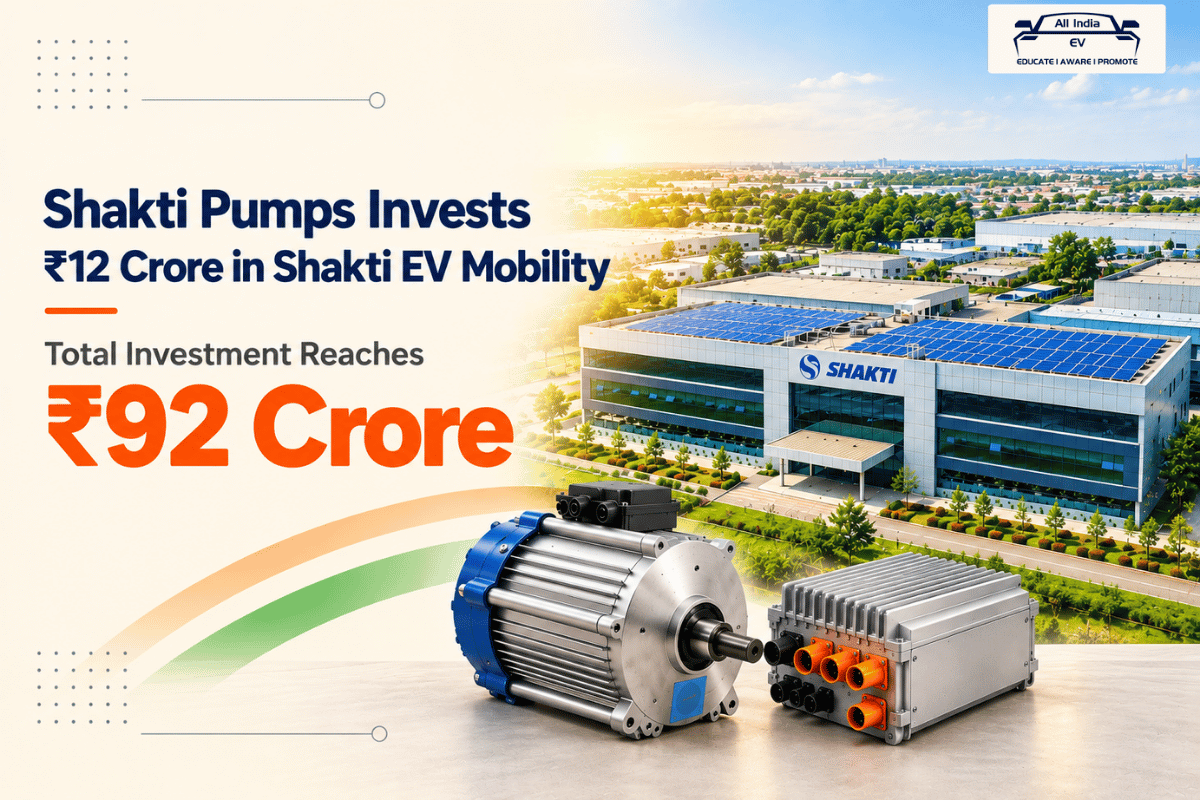
Shakti Pumps (India) Limited has invested an additional ₹12 crore in its wholly owned subsidiary, Shakti EV Mobility Private Limited, increasing its total investment in the electric vehicle business to ₹92 crore. The latest capital infusion aims to support the subsidiary’s business operations and strengthen its presence in India’s growing electric vehicle components market.
According to the company’s regulatory filing, the investment was completed through the subscription of 1.20 crore equity shares, each carrying a face value of ₹10. The transaction was undertaken through cash consideration, with Shakti EV Mobility continuing to operate as a wholly owned subsidiary of Shakti Pumps.
Shakti EV Mobility Focuses on EV Components Manufacturing
Established on December 16, 2021, Shakti EV Mobility is engaged in manufacturing electric vehicle motors, chargers and controllers. Its product portfolio caters to multiple vehicle categories, including electric two-wheelers, three-wheelers, four-wheelers and special-purpose electric vehicles.
By developing capabilities in EV component manufacturing, the subsidiary is positioning itself to serve the evolving requirements of electric vehicle manufacturers. Motors, controllers and charging equipment are essential components of electric mobility systems, making domestic manufacturing capabilities increasingly important as India’s EV ecosystem expands.
The latest investment reflects Shakti Pumps’ continued commitment to developing its electric mobility business alongside its established operations in the pump and motor industry.
EV Subsidiary Records Significant Turnover Growth
Shakti EV Mobility reported a turnover of ₹24.25 crore in the financial year 2025-26, representing a substantial increase compared with the previous financial year.
The subsidiary recorded a turnover of ₹3.73 crore in FY2024-25 and ₹4.30 crore in FY2023-24. The latest figures indicate a significant increase in business activity during FY2025-26.
As of March 31, 2026, the company’s total assets stood at approximately ₹128.57 crore.
The increase in turnover highlights the subsidiary’s progress as it develops its EV component manufacturing operations. Continued investment could support its efforts to strengthen production capabilities and explore additional opportunities across different electric vehicle segments.
However, the company’s future growth will depend on factors such as customer demand, manufacturing capacity, business execution and the pace of electric vehicle adoption in India.
Shakti Pumps Continues to Expand Its EV Business
The additional ₹12 crore investment forms part of Shakti Pumps’ broader strategy to establish a presence in the electric mobility sector. By leveraging its experience in motors and related technologies, the company is expanding into components required for the growing EV industry.
Electric two-wheelers and three-wheelers represent important segments of India’s electrification drive, while demand for electric commercial vehicles and other specialised applications continues to create opportunities for component manufacturers.
Shakti EV Mobility’s presence across multiple vehicle categories could provide opportunities to serve a broader customer base as the market develops.
The company stated that the transaction did not require government or regulatory approvals. Following the investment, Shakti EV Mobility remains fully owned by Shakti Pumps.
Outlook for Shakti EV Mobility
The latest capital infusion underscores Shakti Pumps’ intention to strengthen its position in India’s electric vehicle components industry. With its expanding investment commitment and reported turnover growth, Shakti EV Mobility is developing its role within the company’s long-term business strategy.
As India’s EV market continues to evolve, the subsidiary’s ability to scale manufacturing, develop reliable products and establish relationships with vehicle manufacturers will be important to its future performance.
The ₹92 crore cumulative investment marks another step in Shakti Pumps’ efforts to expand beyond its traditional business and participate in the country’s transition towards electric mobility.