

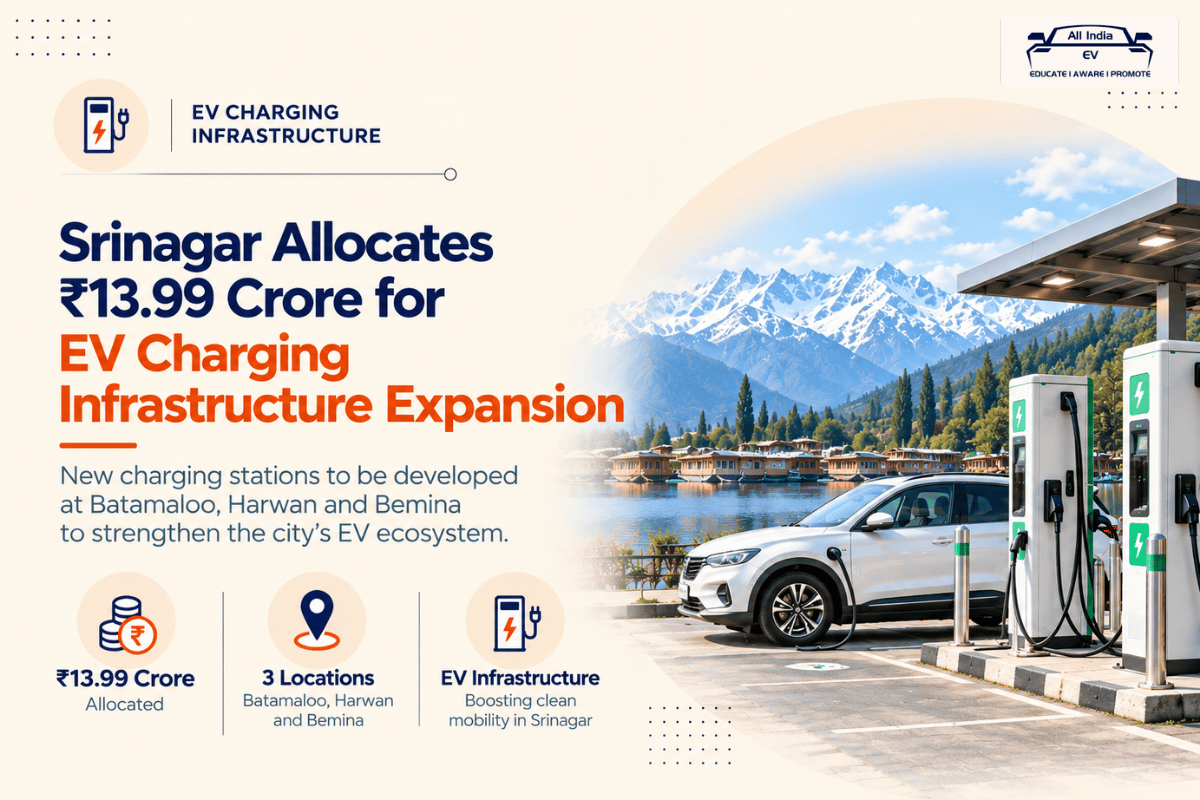
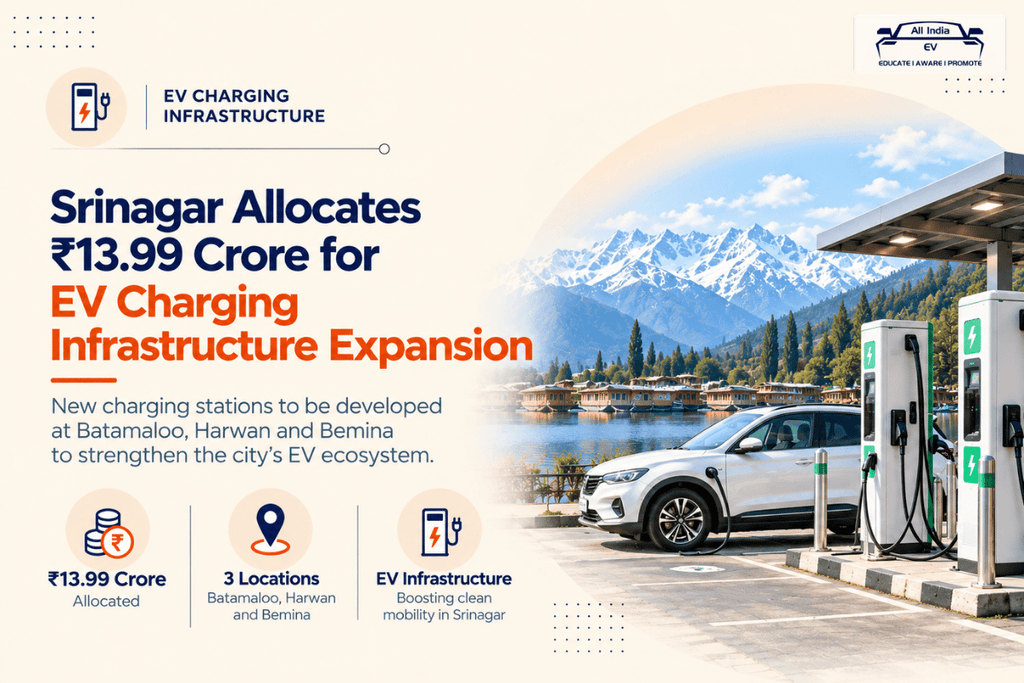
Srinagar is taking another step towards electric mobility, with the Jammu and Kashmir administration allocating ₹13.99 crore for expanding electric vehicle (EV) charging infrastructure across the city. Charging stations are being developed at Batamaloo, Harwan and Bemina as part of the initiative to strengthen the region’s EV ecosystem.
The investment comes as the administration focuses on improving urban mobility, easing traffic congestion and strengthening road safety in Srinagar and Jammu. The development is expected to support the gradual expansion of electric mobility by improving access to charging facilities for electric cars, buses and other compatible vehicles.
Existing Charging Stations Support the Expansion Plan
According to the administration, the Pantha Chowk charging station has been developed with the capacity to accommodate 100 buses, marking an important step towards supporting electric public transport. Meanwhile, the charging station at Zoonimar is operational and can serve 15 vehicles.
Additional charging facilities at Batamaloo, Harwan and Bemina are under development using the ₹13.99-crore allocation. Once completed and operational, these facilities could improve charging accessibility across key locations in Srinagar and help address infrastructure requirements as EV adoption increases.
The development was reviewed during a meeting of the Multi-Disciplinary Committee (MDC) on Traffic Management, chaired by Jammu and Kashmir Chief Secretary Atal Dulloo on October 16, 2026. The meeting assessed several measures related to public transport, road infrastructure, parking management, traffic enforcement and the implementation of road safety recommendations.
Jammu Also Advances Electric Mobility Infrastructure
Alongside Srinagar’s charging network expansion, Jammu is progressing with electric public transport infrastructure under the centrally supported PM E-Drive scheme. The administration has allocated ₹15 crore for the initiative, and sites have been handed over to the Transport Department. Civil works for an electric bus depot are also underway.
These parallel developments indicate a broader effort to prepare both cities for increased electric vehicle adoption. Charging infrastructure and dedicated bus facilities will be important to supporting the transition, particularly as public transport operators and private vehicle owners consider switching to electric mobility.
Traffic Management and Road Safety Remain Priorities
The committee also reviewed measures to improve traffic flow and manage parking in both cities. In Srinagar, an IT-based Automatic Number Plate Recognition (ANPR) system is monitoring 300 parking spaces across important locations. The administration is also working to improve parking management and reduce congestion caused by unregulated roadside parking.
Chief Secretary Atal Dulloo directed municipal corporations to inspect traffic signage regularly and identify additional parking spaces. He also called for upgrading the Integrated Traffic Management System (ITMS) in Jammu and Srinagar, including the proposed introduction of facial recognition capabilities to strengthen enforcement and road safety.
The Transport Department reported that 68,000 vehicle registration certificates had been cancelled because of repeated violations. Authorities were also directed to analyse accident data to identify high-risk locations and deploy traffic personnel at accident-prone areas.
What This Means for EV Adoption in Srinagar
The ₹13.99-crore investment represents an important infrastructure development for Srinagar’s electric mobility ambitions. However, the long-term impact will depend on the timely completion of charging stations, their operational reliability and the availability of charging facilities in locations convenient for EV users.
For electric bus operators, reliable charging infrastructure is particularly important for maintaining schedules and ensuring efficient fleet utilisation. Private EV owners could also benefit from a more accessible public charging network, potentially reducing concerns about charging availability during daily travel.
As Jammu and Kashmir advances its broader electric mobility plans, Srinagar’s charging infrastructure expansion could help establish the foundation for wider EV adoption. The focus will now be on completing the ongoing projects and ensuring that the new facilities deliver dependable charging services to support cleaner and more sustainable urban transportation.