

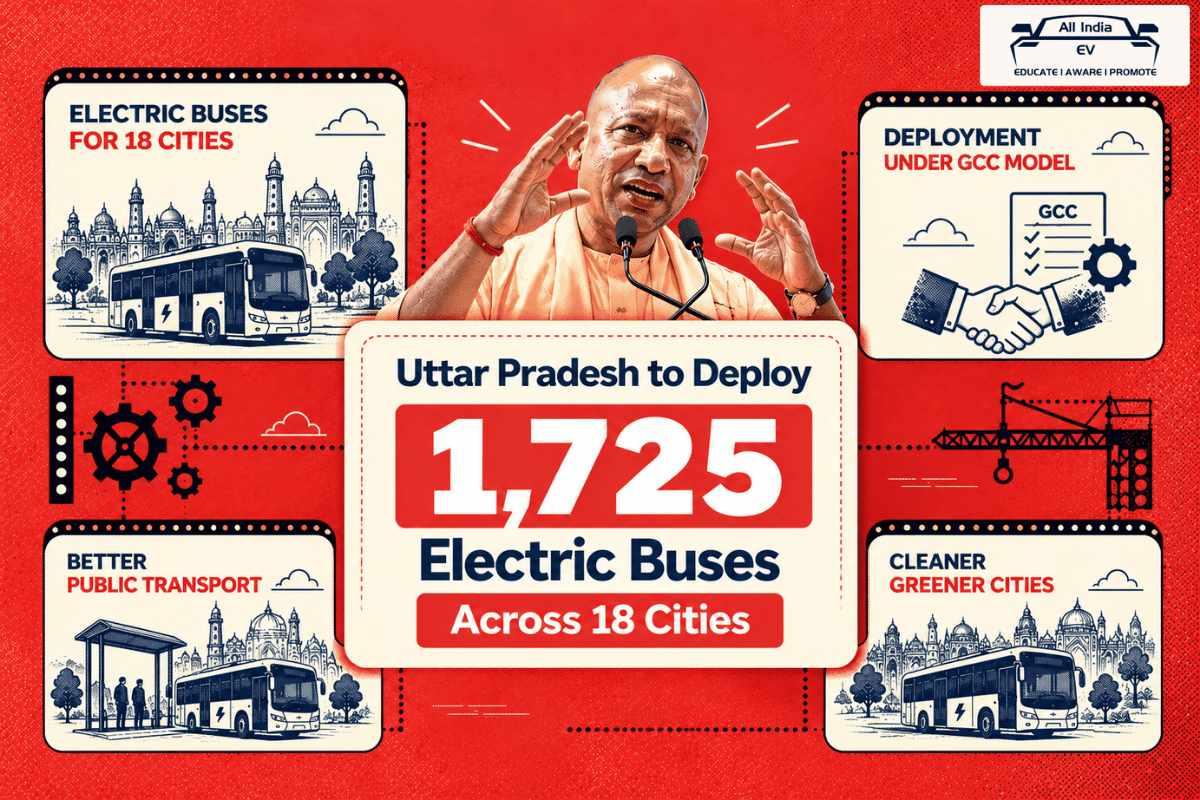
Uttar Pradesh is set to expand its electric public transportation network with the deployment of 1,725 air-conditioned electric buses across 18 cities. The state government has approved the initiative under the Gross Cost Contract (GCC) model to strengthen urban mobility, improve passenger convenience and promote cleaner transportation.
The decision was approved at a state Cabinet meeting chaired by Chief Minister Yogi Adityanath on October 9, 2026. The project will introduce electric buses of nine-metre and 12-metre lengths, with operations planned under contracts lasting 12 years from the commencement of commercial services.
18 Cities to Benefit from Uttar Pradesh’s Electric Bus Expansion
The new electric buses will operate in Agra, Aligarh, Ayodhya, Bareilly, Firozabad, Ghaziabad, Gorakhpur, Jhansi, Kanpur, Lucknow, Mathura-Vrindavan, Meerut, Moradabad, Prayagraj, Shahjahanpur, Saharanpur, Varanasi and Noida, including Jewar.
Lucknow and Kanpur will receive the largest allocations, with 300 electric buses each. Varanasi will get 250 buses, while Gorakhpur will receive 150.
Agra, Ghaziabad, Meerut and Noida, including Jewar, will receive 100 buses each. Mathura-Vrindavan, Ayodhya and Prayagraj will be allocated 50 buses each. Aligarh, Firozabad, Bareilly, Shahjahanpur, Moradabad, Saharanpur and Jhansi will receive 25 buses each.
According to Urban Development Minister Arvind Kumar Sharma, the additional fleet is expected to improve public transport availability and provide passengers with more convenient urban travel options.
GCC Model to Encourage Private Investment
Under the Gross Cost Contract model, private operators will be responsible for procuring electric buses, arranging chargers for charging stations, appointing drivers and technical personnel, and managing daily operations and maintenance.
Operators will receive operation and maintenance payments based on predefined performance standards. The state government will retain control over passenger fares, allowing it to determine user charges while private companies manage service delivery.
The government has also approved financial support to encourage participation from private operators. A subsidy of ₹40 lakh will be provided for each 12-metre electric bus, while each nine-metre bus will receive ₹35 lakh. The respective municipal corporations and the Noida Authority will provide land free of cost, wherever required, for constructing bus depots.
Private operators will be selected through a tendering process, with competition expected to encourage operational efficiency, punctuality, improved passenger services and the adoption of newer technologies.
Boost for Electric Mobility and Local Manufacturing
The electric bus expansion is expected to support Uttar Pradesh’s transition towards cleaner public transportation. Replacing conventional fuel-powered buses with electric alternatives can help reduce tailpipe emissions and noise pollution, particularly in densely populated urban areas.
The initiative could also create opportunities across the electric vehicle ecosystem, including bus manufacturing, charging infrastructure, vehicle maintenance and technical services.
The state government has proposed giving preference to electric buses manufactured in Uttar Pradesh at the lowest evaluated tender price, subject to its procurement policy. This approach could support local manufacturers, strengthen the state’s EV supply chain and generate employment opportunities.
With 1,725 additional electric buses planned across 18 cities, Uttar Pradesh is taking another step towards expanding electric public transport. The project’s long-term impact will depend on timely deployment, reliable charging infrastructure, effective fleet management and consistent service quality.