
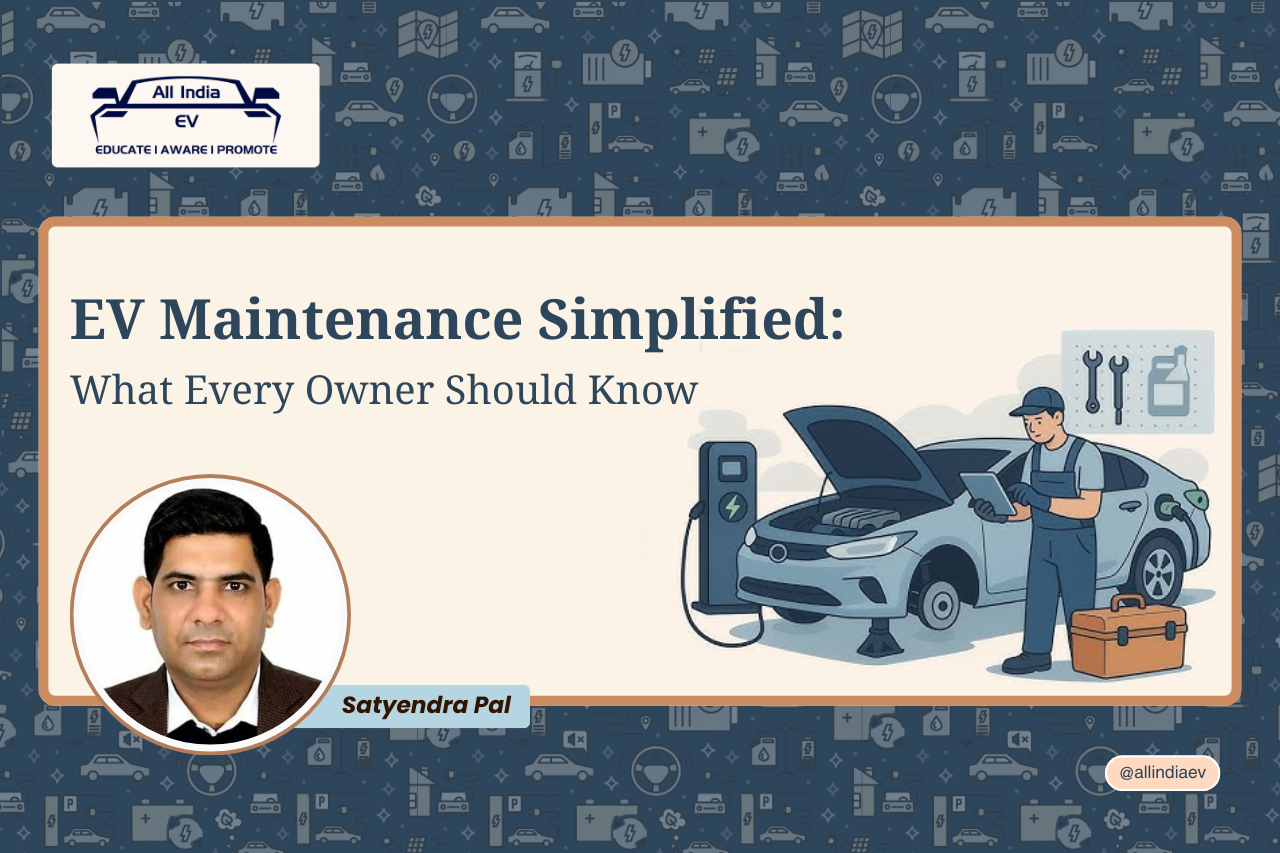

Electric Vehicles (EVs) have redefined the way we drive-quiet, efficient, and environmentally conscious. Yet, one question still lingers for many new owners: “How do I maintain my EV?” The good news is that electric vehicles require far less upkeep than traditional petrol or diesel cars. Let’s break down what every EV owner should know to keep their vehicle running smoothly for years.
- 1. Fewer Moving Parts, Fewer Headaches
- 2. Battery Health Is Everything
- 3. Brake System: Lasts Longer with Regeneration
- 4. Tyre Care Still Matters
- 5. Cooling Systems and Fluids
- 6. Software: Your New Service Schedule
- 7. Cabin Filters and HVAC
- 8. Charging Equipment Check
- 9. Annual Inspection Is Still Key
- 10. The Cost Advantage
- In Conclusion
- Case Study: Real-World EV Ownership Experience
- Key Learning:
- Conclusion:
1. Fewer Moving Parts, Fewer Headaches
Unlike internal combustion engines (ICE), EVs don’t have hundreds of components that require constant attention—no oil changes, fuel filters, or exhaust systems to worry about. Most electric cars have 20 or fewer moving parts in the drivetrain compared to over 2,000 in a conventional engine. This simplicity drastically cuts down on wear and tear.
Key takeaway: Expect fewer visits to the service center and more peace of mind.
2. Battery Health Is Everything
The battery pack is the heart of your EV. Modern lithium-ion batteries are built to last, typically offering 8–10 years or 1,50,000 km warranties, but how you use and charge your vehicle makes a difference.
Tips for longevity:
- Avoid frequent 100% fast charges; aim for 20%–80% charge cycles when possible.
- Park in shaded or covered areas to protect the battery from extreme heat.
- Use regenerative braking to extend battery efficiency and range.
3. Brake System: Lasts Longer with Regeneration
EVs use regenerative braking, a system that converts braking energy back into battery power. This not only boosts efficiency but also reduces brake pad wear significantly.
Pro tip: Even though brakes last longer, get them inspected annually for dust, rust, or uneven wear-especially if you drive infrequently.
More EV News
4. Tyre Care Still Matters
EVs deliver instant torque, which can cause faster tyre wear if not monitored. Moreover, the added battery weight means tyres carry more load.
Maintenance essentials:
- Rotate tyres every 8,000–10,000 km.
- Keep them properly inflated-check at least once a month.
- Use EV-rated tyres for optimal grip and noise reduction.
5. Cooling Systems and Fluids
Yes, EVs still have a few fluids-mainly for battery cooling, brake fluid, and sometimes windshield washer fluid. The coolant helps regulate battery temperature and should be checked or replaced as per manufacturer guidelines (often every 3–5 years).
6. Software: Your New Service Schedule
Modern EVs are as much software-driven as they are mechanical. Over-the-air (OTA) updates can enhance performance, improve range, and even add new features.
Advice: Keep your EV connected to Wi-Fi or mobile data when parked so it can automatically install software updates.
7. Cabin Filters and HVAC
Your air cabin filter keeps the air inside fresh and free of dust and pollutants. Replace it once or twice a year depending on driving conditions. The HVAC system, crucial for maintaining cabin temperature and battery conditioning, also deserves periodic checks.
8. Charging Equipment Check
Inspect your charging cable and port for debris or wear. Clean the connectors gently and make sure there’s no corrosion. If you have a home charging station, schedule a professional inspection annually.
9. Annual Inspection Is Still Key
Even though EVs need less maintenance, it’s wise to get an annual service check-up. This typically includes:
- Battery health diagnostics
- Tyre and brake inspection
- Software updates
- Cooling system check
10. The Cost Advantage
According to several studies, EV maintenance costs are 30–50% lower than those of petrol or diesel cars. Over a few years, this translates to significant savings-both in your wallet and the planet’s carbon budget.
In Conclusion
Owning an electric vehicle is more about smart upkeep than regular mechanical maintenance. Stay mindful of battery care, software updates, and tyre health, and your EV will reward you with years of smooth, silent, and sustainable driving.
Because when it comes to EVs, less maintenance truly means more miles of effortless motion.
Case Study: Real-World EV Ownership Experience
Owner Profile: Fleet Operator using 10 Electric Commercial Vehicles (1.5T category)
Operating Region: Urban & Semi-Urban India Usage: 120–150 km daily per vehicle Challenge:
The operator transitioned from diesel vehicles to EVs with concerns around battery life, service reliability, and maintenance cost under high daily usage.
Implementation:
- Followed 20%–80% charging discipline with limited fast charging
- Ensured timely software updates and quarterly battery diagnostics
- Regular tyre rotation and brake inspection due to regenerative braking
- Annual cooling system check as per OEM recommendation
Results After 18 Months:
- 42% reduction in maintenance cost compared to diesel fleet
- Brake pad replacement interval extended by over 60%
- Battery health remained above 92% across all vehicles
- Zero unscheduled breakdowns reported
Key Learning:
Smart charging habits, basic inspections, and software updates are sufficient to ensure long- term EV reliability. The case clearly demonstrates that EVs are not only environmentally sustainable but also, operationally economical when maintained correctly.
Conclusion:
Owning an electric vehicle is more about smart upkeep than regular mechanical maintenance. With mindful battery care, tyre management, and digital servicing, EVs deliver superior performance and lower lifecycle cost—making them the future of mobility.