

New Joint Development Agreement Aims to Fast-Track High-Energy Lithium Metal Batteries for Future Electric Vehicles
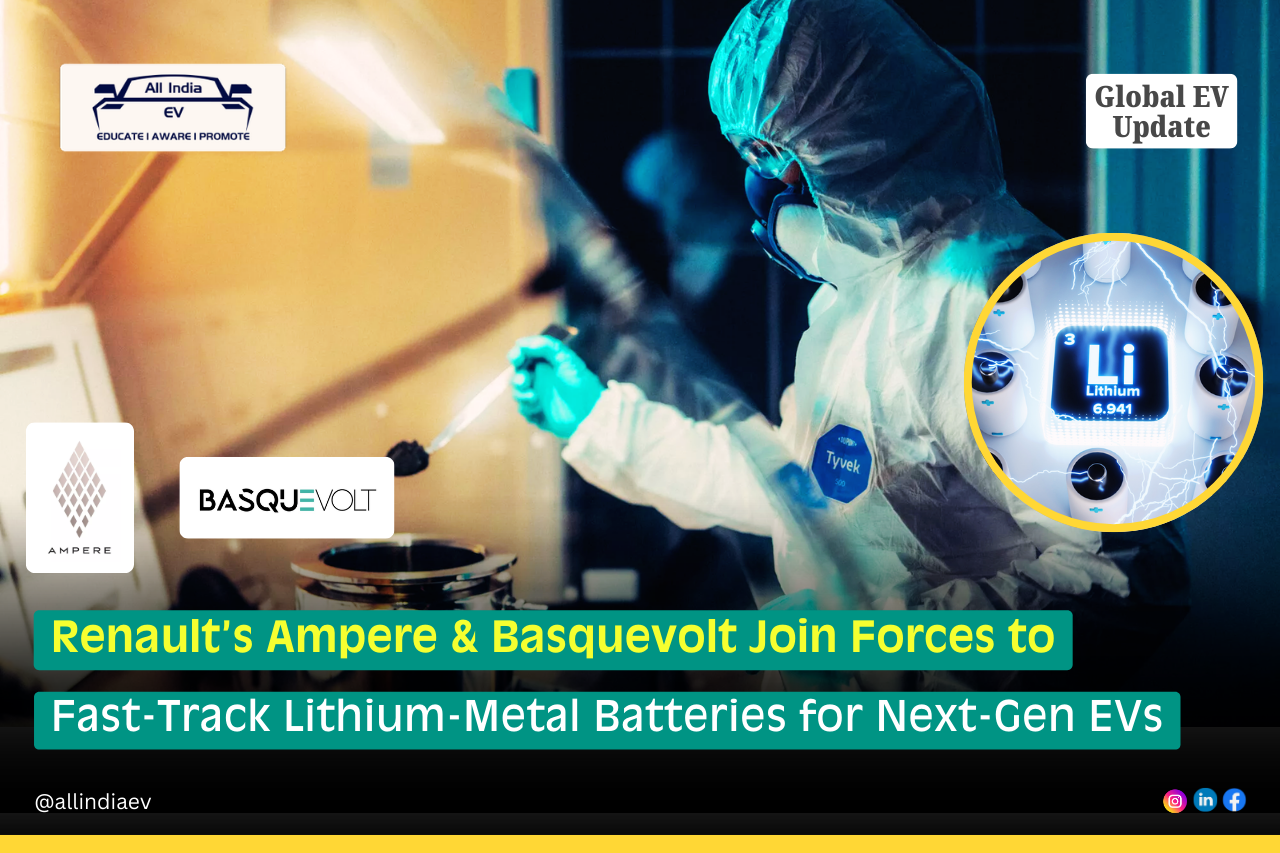
In a move that could help redefine electric vehicle performance and cost structures, Ampere, the dedicated electric vehicle and software division of Renault Group, has signed a Joint Development Agreement (JDA) with Spanish energy innovator Basquevolt to accelerate the development and validation of lithium metal-based battery technology for the next generation of electric cars.
The partnership, announced on February 23, 2026, signals a significant push by both companies to advance battery technology beyond current lithium-ion standards and bring a transformative leap in energy storage performance closer to commercial reality.
A Leap in Battery Technology
At the heart of the agreement is a focus on lithium metal-based batteries, which are widely seen as the next step forward from traditional lithium-ion cells that use liquid electrolytes. Compared with conventional batteries, lithium metal designs promise higher energy density, lighter weight, improved thermal stability, and faster charging all critical attributes for future electric vehicles seeking longer range and better real-world performance.
Rather than relying on standard liquid electrolytes, the technology under development incorporates a polymer electrolyte alongside advanced anode materials. This novel combination could make battery packs more compact and efficient, helping EVs deliver greater driving range without larger pack sizes.
In addition to performance gains, the collaboration aims to simplify manufacturing processes. Basquevolt’s technology is engineered to enable cells to be produced through more efficient methods, potentially cutting energy use and capital investment in battery production. Early indications suggest that manufacturing costs could fall by roughly 30 % per gigawatt hour (GWh) and energy use could decrease by an estimated 30 % per kilowatt-hour produced compared with current battery factories.
Strategic Partnership and Industry Implications
The joint development project builds on more than 12 months of collaboration between Ampere and Basquevolt, demonstrating early promise in adapting next-gen battery chemistry to automotive conditions. Leaders from both organisations emphasised that the goal now is to validate the technology in real-world environments and push closer to pre-commercial prototypes often referred to as Pre-A Sample EV requirements that could eventually be integrated into future vehicle platforms.
“This next phase with Ampere marks a major milestone in our mission to bring polymer electrolyte technology closer to the mass market,” said Pablo Fernández, CEO of Basquevolt. “Our focus remains on proving real-world performance and accelerating the transition to next-generation EV batteries that meet the evolving needs of customers.”
More EV News

Nicolas Racquet, Vice President of Vehicle & Powertrain Engineering at Ampere, added that combining Basquevolt’s cutting-edge cell chemistry expertise with Ampere’s automotive engineering know-how could help deliver meaningful performance and cost advantages in future EVs.
Why This Matters for the EV Industry
Battery innovations are widely recognised as a key bottleneck and opportunity area in the shift toward widespread electric mobility. Current lithium-ion cells while effective are approaching theoretical limits in terms of energy density and cost efficiency. Lithium metal-based systems, which replace the traditional graphite anode with lithium metal, offer a pathway to significantly more energy per unit of weight and volume.
By moving forward with a joint development agreement rather than a simple supply contract, Renault Group and Basquevolt are signalling a commitment to co-creating core technology rather than buying off-the-shelf battery solutions. This approach could help Renault strengthen its competitive position in the global EV market, where range, charging speed, and total cost of ownership are critical to buyer decisions.
Future Outlook and Challenges Ahead
While the technical potential is clear, translating laboratory breakthroughs into mass-produced automotive batteries remains a formidable engineering and commercial challenge. Next-generation battery systems must not only deliver improved performance but also prove reliable, safe, and economically viable at scale.
Nevertheless, analysts and industry observers say partnerships like this one are exactly what the EV sector needs to maintain momentum in energy storage innovation, reduce reliance on existing battery chemistries, and help European automakers build more resilient, self-reliant supply chains.
As Ampere and Basquevolt continue their collaboration, the industry will be watching closely both for advances in battery performance and for signs that this next wave of electric vehicle technology can accelerate mainstream adoption in the years ahead.