

With a cheaper entry price, swappable batteries and a factory being scaled threefold, Hero MotoCorp’s electric brand is no longer a late entrant playing catch-up.
A year ago, VIDA was easy to file under “promising, but small.” Hero MotoCorp had arrived late to India’s electric scooter market, and its EV-native rivals seemed to have a commanding head start. The latest numbers suggest that picture is out of date.
In the first quarter of FY27, VIDA recorded 57,058 retail sales, up from 21,652 in the same quarter a year earlier. Its VAHAN market share rose from 6.9% to 10.9%, according to Hero’s investor presentation. Behind those figures is a strategy aimed at the three things that most often keep Indian buyers from choosing an electric scooter: the upfront price, the difficulty of charging, and the risk that the vehicle isn’t available when they want it.
Momentum that is hard to dismiss
The clearest sign of change is how quickly the milestones now arrive. VIDA took roughly 33 months to sell its first 100,000 vehicles and a little over seven months to reach 200,000. The next 100,000 took about five, and the brand crossed 300,000 cumulative retail sales in early August 2026.
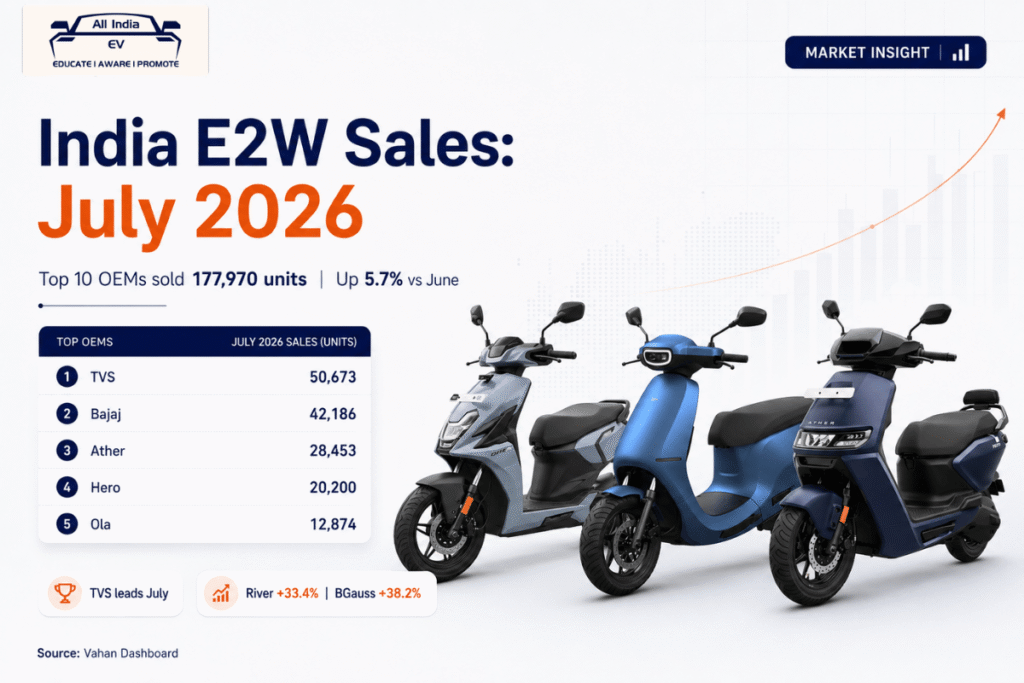
Monthly numbers tell a similar story, with some nuance. July 2026 was VIDA’s best month to date, with 22,989 retail units. August cooled to 18,978 registrations, down 17% from July, though still 38% higher than a year earlier and good for about 10% of the electric two-wheeler market. Across January to August, VIDA registered 148,069 units, which puts it on course to pass 200,000 annual retail sales for the first time if demand holds.
A month-on-month dip after a record is not a cause for alarm. What matters is that VIDA is now competing head-on with TVS, Bajaj and Ather rather than trailing them from a distance.
A product range that widens the funnel
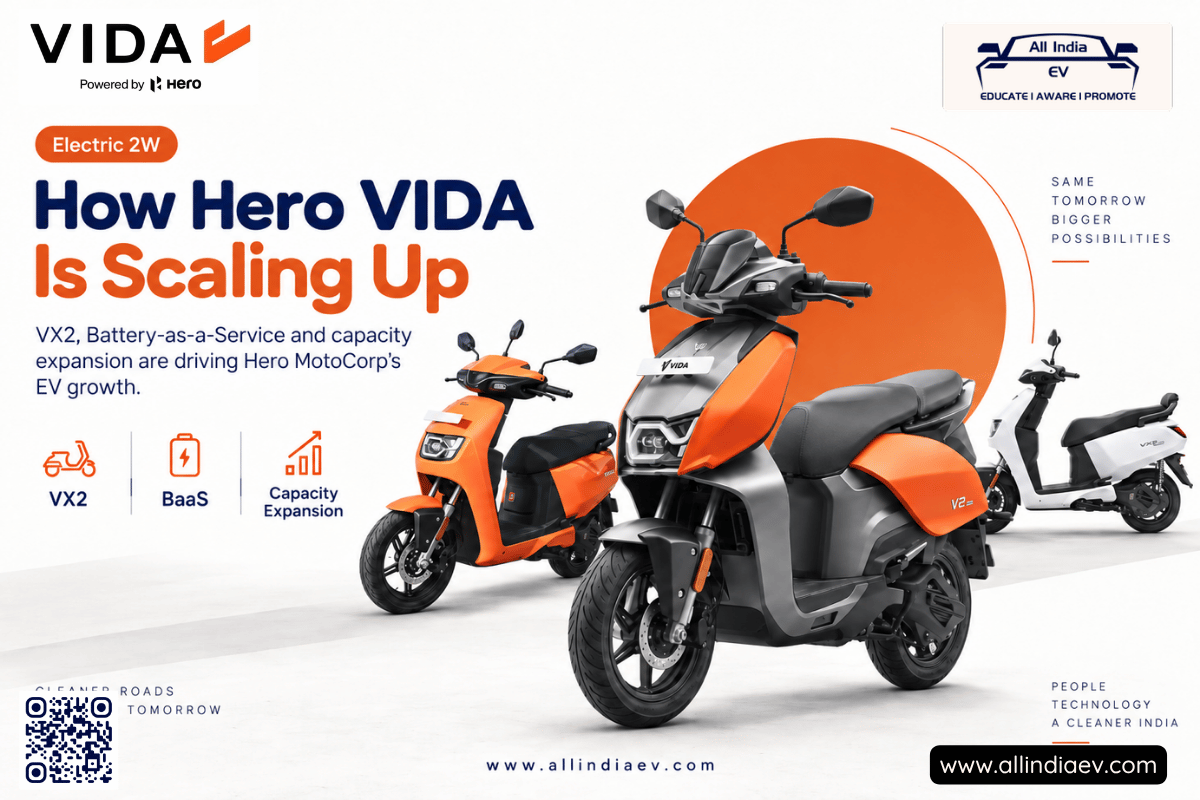
The VX2, launched in July 2025, marked a shift in how Hero positioned its electric scooters. Rather than selling EVs as premium technology, the VX2 was pitched on affordability and everyday usability. It debuted in Go and Plus variants, with removable batteries and a Battery-as-a-Service (BaaS) option that lowered the sticker price considerably.
Hero has since broadened the line-up. The VX2 Plus 4.4 kWh sits higher in the range with an IDC range of around 187 km, while the VX2 Go FB pairs a fixed 3.1 kWh battery with roughly 128 km of IDC range. The result is a portfolio that can serve buyers who want removable batteries, those who prefer a fixed pack, those chasing range, and those who simply want to own the whole vehicle outright. As the market moves beyond early adopters, that flexibility is likely to matter more.
Rethinking the battery
BaaS may be the most consequential idea in Hero’s EV playbook. Customers subscribe to the battery separately rather than buying it with the scooter, so the headline price falls sharply. Hero’s Q1 FY27 presentation put BaaS pricing at around ₹0.9 per kilometre.
This changes the terms of the comparison a buyer makes. Instead of weighing an expensive EV against a cheaper petrol scooter, the buyer weighs a vehicle price plus a running cost. That is a far more familiar way for Indian households to think about mobility, and it takes some of the sting out of the upfront premium.
Charging is addressed in a similar spirit. Removable batteries that work with a standard 5A plug let customers without dedicated parking take the pack indoors, or charge it elsewhere. Together with public fast charging, that gives VIDA three routes to a full battery: at home, off the vehicle, or on the road. Platforms built around fixed batteries cannot offer that mix.
Capacity, and a signal about demand
Hero’s willingness to expand production says much about its confidence. Monthly VIDA capacity stood at roughly 15,000 units at the start of Q1 FY27 and had climbed to close to 30,000 by early August. The target is about 45,000 units per month before the end of the financial year.
Management has also stressed that this is not inventory being pushed onto dealers. On the Q1 earnings call, CEO Harshavardhan Chitale said channel inventory was running at only two to three days, depending on the region, and that vehicles supplied were being retailed quickly. That distinction matters. Wholesale dispatches can be flattered by stocking dealerships, but retail registrations are a much better test of real consumer demand.
The advantage of an incumbent
Building a good electric scooter is only part of the challenge. The rest is sales, service, spare parts, financing, customer support and charging access, and this is where Hero’s decades in mass-market two-wheelers count for something.
By June 2026, VIDA had 739 locations across 456 cities and access to around 5,900 fast-charging points. The more revealing statistic may be local: VIDA ranked in the top two in 62 towns and held more than 20% share in 53 of them. Its national share, in other words, understates its strength where it is best established. If Hero can reproduce those results across the rest of its vast dealer footprint, the next phase of growth may come less from new products than from deeper penetration of geography it already covers.
The economics still have to work
Volume alone does not make a business. In Q1 FY27, Hero booked roughly ₹48 crore in Production Linked Incentive benefits. About 60% of VIDA’s portfolio qualified during the quarter, and the company expects its entire EV range to be eligible by December 2026. As electric scooter pricing gets more competitive, incentives, localisation and scale give manufacturers room either to protect margins or to cut prices. Hero says unit economics are improving as volumes rise, and that will ultimately decide whether VIDA is a fast-growing division or a financially meaningful part of the group.
The real question
VIDA was late to the market, and for a while that looked like a handicap. But the market is increasingly rewarding companies that combine breadth of product, manufacturing scale, service reach, dependable supply and sensible ownership costs. The VX2 widened the audience, BaaS chipped away at the price barrier, removable batteries eased the charging problem, and Hero’s dealer network offers a route into hundreds of cities.
The question is no longer whether Hero can establish VIDA. It is whether the company can carry its strengths in manufacturing, distribution and mass-market two-wheelers into EVs while keeping pace with TVS, Bajaj, Ather and a shifting field of smaller challengers. If it can, VIDA will be far more than Hero’s electric sub-brand. It could become one of the company’s main engines of growth in the next chapter of Indian two-wheelers.