

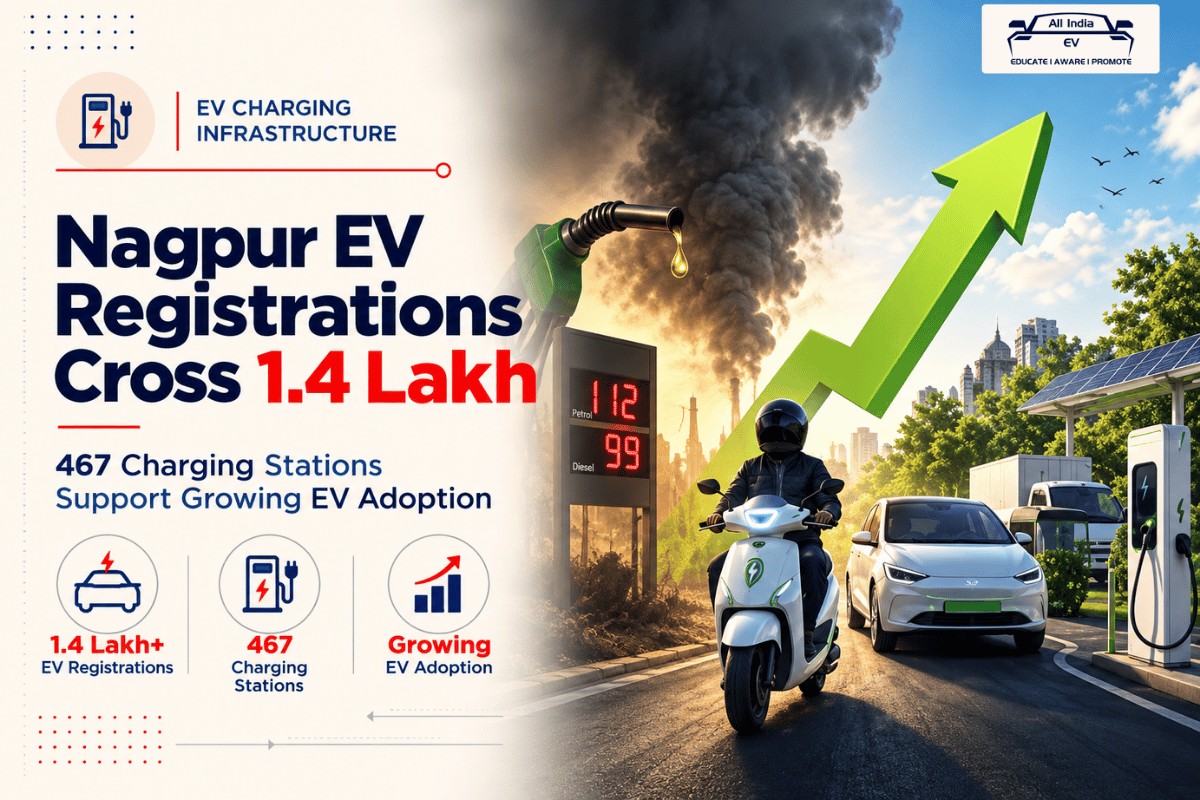
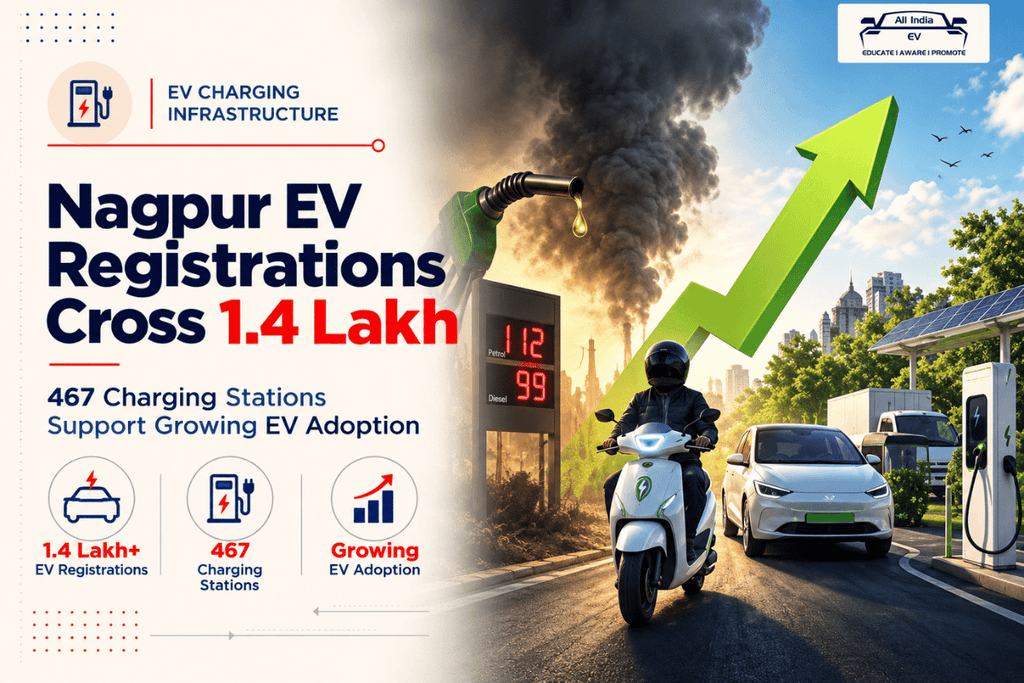
Nagpur is witnessing a significant shift towards electric mobility, with cumulative electric vehicle (EV) registrations crossing 1.41 lakh as of September 2026. The growing adoption of electric vehicles, rising conventional fuel prices and increasing rooftop solar installations are contributing to the transition towards cleaner transportation in Nagpur district, Maharashtra. According to reported official data, the district has also established 467 EV charging stations to support the expanding electric vehicle population.
Nagpur Records Strong Growth in EV Registrations
Data from Nagpur’s three Regional Transport Offices (RTOs) highlights the growing popularity of electric mobility across the district. Nagpur East RTO (MH-49) leads with 65,479 registered electric vehicles, followed by Nagpur Rural RTO (MH-40) with 53,112 registrations. Nagpur City RTO (MH-31) accounts for another 23,205 electric vehicles.
Electric two-wheelers continue to drive EV adoption, as consumers increasingly consider them an alternative to petrol-powered scooters and motorcycles. The narrowing price difference between electric and conventional two-wheelers is making the transition more attractive to daily commuters.
Registration figures published for recent financial years also indicate sustained growth. Nagpur recorded 15,152 EV registrations in 2022–23, increasing to 23,258 in 2023–24 and 25,323 in 2024–25. Registrations reached 25,370 in 2025–26, while another 20,247 electric vehicles were reportedly registered between April and September 2026.
Note: The published report’s year-wise figures total approximately 1.09 lakh, which differs from the reported cumulative RTO total of 1.41 lakh. The discrepancy requires clarification.
Rising Fuel Prices Encourage Electric Mobility
Higher petrol and diesel prices are another factor encouraging consumers to explore electric vehicles. With petrol prices reported at around ₹112 per litre and diesel at approximately ₹99 per litre in Nagpur, EVs offer potential savings on everyday travel expenses.
Electric vehicles generally have lower energy and routine maintenance costs than comparable petrol and diesel vehicles. These advantages are particularly relevant for commuters covering regular distances and commercial operators seeking to reduce operating expenses.
Beyond private electric two-wheelers and cars, electric passenger vehicles, e-rickshaws and electric goods carriers are also gaining traction. For businesses involved in passenger transportation and local deliveries, switching to electric vehicles can help improve operating economics while reducing dependence on conventional fuels.
Rooftop Solar Adds to EV Adoption
The growing installation of rooftop solar systems is creating another opportunity for electric mobility. Households with solar power can potentially use the electricity generated at home to charge their electric vehicles, helping reduce dependence on grid electricity and conventional fuels.
Combining rooftop solar with EV charging can improve the economics of electric vehicle ownership, particularly for households with predictable daily travel requirements and suitable home-charging facilities.
Charging Infrastructure Expansion Remains Important
Nagpur has established 467 EV charging stations, with the Maharashtra State Electricity Distribution Company Limited (MSEDCL) serving as the nodal agency responsible for developing charging infrastructure.
However, the reported figures suggest that infrastructure expansion must continue alongside rising EV adoption. Based on 1.41 lakh registered EVs and 467 charging stations, the district has approximately 304 registered electric vehicles per station.
The actual availability of charging facilities depends on several factors, including the number of charging points at each location, charging speeds, station accessibility and geographical distribution. Expanding reliable public charging facilities will therefore be important for supporting private EV owners and commercial fleet operators.
Nagpur’s Electric Mobility Transition
Nagpur’s growing EV registrations highlight the increasing acceptance of electric mobility in Maharashtra. Continued investment in charging infrastructure, better charging accessibility and greater integration of renewable energy could further support this transition.
As electric two-wheelers and commercial EVs gain popularity, coordinated efforts by transport authorities, electricity providers and infrastructure developers will be essential to ensure that charging capacity keeps pace with demand.