

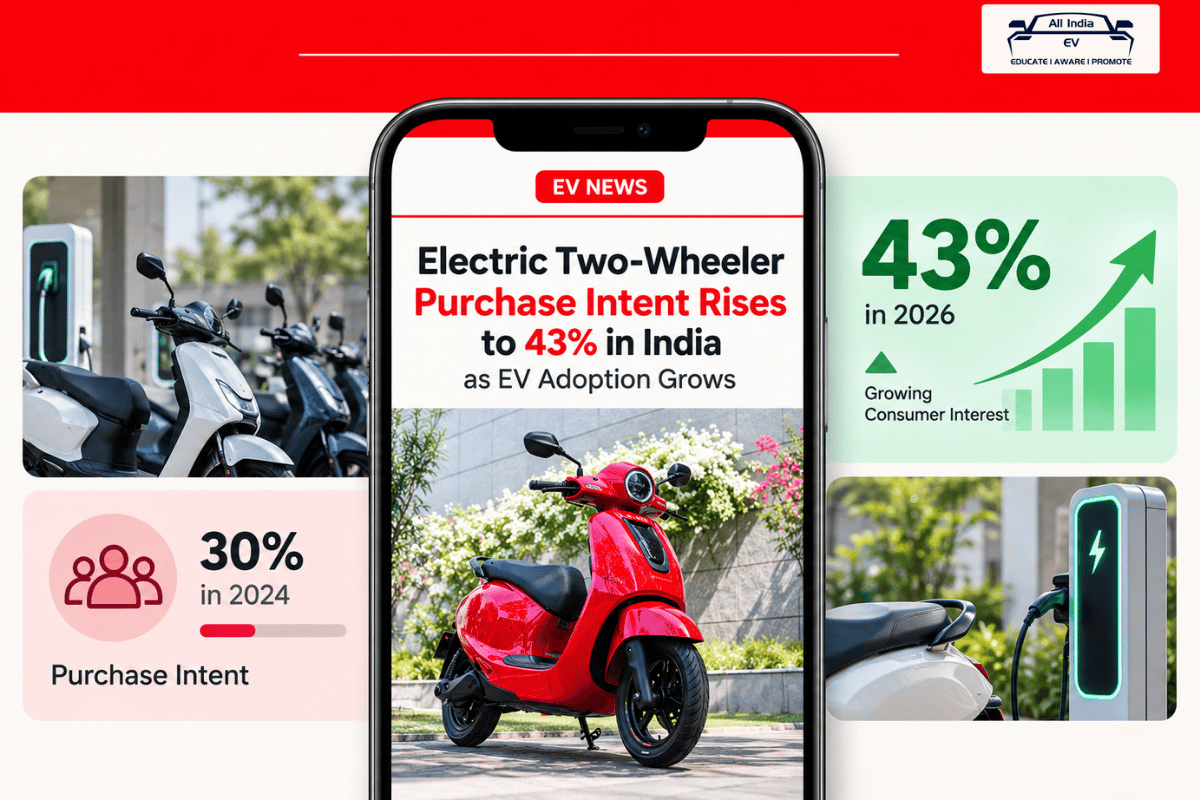
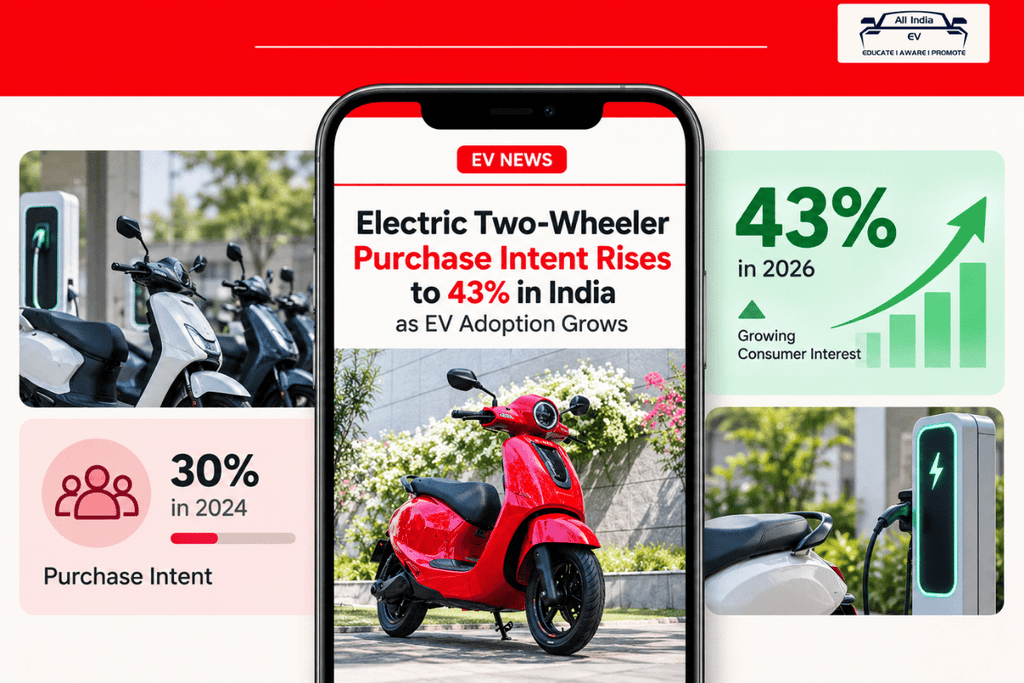
India’s electric two-wheeler market is witnessing growing consumer interest, with 43% of potential buyers now actively considering an electric vehicle for their next purchase. This marks a significant increase from 30% in 2024, highlighting the growing acceptance of electric mobility among Indian consumers. However, electric two-wheelers accounted for only 9.9% of total two-wheeler sales between April and August 2026, indicating considerable room for further market expansion.
According to a new report by Boston Consulting Group (BCG), titled Electric in Charge: How India’s Electric Two-Wheelers Are Moving into the Mainstream, consumer resistance to electric two-wheelers is also declining. The proportion of respondents who outright rejected electric two-wheelers fell from 38% in 2024 to 29% in 2026. Meanwhile, another 28% expressed openness to electric two-wheelers but were unlikely to purchase one within the next six months.
Electric Two-Wheeler Sales Gain Momentum
The rising purchase intent is increasingly translating into market adoption. BCG’s analysis shows that electric two-wheelers’ share of the overall market increased from 5.5% in FY2024 to 9.9% in FY2027 year-to-date through August 2026.
Electric scooters are leading this transition. Their market penetration rose from 16.8% in FY2024 to 24.1% during the same period in FY2027. The report also estimates that approximately 1.8 lakh Indians are purchasing their first electric two-wheeler every month.
Between FY2022 and FY2026, electric scooter sales recorded a compound annual growth rate of 54%, significantly outpacing the 16% growth recorded by petrol-powered scooters. These figures highlight the increasing role of electric scooters in India’s evolving personal mobility market.
Better Design and Performance Improve Consumer Confidence
The BCG report identifies improvements in consumer perceptions of electric two-wheelers as an important driver of adoption. Buyers are increasingly recognising their styling, performance, convenience and brand credibility.
Among consumers prioritising convenience, the share who viewed electric two-wheelers as aesthetically appealing increased from 30% in 2024 to 59% in 2026. Similarly, positive perceptions of pickup improved from 27% to 48%. The proportion associating electric two-wheelers with trusted or popular brands also rose from 28% to 46% within this consumer segment.
The research is based on a survey of 1,600 existing and prospective two-wheeler buyers across different age groups, income levels and geographical markets. Approximately 55% of respondents came from rural areas and Tier 2, Tier 3 and Tier 4 markets, demonstrating the importance of smaller cities and rural regions in the next phase of EV growth.
Durability and Range Remain Key Challenges
Despite improving acceptance, certain concerns continue to influence purchase decisions. Consumers remain cautious about long-term battery and vehicle durability, rough-road performance and suitability for highway travel.
The report found that actual ownership experiences generally met or exceeded expectations in areas such as running costs, maintenance, comfort, storage, manoeuvrability and digital features. However, limited long-term ownership experience makes it difficult for many buyers to assess how electric two-wheelers compare with petrol models over their entire lifespan.
Manufacturers Must Focus on Customer Needs
BCG noted that the availability of electric two-wheeler models has increased by approximately 30% since 2023, while the number of electric motorcycle models has doubled. Nevertheless, five brands continue to account for around 83% of the market.
To sustain growth, manufacturers need to develop products around specific customer requirements, including affordability, riding range, performance, comfort and durability. Stronger after-sales service, battery warranties, insurance options and resale support will also be essential.
As electric two-wheelers move towards mainstream adoption, manufacturers that combine suitable products with reliable ownership support are likely to be better positioned to capture India’s expanding EV market.