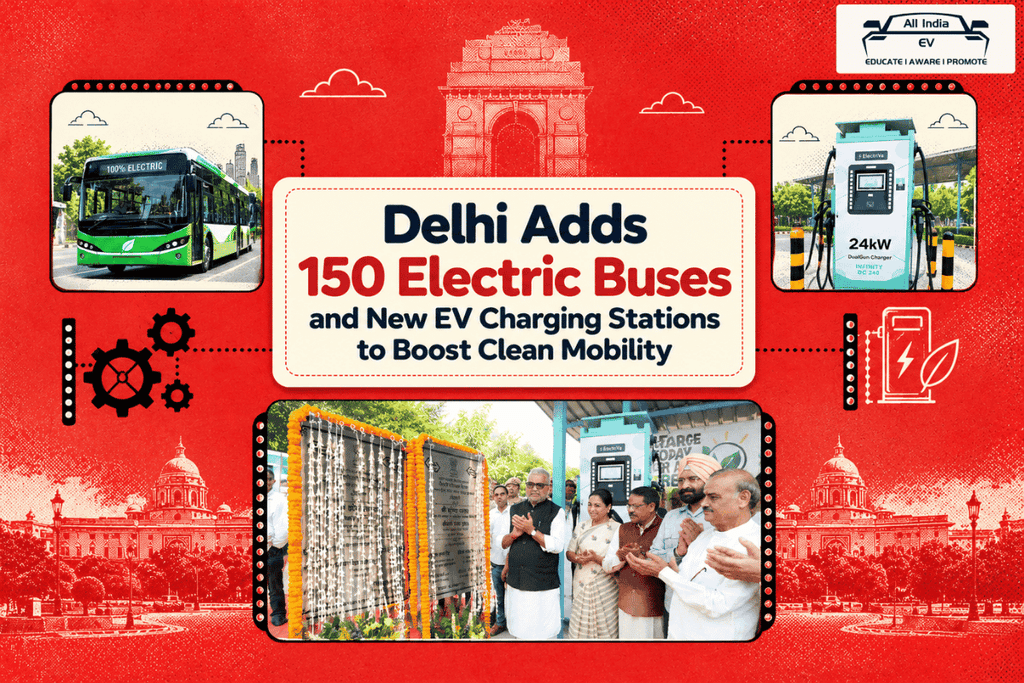


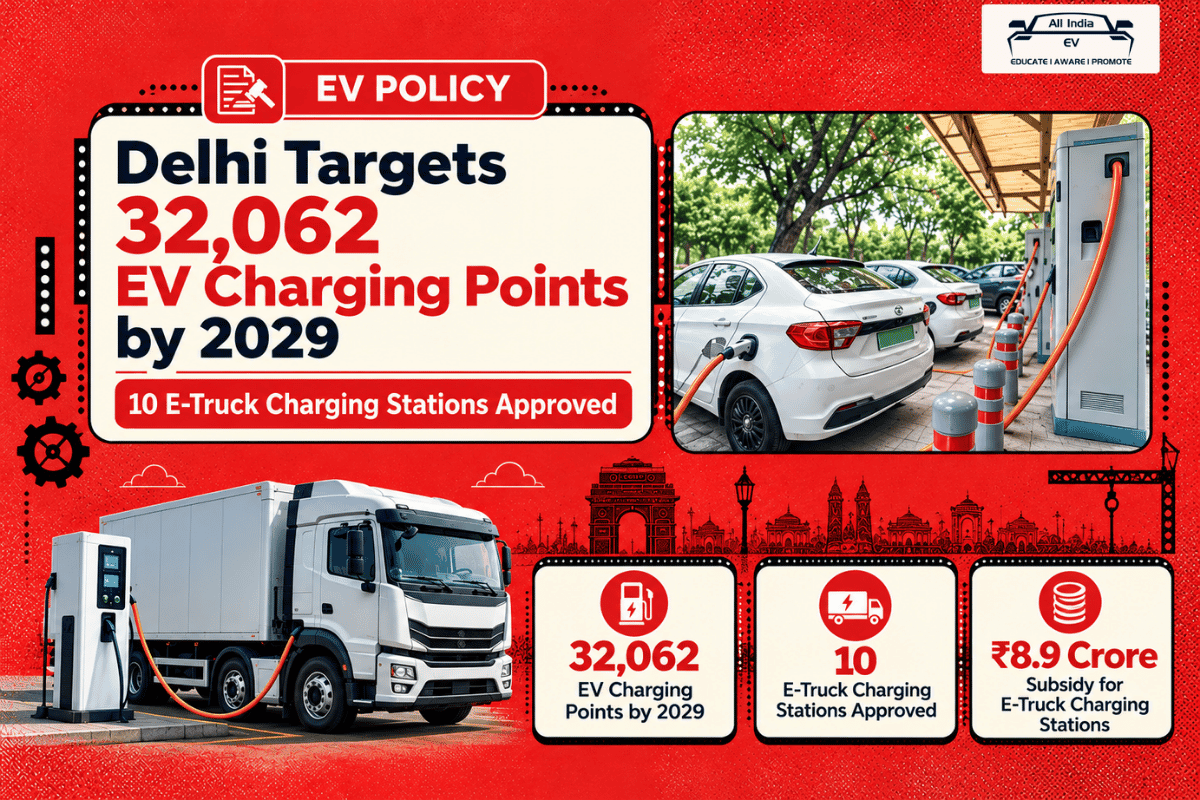
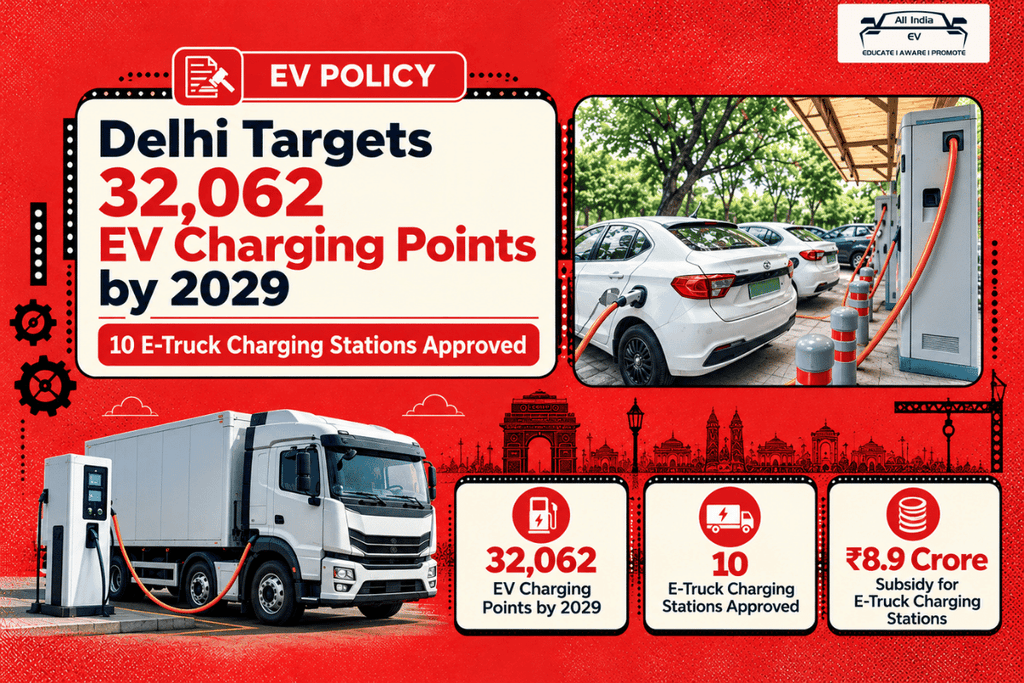
Delhi is accelerating its electric mobility transition with plans to expand its electric vehicle (EV) charging network to 32,062 charging points by December 2029. The Delhi government has also received approval for 10 public charging stations dedicated to electric trucks, strengthening infrastructure for electric commercial vehicles and supporting the city’s efforts to reduce vehicular emissions.
The developments come as Delhi continues to implement its Electric Vehicle Policy 2026, which aims to encourage EV adoption across multiple vehicle segments, including two-wheelers, three-wheelers, goods carriers and commercial fleets.
Delhi Exceeds Its 2026 EV Charging Target
According to government figures reported by The Times of India, Delhi added 5,312 EV charging points between January 1 and September 30, 2026. This increased the city’s total charging infrastructure to 14,225 points, surpassing the 13,913-point target established by the Commission for Air Quality Management (CAQM) for December 2026.
The achievement marks progress in expanding public charging access across the national capital. However, the government aims to increase the network substantially over the next three years to accommodate the anticipated growth in electric vehicle registrations.
Delhi’s earlier action plan submitted to CAQM in February identified a significant infrastructure gap. At that time, the city had 8,998 public EV charging points against an estimated requirement of 36,177, highlighting the need for faster infrastructure development.
₹8.9 Crore Subsidy Approved for Electric Truck Charging
A major development in the latest announcement is the approval of a ₹8.9 crore subsidy by the Ministry of Heavy Industries on October 23, 2026, for developing 10 public charging stations specifically designed for electric trucks.
These stations are planned to feature 20 heavy-duty chargers rated at 360 kW each and equipped with CCS-II connectors. The high-capacity charging infrastructure is intended to meet the requirements of electric trucks, which need reliable charging facilities to support commercial transportation and freight operations.
Electrifying heavy-duty vehicles could deliver significant environmental benefits. Research by the International Council on Clean Transportation indicates that medium- and heavy-duty trucks account for approximately 44–45% of India’s road transport CO₂ emissions despite representing only around 2–3% of vehicles on the road.
PM E-DRIVE Scheme Supports Charging Infrastructure Expansion
Delhi is also progressing with charging infrastructure projects under the Centre’s PM E-DRIVE scheme. The Ministry of Heavy Industries has sanctioned more than ₹127.1 crore in subsidies for 382 approved charging sites.
Of these, 180 sites have been reassessed and identified as suitable for composite chargers with capacities of 12 kW, 60 kW and 120 kW. The Delhi government submitted the details of these locations to the ministry on October 8, 2026.
Tendering and approval procedures are currently underway through Delhi Transco Limited and the relevant government departments. The completion of these processes will be important for translating approved projects into operational charging facilities.
Delhi EV Policy 2026 Sets New Registration Milestones
The charging network expansion is closely linked to the Delhi EV Policy 2026, notified on June 30, 2026. Under the policy, only electric three-wheelers and N1-category goods carriers will be registered from January 1, 2027. The corresponding registration milestone for electric two-wheelers is April 1, 2028.
The government is also promoting the gradual electrification of school buses, with a target of achieving 30% electric school bus adoption by 2030. Commercial delivery fleets and government departments are expected to contribute to the transition by progressively shifting towards electric vehicles.
With its 2029 charging target and dedicated electric truck infrastructure, Delhi is taking further steps towards building a more accessible EV ecosystem. The timely implementation of charging projects will be crucial to supporting future EV adoption, commercial fleet electrification and the city’s broader clean mobility ambitions.