
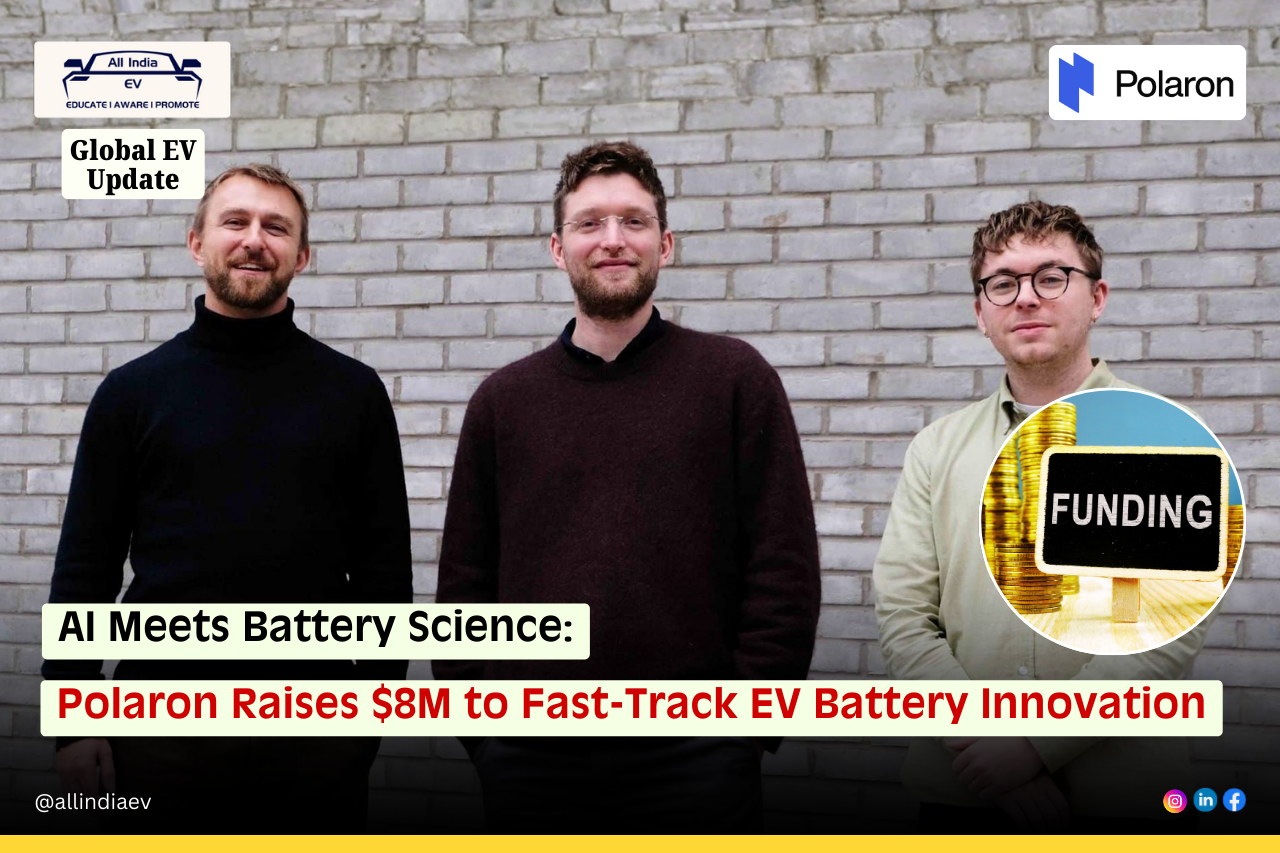

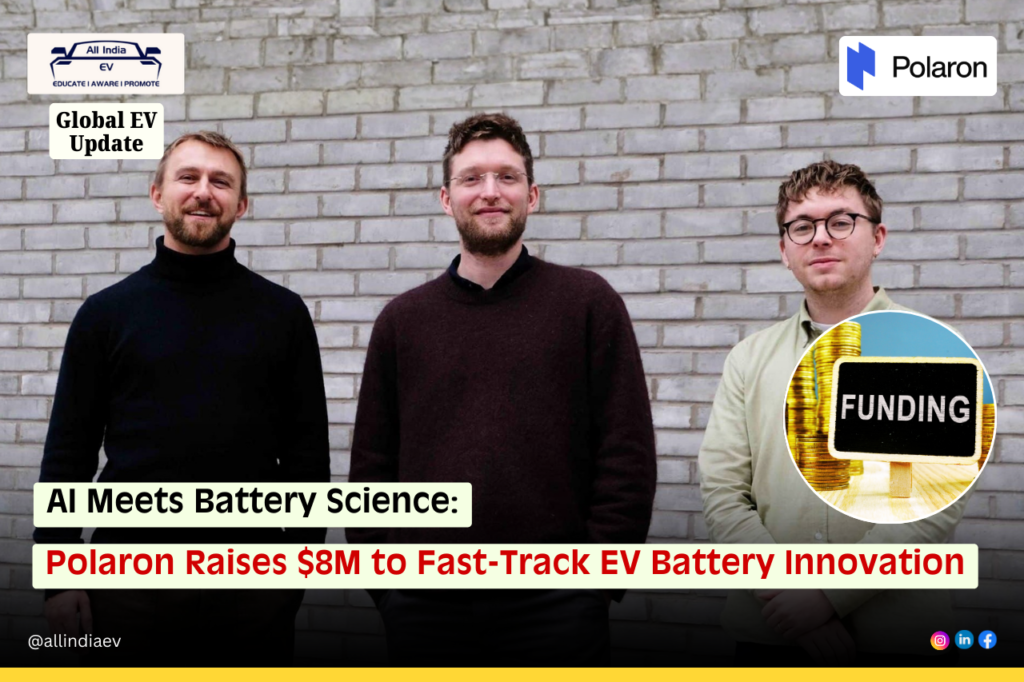
The London-based startup is using machine learning and computer vision to predict materials performance and cut development time for next-gen batteries.
In a major boost to the rapidly evolving electric vehicle (EV) ecosystem, London-based artificial intelligence startup Polaron has raised $8 million in fresh funding to scale its advanced materials science platform aimed at transforming EV battery development. The company’s AI-powered technology is already being adopted by EV manufacturers responsible for over one-third of global electric vehicle production, underlining its growing relevance in the clean mobility supply chain.
Spun out of Imperial College London after seven years of academic research, Polaron has built a proprietary platform that applies machine learning to analyze material microstructures and predict real-world performance outcomes. By processing high-resolution microscopy images, the system helps engineers understand how subtle structural changes in materials influence durability, efficiency, and energy density an area that has traditionally relied on lengthy trial-and-error experimentation.
One of Polaron’s most promising applications lies in EV battery electrode design, where the startup’s tools have already delivered energy density improvements exceeding 10%. Such gains are significant for battery makers seeking to extend driving range, improve charging efficiency, and lower overall costs three critical factors shaping consumer adoption of electric vehicles worldwide.
The funding round was led by Racine2, an impact-focused investment fund backed by Serena and Makesense, with participation from Speedinvest and Futurepresent, alongside a group of angel investors with deep experience in industrial AI. The investor consortium signals strong confidence in Polaron’s ability to bridge the long-standing gap between laboratory materials research and large-scale industrial manufacturing.
With the new capital, Polaron plans to expand its engineering team, accelerate the rollout of its generative design tools, and meet rising demand from customers across the automotive and energy sectors. The company is positioning itself as a critical technology partner for manufacturers racing to optimize battery materials, lightweight components, and advanced composites needed for next-generation EVs and energy storage systems.
“For more than a century, industry has used machines to shape materials. Now, we are teaching machines to understand them,” said Isaac Squires, Chief Executive Officer and Co-founder of Polaron. “Polaron is building an intelligence layer powered by the world’s materials data, enabling faster discovery, better design, and the creation of a new generation of advanced materials.”
More EV News
A key challenge in materials engineering has long been the disconnect between how materials are processed and how they ultimately perform in real-world conditions. Traditional workflows depend heavily on manual analysis, fragmented software tools, and repeated physical testing cycles, often stretching development timelines by months or even years. Polaron’s AI-driven system automates much of this characterization process, compressing what could take thousands of hours of human analysis into minutes.
The platform can also generate three-dimensional reconstructions from two-dimensional microscopy images, allowing engineers to visualize complex internal structures and identify microstructural features that influence conductivity, strength, and longevity. This capability is particularly valuable in battery research, where microscopic changes can have a disproportionate impact on macroscopic performance and safety.
Investors believe Polaron is uniquely positioned to commercialize materials AI at scale. “In materials science, AI is commoditizing atomistic discovery,” said Alix Trébaol of Serena. “The real winners will be those who can predict industrial manufacturability and Polaron is leading in this space.” Florian Obst of Speedinvest added that the company’s focus on translating scientific insights into factory-ready solutions was a key differentiator.
As global automakers and battery manufacturers intensify their push toward electrification, AI-driven materials innovation is emerging as a critical lever for competitive advantage. With fresh funding and growing industry adoption, Polaron appears poised to play a pivotal role in shaping the next wave of high-performance, cost-effective EV batteries and advanced materials.