
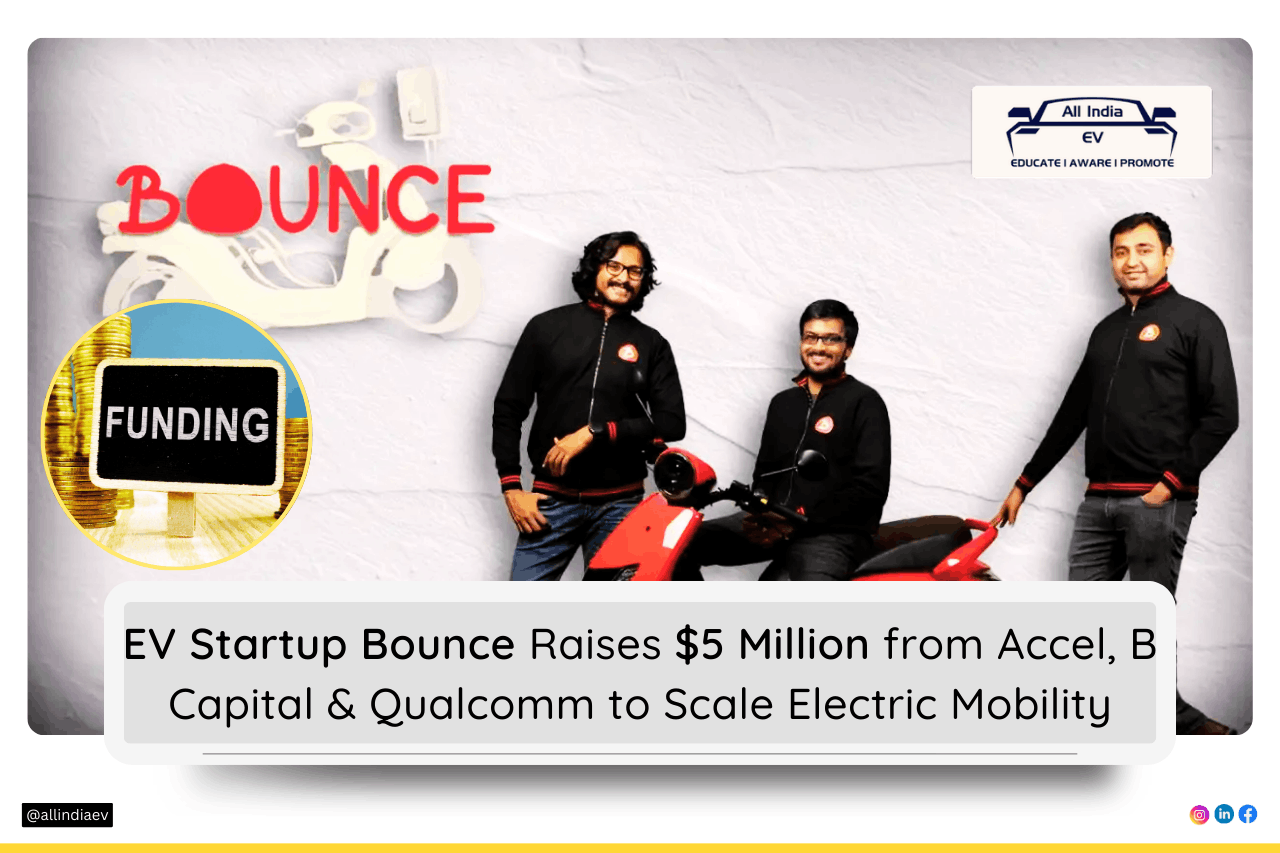


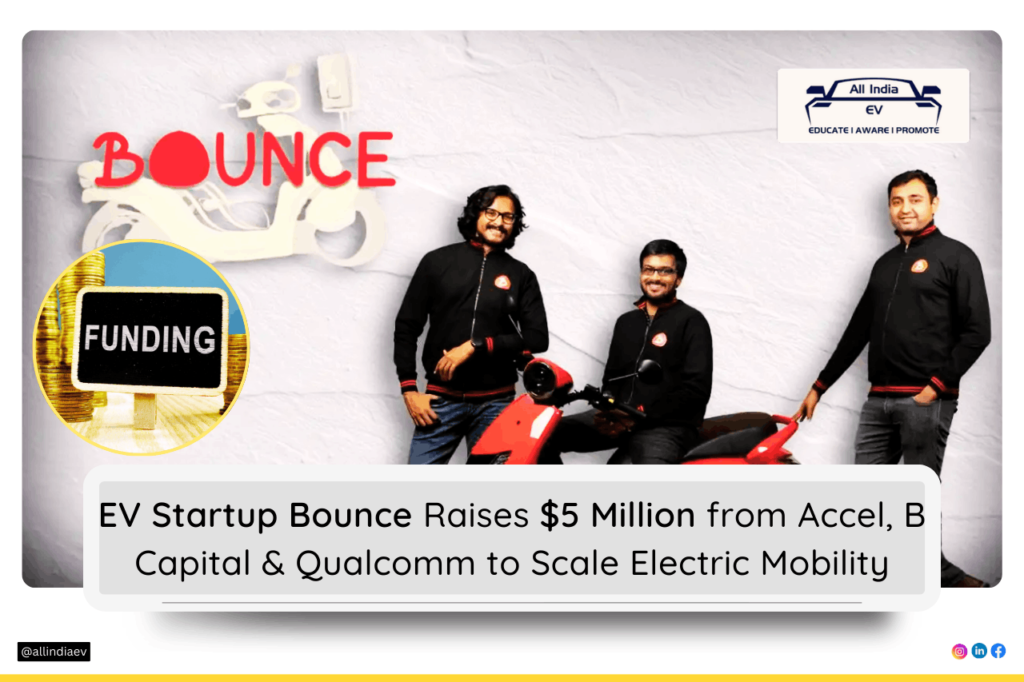
EV startup Bounce raises $5 million from Accel, B Capital, Qualcomm, giving the Bengaluru-based electric mobility company fresh capital as it sharpens its fleet-led EV play in India. The funding came through an internal round, which means existing investors participated without bringing in new backers.
Bounce said the new capital will be used mainly as margin money to unlock additional financing for fleet expansion. That is a meaningful detail, because this is not just balance-sheet support. It is growth capital aimed at putting more electric scooters on the road. The company currently has around 10,000 scooters in operation and is active across both vehicle manufacturing and fleet management.
The company’s journey has been anything but linear. Bounce began as Wicked Ride, a premium motorcycle rental business, then pivoted after the Covid disruption into scooter rentals, and later moved deeper into electric mobility and manufacturing. In 2021, it acquired Gurugram-based 22Motors, which helped accelerate its shift from platform-led mobility to becoming an EV OEM with tighter control over product and operations.
That operating model matters. By manufacturing scooters and running fleet operations in parallel, Bounce can capture direct feedback from usage patterns, vehicle downtime, and maintenance cycles, then push those learnings back into design and servicing. For a fleet-heavy EV business, that loop can become a competitive advantage because reliability and uptime often matter more than headline specifications.
Financially, the picture is mixed but improving. For FY25, Bounce’s revenue declined to ₹64.2 crore from ₹88.7 crore in FY24, but the company’s net loss narrowed significantly to ₹28.6 crore from ₹79.4 crore, according to Tracxn data cited in the report. That suggests the company is still in transition, but may be moving toward a more disciplined operating structure.
In simple terms, this is not just another startup funding update. It is a signal that investors still see value in EV businesses that combine manufacturing with real-world fleet deployment, especially when the model is tied to commercial utilisation rather than only retail demand.
More EV News

How This Will Help the Indian EV Market
This development matters because it highlights a part of the EV market that often gets less attention than passenger car launches: fleet-driven electric mobility. When an EV company raises capital to expand a scooter fleet, the impact can be more immediate than a conventional retail story. Fleet vehicles tend to run more hours per day, cover more kilometres, and create faster real-world data on battery behaviour, maintenance needs, charging habits, and operating economics.
That matters for India. The country’s EV transition will not be driven only by private ownership. It will also depend heavily on high-utilisation use cases such as gig work, delivery services, rental mobility, and urban transport fleets. If Bounce uses this funding effectively, it could help prove whether fleet-operated electric scooters can scale with better uptime, tighter maintenance cycles, and stronger unit economics.
There is also a manufacturing angle here. Bounce is not just a fleet operator. It is also an OEM. That means operational feedback from vehicles in the field can flow directly back into product design, servicing standards, and component improvement. In a price-sensitive market like India, that kind of closed learning loop can help improve product quality faster.
More broadly, this funding suggests investors still believe India’s EV opportunity is alive in practical, commercially grounded formats. Not every winner in the EV market will be built around consumer hype. Some will come from companies solving everyday mobility economics at street level.