

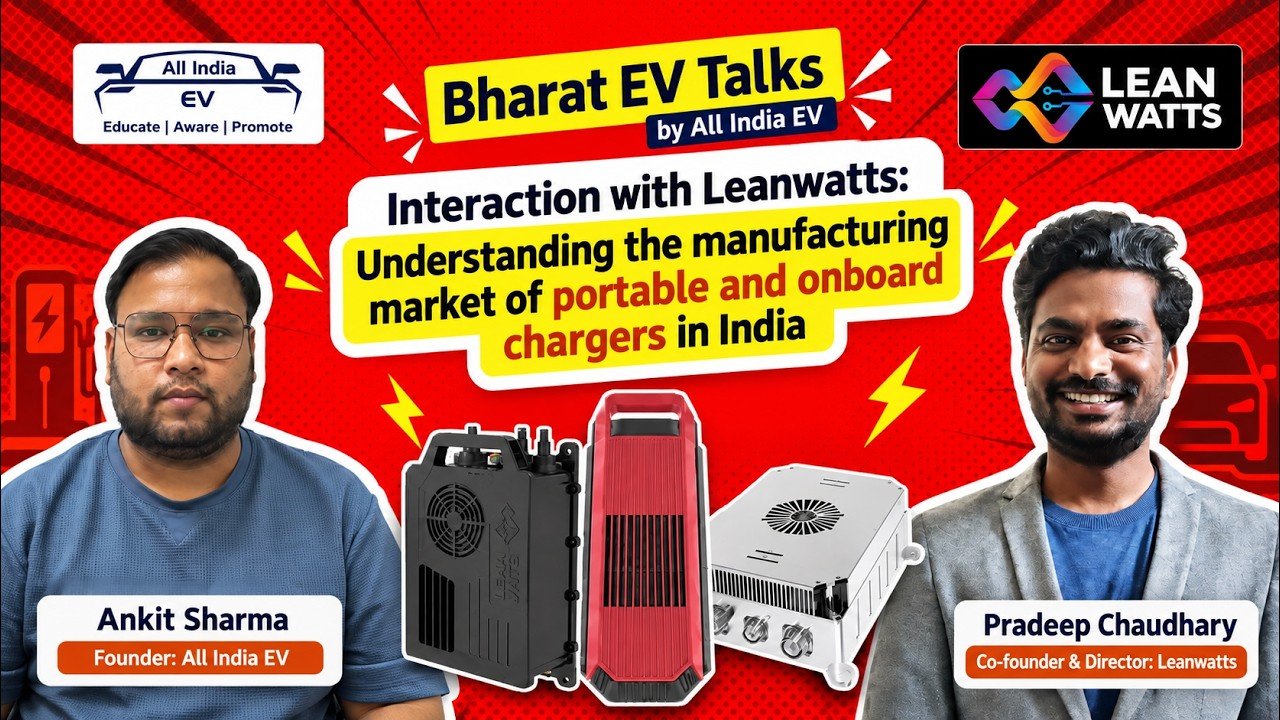
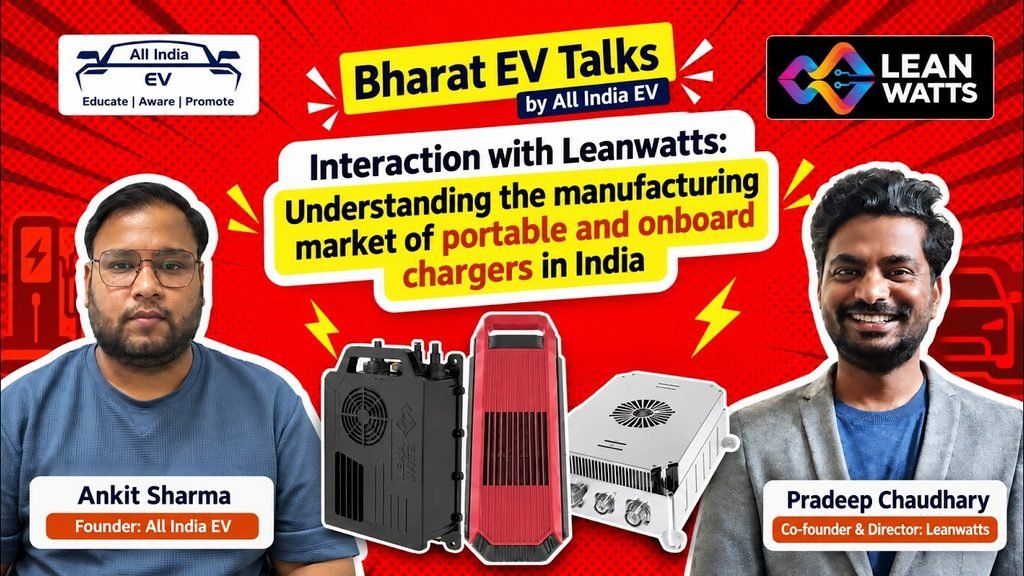
In this episode of The Bharat EV Talks hosted by All India EV , host Ankit Sharma speaks with the founder of Leanwatts to examine the realities of indigenous power electronics manufacturing in India and how domestic startups are competing with established global hubs like China and Taiwan.
Redefining “Make in India” in Power Electronics
While “Make in India” has become a widespread national slogan, the conversation establishes that genuine domestic manufacturing is built on multiple distinct layers:
- Solutionizing and Architecture: Designing tailored system topologies from scratch rather than white-labeling imported designs.
- Deep R&D and Engineering: Developing firmware, power management algorithms, and hardware architectures optimized for local operating conditions.
- Assembly and Sourcing: Progressing from subsystem integration to final electronic product assembly.
- Component-Level Fabrication: The long-term goal of sourcing raw materials and semiconductor components domestically.
Rather than treating local manufacturing merely as an assembly line, true value creation begins upstream in core engineering.
Unlocking the 2-Wheeler and 3-Wheeler Charging Segment
The Indian electric vehicle market has seen rapid adoption in the low-speed, high-density two-wheeler and three-wheeler segments. However, most domestic OEMs initially relied on imported offboard, portable, and onboard chargers from China due to speed-to-market demands and lower initial unit costs.
Leanwatts identified that imported off-the-shelf units often face reliability issues under demanding Indian electrical and environmental conditions. By committing to patient R&D, local engineering teams can iterate faster, deliver tailored voltage and thermal tolerances, and build reliable charging solutions that reduce long-term operational costs for Indian fleets.
Supply Chain Realities and the “Zero to One” Transition
Addressing the challenges of global supply chain dependencies, Leanwatts highlights that raw material processing and component-level fabrication remain concentrated abroad across Japan, Taiwan, Germany, and China. Because India currently lacks an exhaustive component-level ecosystem for specialized power electronics, attempting to manufacture every tiny element overnight can stall progress.
Instead, the solution lies in a phased approach:
- System-Level Mastery: Startups focus on building robust, cost-effective power conversion systems and inverters.
- Local Market Pull: As domestic system integration scales, it generates consistent volume, incentivizing upstream raw material and component suppliers to establish domestic operations.
In terms of market maturity, India has successfully navigated the “0 to 1” phase at the OEM level evidenced by domestic brands leading the 2W and 3W categories. The sector has entered the multiplication phase, where execution speed and scale will dictate long-term market leadership.
A Logical Opportunity for Indian Engineering Talent
Rather than viewing domestic power electronics development as a burdensome national obligation, Leanwatts frames it as an obvious, high-yield business opportunity. With India representing one of the largest expanding clean-mobility and energy-storage markets worldwide, domestic design centers give engineering graduates direct opportunities to build cutting-edge hardware locally rather than seeking opportunities abroad.