
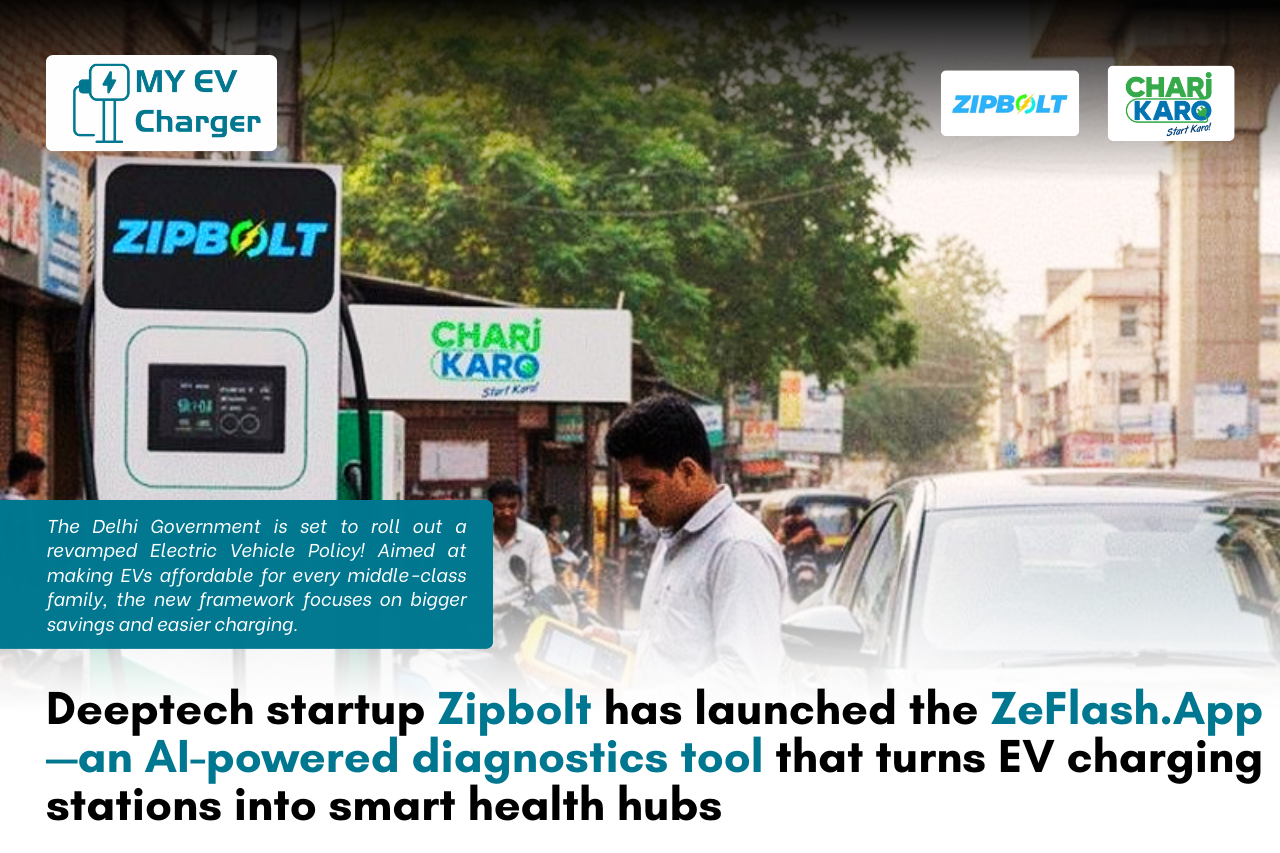

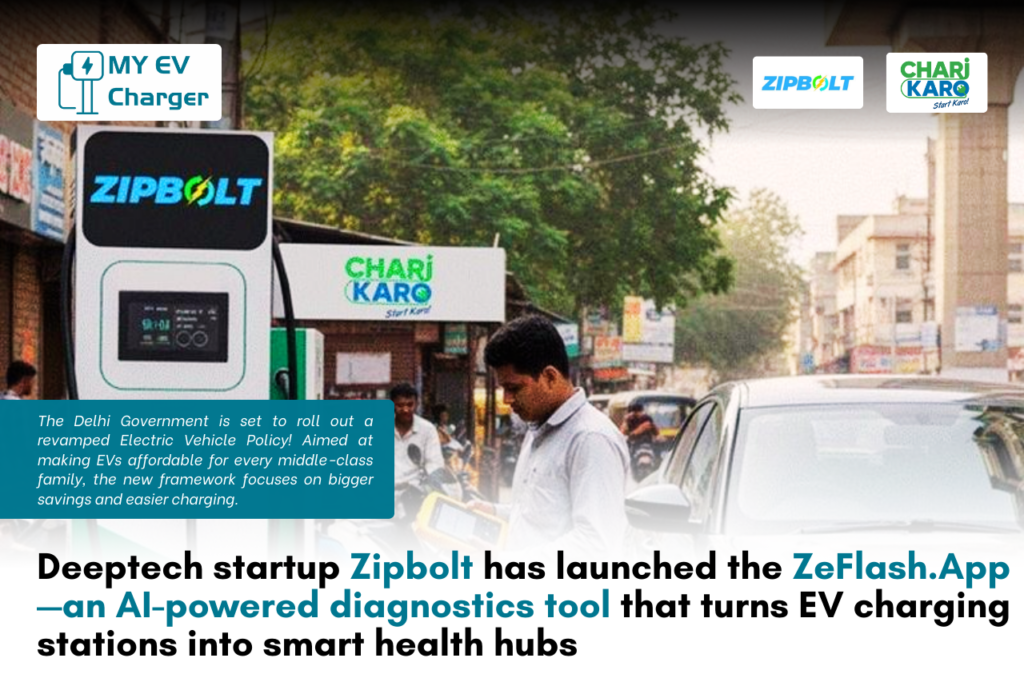
As India’s electric vehicle (EV) ecosystem continues its rapid expansion, Gurugram-based deeptech startup Zipbolt Innovations has unveiled ZeFlash.App, an AI-powered EV battery diagnostics and safe-charging platform, now operational across over 100 CharjKaro fast-charging stations in Delhi and Chandigarh. The deployment is being expanded to Dehradun, Agra, and other emerging EV hubs, strengthening the intelligence layer of India’s charging infrastructure.
The rollout marks a significant shift in the country’s EV landscape—from basic power delivery to integrated, data-driven energy intelligence. By embedding automated, API-led diagnostics directly into the charging process, Zipbolt aims to eliminate conventional manual testing methods and enable real-time battery health monitoring during active charging sessions.
Intelligence Built Into Charging Infrastructure
With ZeFlash.App, Zipbolt is redefining charging stations as smart intelligence hubs rather than passive utilities. The solution is fully integrated with Zipbolt’s AI-enabled DC fast chargers and is designed to cater not only to premium electric cars but also to two-wheelers and three-wheelers, which account for the majority of EV adoption in India.
Users charging their vehicles at supported stations can access a Rapid Battery Diagnostic Report within 20 minutes. This report highlights early-stage battery faults, voltage imbalances, degradation patterns, and potential thermal risks, all without interrupting vehicle operations. The diagnostics are conducted simultaneously with the charging process, offering a seamless user experience.
ZipSure AI Driving Predictive EV Maintenance
At the core of the system lies ZipSure AI, Zipbolt’s patent-applied, IoT-enabled intelligence engine. Using chemistry benchmarking, digital twin models, and multi-signal data analysis, ZipSure AI enables a shift from traditional reactive maintenance to a predictive, prevention-first model.
This intelligence-driven approach is expected to reduce unexpected breakdowns, battery failures, recalls, and downtime, benefiting individual EV owners as well as commercial fleet operators. The platform’s ability to detect risks early could play a crucial role in improving battery safety and lifecycle management across India’s EV ecosystem.
Strategic Partnership with CharjKaro
The deployment is being executed in collaboration with CharjKaro, with a focus on high-usage urban corridors and battery-swap ecosystems. The partnership aims to enhance safety, reliability, and operational efficiency across dense urban EV networks, where charging infrastructure faces high daily loads.
More EV News
Roadmap Aligned with India’s 2030 EV Goals
Zipbolt’s unified technology stack includes AI-powered DC fast chargers compliant with LEVDC Type 6 and Type 7 standards, real-time diagnostics via ZeFlash.App, and battery energy storage system (BESS) and AI datacentre lifecycle risk management through ZipSure AI.
Following its pre-seed funding in 2025 and selection under the MeitY Startups–RIIDL SVU–SAMRIDH Deeptech AI IoT Fund, Zipbolt is preparing for a $1 million Pre-Series A funding round in 2026. The startup aims to onboard over 100,000 AI-enabled EVs by 2028, supporting India’s national target of 30% EV penetration by 2030. Upcoming initiatives include UPI-based API integration and participation in the Battery360 Alliance.
Commenting on the launch, Rohan Singh Bais, Founder & CEO of Zipbolt Innovations, said, “India’s EV ecosystem needs intelligence at the point of charging and operation—not after failures occur. With ZeFlash.App and ZipSure AI, we are enabling safer, smarter electric mobility at the city-block level and laying the foundation for next-generation energy infrastructure.”
Comment by Author:
The launch of ZeFlash.App marks an important step in India’s EV journey, shifting the focus from basic charging access to intelligent, safety-led infrastructure. By embedding real-time battery diagnostics directly into high-usage charging stations, Zipbolt is addressing one of the most critical gaps in the EV ecosystem—predictive battery health and risk prevention. Such innovations could play a decisive role in improving user confidence, fleet reliability, and long-term sustainability as India moves closer to its 2030 EV adoption goals.