

Battery chemistry is evolving rapidly, and not all battery metals will succeed in the competitive race for next-generation EV materials.
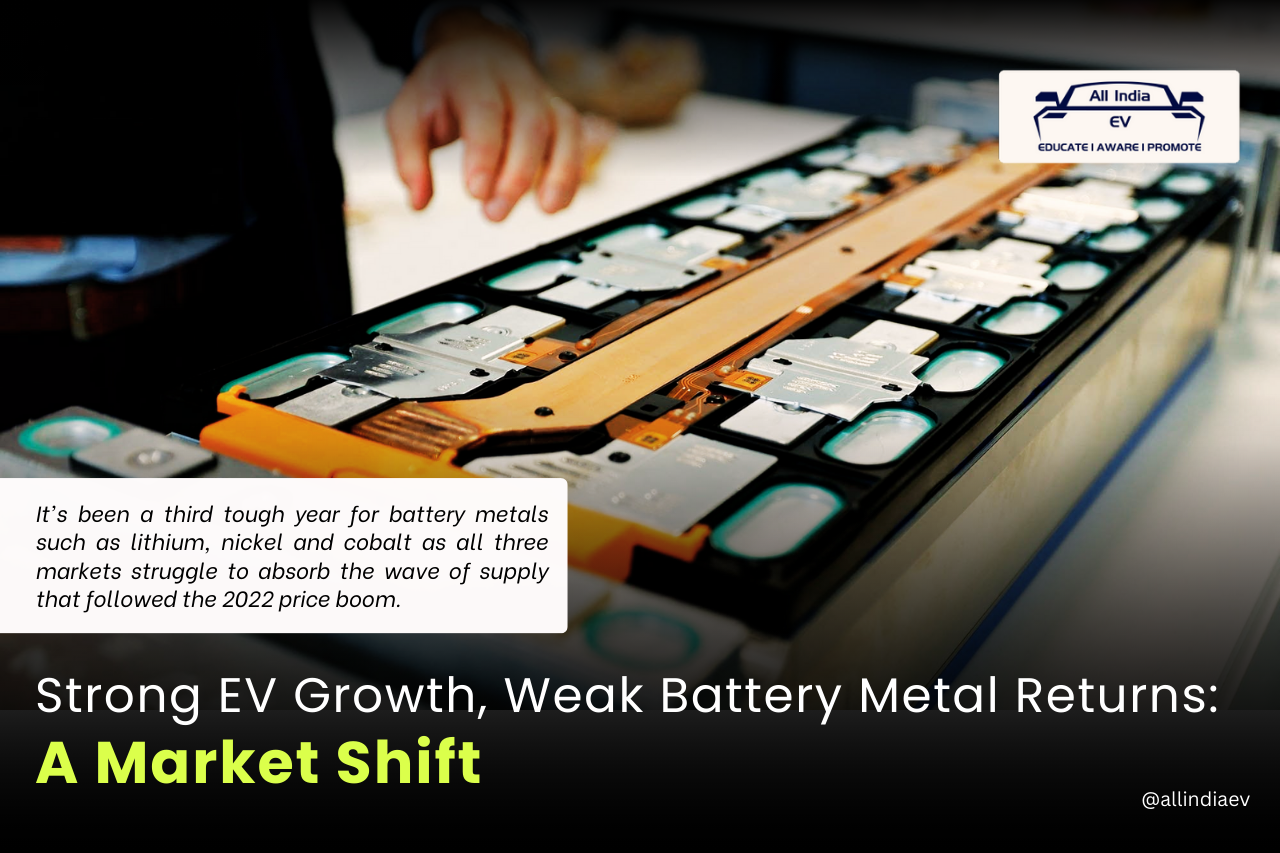
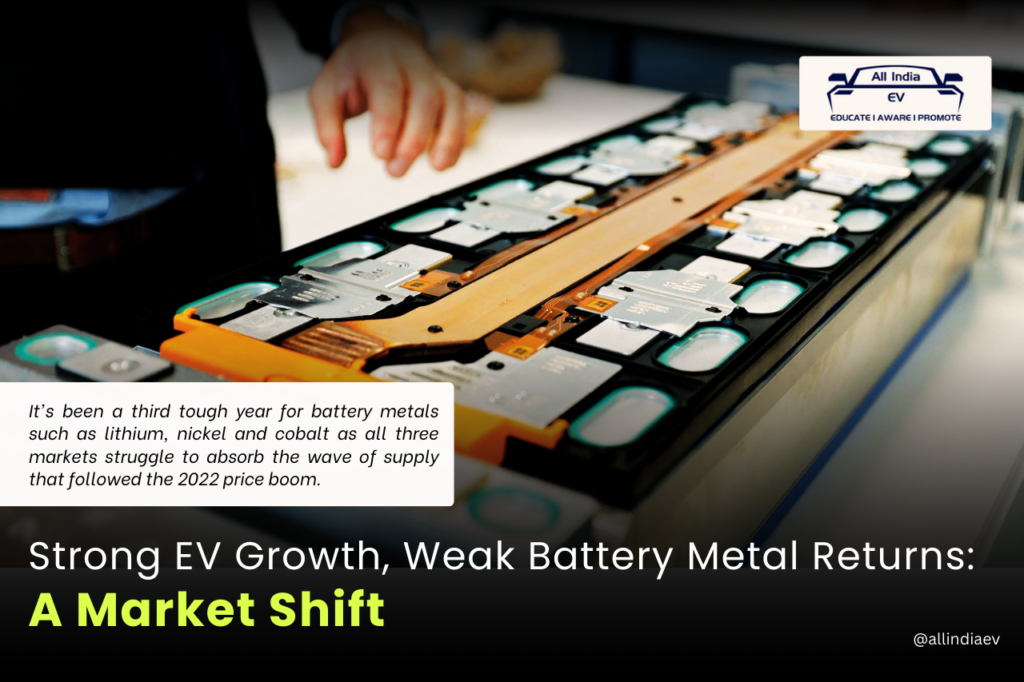
The electric vehicle (EV) revolution continues to surge globally, yet battery metals such as lithium, nickel, and cobalt are facing a challenging third consecutive year. After the price boom of 2022, all three metals are grappling with an oversupply that markets are struggling to absorb.
Rising EV Demand Despite Battery Metal Woes
Despite the turbulence in battery metals, demand for EVs and the batteries that power them is growing at an unprecedented pace. Analysts remain optimistic that the current supply glut will eventually be absorbed by the surging global demand for EVs. However, the rapid pace of technological advancement in battery chemistry, particularly by Chinese companies, is reshaping which metals are likely to dominate in the future.
Battery Chemistry in Transition
China is at the forefront of this technological revolution, striving to produce more powerful and cost-efficient batteries. As battery chemistries evolve, it is becoming clear that not all metals will emerge as winners in the global race for EV dominance.
Global Policy Headwinds
The path to widespread electrification remains uneven. In the United States, former President Donald Trump rolled back EV subsidy schemes, while the European Union delayed its ban on combustion-engine vehicles beyond 2035. Nevertheless, the underlying momentum for EV adoption remains strong.
Record EV Sales Worldwide
According to consultancy Rho Motion, global EV sales rose 21% year-on-year to 18.5 million vehicles in the first eleven months of 2025. China continues to drive this growth, accounting for 62% of global EV sales with a 19% year-on-year increase in its domestic market.
China Leads in Battery Innovation
Chinese manufacturers are spearheading innovation in battery chemistry, with lithium-iron-phosphate (LFP) batteries now dominating the market. These batteries are safer, cheaper, and increasingly competitive in performance compared to traditional nickel-cobalt-manganese (NCM) batteries.
Last year, LFP batteries accounted for 48% of global EV batteries, and Macquarie Bank projects this share could rise to 65% by 2029, a significant jump from earlier estimates.
Impact on Nickel and Cobalt Markets
The rise of LFP batteries is challenging producers of nickel and cobalt, particularly in Indonesia and the Democratic Republic of Congo (DRC), the world’s largest suppliers of these metals.
- Indonesia’s nickel production has surged, flooding the market with surplus metal and leading to skyrocketing London Metal Exchange (LME) stocks, currently at 338,900 tons.
- Nickel prices have dipped below $15,000 per ton, putting pressure on Indonesian policymakers to reconsider production growth.
- In the Congo, cobalt oversupply and slow regulatory implementation have caused shipments of cobalt intermediates to Chinese refineries to halt completely.
These developments have intensified concerns over price volatility and ethical mining practices, potentially accelerating efforts to phase cobalt out of battery chemistries altogether.
Lithium Maintains Its Central Role
Despite these challenges, lithium remains the dominant metal in EV batteries, particularly as China pivots towards LFP technology. Consultancy Adamas Intelligence reports that 60,900 tons of lithium were deployed globally on roads in September 2025, reflecting a 25% year-on-year increase. By comparison, cobalt and nickel deployments grew by 15% and 10%, respectively.
However, lithium is also facing new competition. CATL, a Chinese battery giant, is developing sodium-ion batteries, which could match the efficiency of LFP batteries at a lower cost. CATL founder Robin Zeng predicts sodium-ion technology could replace up to half the LFP battery market in the future.
Shift from Road to Grid Storage
Fortunately for lithium producers, the metal is critical for energy storage batteries, which are witnessing rapid growth. Global battery energy storage system installations jumped 38% year-on-year in the first ten months of 2025, according to Benchmark Mineral Intelligence.
Reflecting this trend, Ford Motor Company announced a $19.5 billion investment in EVs, alongside a $2 billion commitment to energy storage batteries, signaling a growing focus on grid applications.
The Changing EV Battery Landscape
The outlook for battery metals has shifted dramatically since 2022, when lithium, nickel, and cobalt prices were soaring under the assumption that all three would remain central to EVs. Today, battery chemistry continues to evolve at breakneck speed, driven by extensive research and development, making it difficult to predict which materials will dominate in the next decade.
Metals That Enable EVs
While the fortunes of traditional battery metals are uncertain, copper and aluminum are set to remain indispensable. Copper is essential for wiring vehicles and charging infrastructure, while aluminum is likely to retain its position as the preferred material for lightweight vehicle frames.
Conclusion
The EV revolution is progressing at an extraordinary rate, but the metals that power it are in flux. Chinese innovation in battery chemistry, shifting global policies, and rising demand for both road and grid applications are reshaping the market landscape. While lithium retains its central role, nickel and cobalt face significant challenges, and emerging alternatives like sodium-ion batteries could alter the market dynamics entirely.
One thing is certain: the ultimate winners in the EV revolution may not be the metals themselves, but those that enable the ecosystem, from wiring and infrastructure to lightweight vehicle construction.
Andy Home, a Reuters columnist, highlights the importance of staying informed about these trends, noting that ROI-Reuters Open Interest provides data-driven commentary on markets and finance.
Comment by Author:
The global EV revolution is accelerating, yet battery metals like nickel and cobalt are struggling amid oversupply and shifting technologies. While lithium and emerging alternatives like sodium-ion batteries maintain strong relevance, the real winners in the EV ecosystem may be the materials and technologies that enable EV adoption, from wiring and lightweight vehicle frames to advanced energy storage solutions.