
All India EVAll India EVAll India EV
Notification
Font ResizerAa
  • Home
  • EV News
  • EV Launch
  • Market Insights
  • Investments & Funding
  • Guest Articles
  • EV Engineering
  • Contact
Reading: IISc Unveils Breakthrough Design to Boost EV Fast-Charging Efficiency by Up to 5%
Share
All India EVAll India EV
Font ResizerAa
  • Home
  • EV News
  • EV Launch
  • Market Insights
  • Guest Articles
  • EV Engineering
  • Contact
Search
  • Home
    • Home 1
    • Home 2
    • Home 3
    • Home 4
    • Home 5
  • Home
  • Categories
    • Electric
  • Categories
  • Shows
    • Rap
  • More Foxiz
    • Blog Index
    • Contact
  • Bookmarks
    • Customize Interests
    • My Bookmarks
  • More Foxiz
    • Blog Index
    • Sitemap
Have an existing account? Sign In
Follow US
EV Fast-Charging
Home » Blog » IISc Unveils Breakthrough Design to Boost EV Fast-Charging Efficiency by Up to 5%
Market Insights

IISc Unveils Breakthrough Design to Boost EV Fast-Charging Efficiency by Up to 5%

Sunita
By
Sunita
Last updated: 25 September 2025
Share
3 Min Read
SHARE

Conventional EV Chargers Use Large, Costly LFTs Dependent on Copper and Iron, Raising Efficiency Concerns

Contents
  • CHB-Based Multiport DC Converter
  • Dual Functionality and Grid Support
  • Green and Scalable Technology
  • Beyond EV Charging

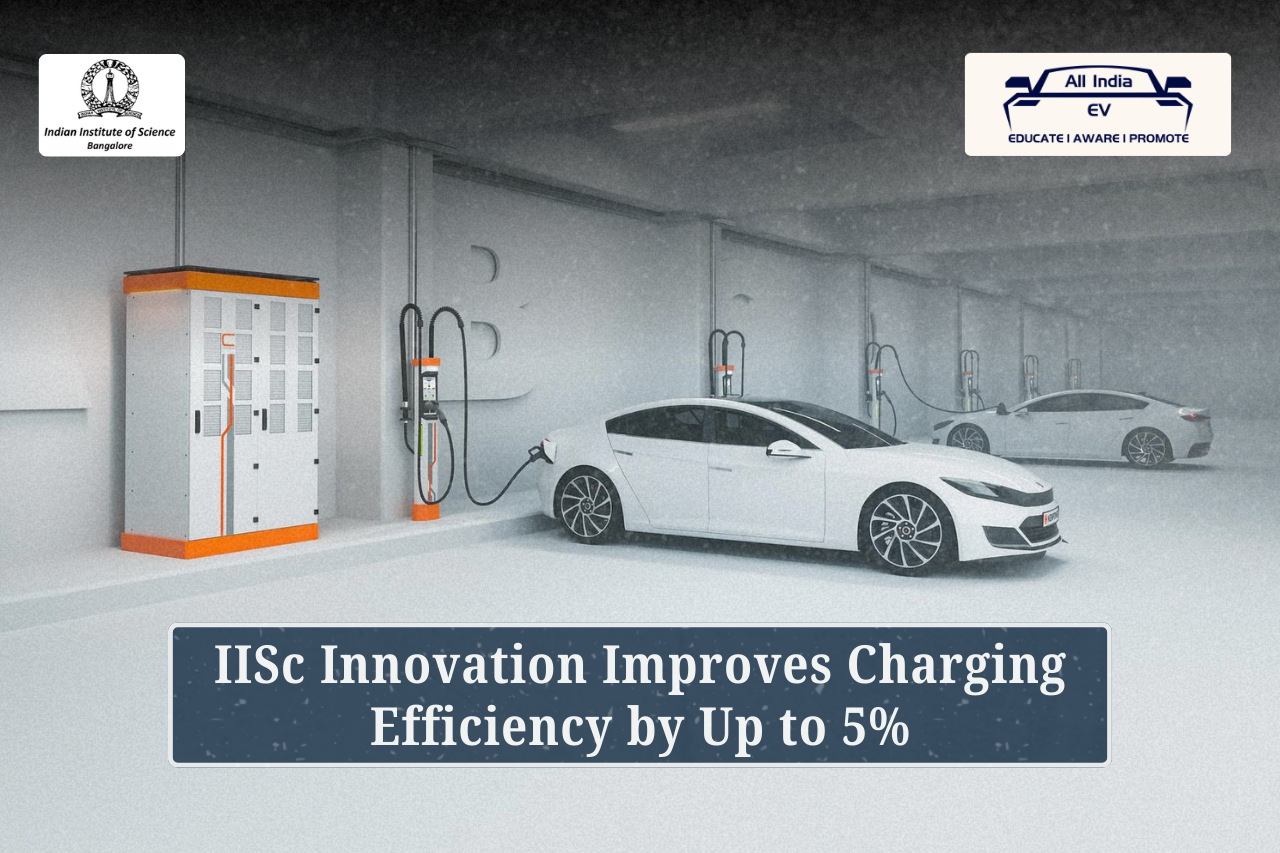
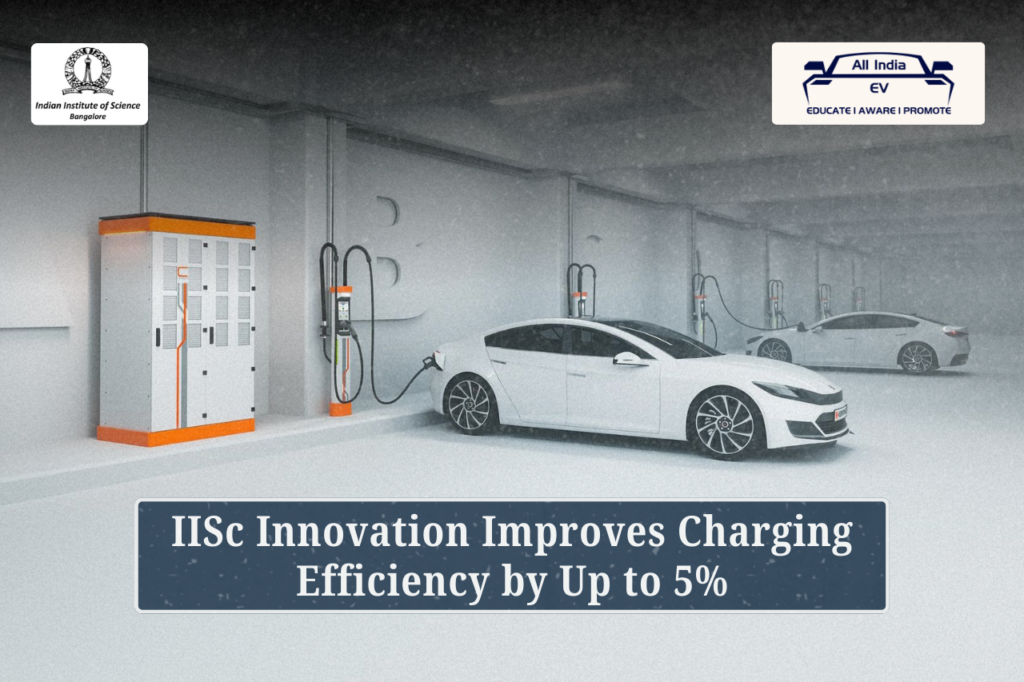
Researchers at the Indian Institute of Science (IISc), in collaboration with Delta Electronics India, have developed a new power converter design that promises to make electric vehicle (EV) fast-charging more efficient, compact, and cost-effective.

One of the biggest hurdles in the growth of EV adoption is the lack of reliable fast-charging stations capable of delivering over 1MW of power—enough to run about 1,000 homes. Conventional chargers rely on line frequency transformers (LFTs), which are bulky, expensive, and heavily dependent on copper and iron. They also require multiple power conversion stages, increasing both cost and energy loss.


CHB-Based Multiport DC Converter

The IISc team has designed a cascaded H-bridge (CHB)-based multiport DC converter that directly connects to the medium-voltage AC grid. By eliminating the need for bulky transformers, the system reduces energy losses and simplifies charging infrastructure.

The results, published in the journal IEEE Transactions on Industrial Electronics, show that the new design improves efficiency by 3–5% compared to conventional systems. “Even small efficiency gains at the megawatt scale translate into significant energy savings and lower material costs,” said Kaushik Basu, Associate Professor at IISc and the corresponding author of the study.

Dual Functionality and Grid Support

The bidirectional design of the converter allows not only charging of EVs but also storing energy locally in batteries. This stored power can then be used during peak demand periods or fed back to the grid in emergencies, making charging hubs potential local power stabilisers. According to IISc, such systems could support hospitals, essential services, or entire neighbourhoods during outages.


Green and Scalable Technology

The converter is also compatible with renewable energy sources like solar, enabling a cleaner charging ecosystem. Its compact, transformer-free design cuts down on copper and iron usage, making it environmentally friendlier and more sustainable for large-scale deployment.

More EV News
India’s EV charging stations Energize: 9x growth in 2 years!
Andhra Pradesh to Electrify Entire RTC Fleet Under New E-Mobility Policy
Build EV Charger? Location, power, cost, demand key.
A Comprehensive Growth Analysis of Zypp Electric
How NMC Lost Market Share to LFP in the Last 3 Years

Beyond EV Charging

While developed for EV infrastructure, researchers believe the design could be applied in data centres, railway traction systems, and wind energy setups—all sectors that demand high-efficiency power conversion.With India targeting 30% EV adoption by 2030, this breakthrough from IISc could play a critical role in scaling fast-charging infrastructure, reducing costs, and driving sustainable mobility.

Join All India EV Community

Click here for more such EV Updates

Vehicle-to-Grid (V2G): The Future of Smart EV Charging in India
Ola Electric Dominates EV Industry with 205 Patents in 2022-23
India Approves ₹7,300 Crore Magnet Scheme to Boost Domestic Rare Earth Production for EVs and Clean Energy
India’s Battery Waste Management Rules, 2022: A Comprehensive Guide
India’s EV Sector Drew ₹30,000+ Crore in FY 2025–26.

Sign Up For Daily Newsletter

Be keep up! Get the latest breaking news delivered straight to your inbox.
Loading
By signing up, you agree to our Terms of Use and acknowledge the data practices in our Privacy Policy. You may unsubscribe at any time.
Share This Article
Facebook Whatsapp Whatsapp LinkedIn Copy Link Print
Leave a Comment

Leave a Reply Cancel reply

Your email address will not be published. Required fields are marked *

Follow US
XFollow
InstagramFollow
YoutubeSubscribe
LinkedInFollow
BEAM Mobility
Why BEAM Mobility Is Betting on India’s Overlooked Short-Distance Market
21 April 2026
Delhi EV Policy 2026: The Real Gap Is Not in Vision, But in Making EVs Work on the Ground
20 April 2026
Karnataka plans to push EV tax rollout
17 April 2026
All India EV: Edition 48
What all happened in March 2026?
Click Here
All India EV

Daily EV Industry updates for you…

Categories

  • EV News
  • EV Launch
  • Investments & Funding
  • Market Insights
  • Guest Articles
  • EV Engineering

Quick Links

  • Community
  • Content Services
  • Branding Services
  • My EV Charger
  • Substack

© Developed and Managed by “The Energy Log”

Welcome Back!

Sign in to your account

Username or Email Address
Password

Lost your password?

Not a member? Sign Up