
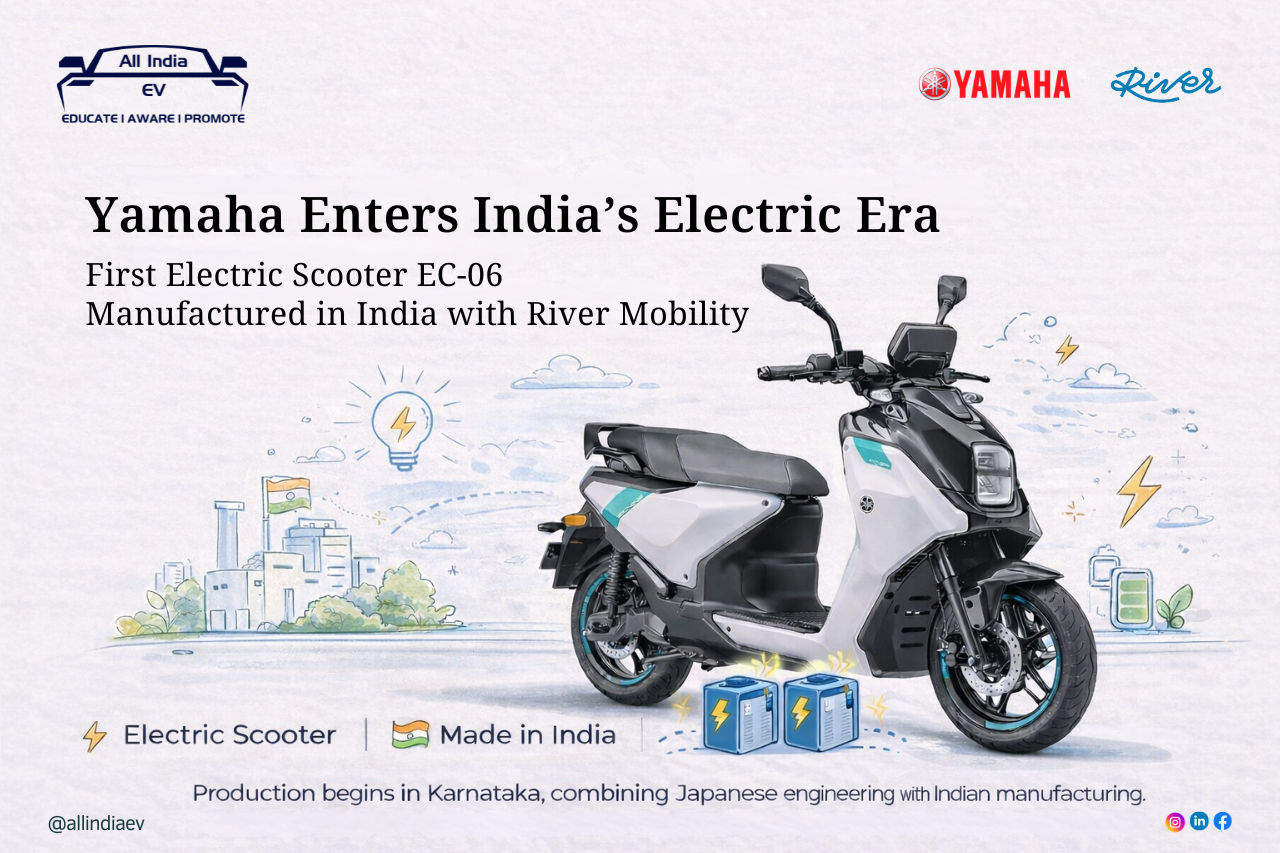

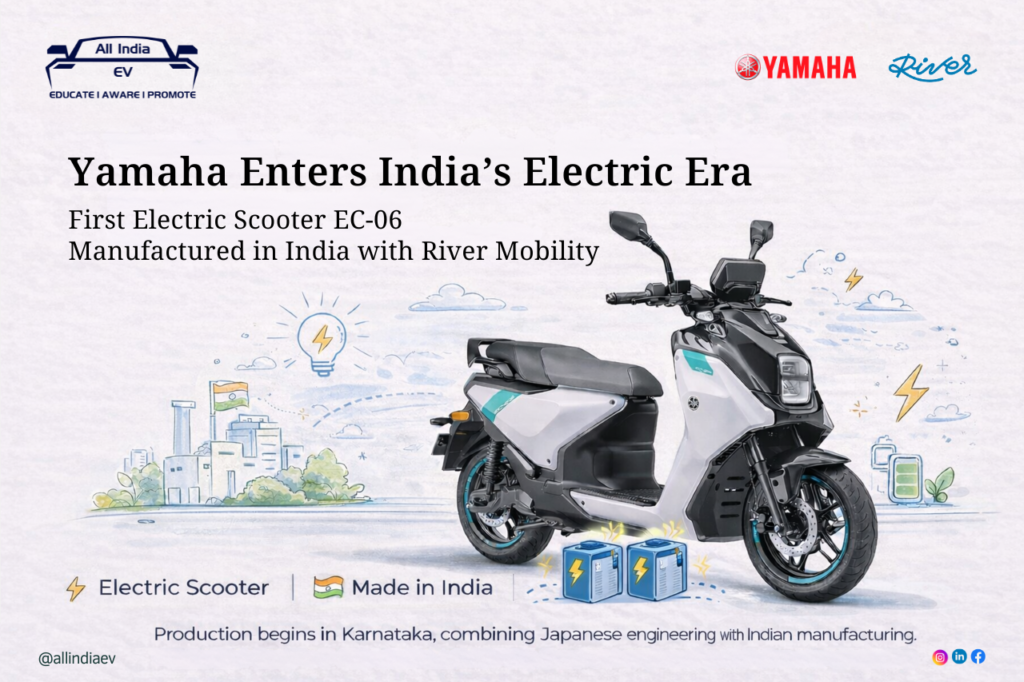
India’s rapidly evolving electric vehicle (EV) ecosystem received a fresh boost this week with a significant milestone in two-wheeler electrification. Japanese manufacturer Yamaha Motor, in close partnership with Bengaluru-based EV startup River Mobility, has commenced production of its first Made-in-India electric scooter, marking a strategic escalation of its ambitions in the Indian EV market.
The rollout took place at River Mobility’s advanced manufacturing facility in Hoskote, Karnataka, underscoring India’s emergence as a key production hub for global automotive brands. The first unit, the Yamaha EC-06, was unveiled in a ceremony that highlighted the blend of international engineering expertise and local manufacturing capability—an approach that could reshape competition in the premium electric scooter segment.
EC-06: A Premium EV Entry
The Yamaha EC-06 is built on the robust platform of the River Indie and tailored with Yamaha’s own design and performance ethos. Industry reports indicate that this model will offer an estimated driving range of around 160 km on a single charge, supported by a 4 kWh battery and a 6.7 kW motor capable of highway-ready performance.
Unlike many competitors now dominating the EV two-wheeler landscape, the EC-06 is positioned in the premium price bracket, reflecting Yamaha’s intent to attract customers seeking higher performance and refined design. The scooter also features modern technology like a fully digital instrument cluster, Bluetooth connectivity, and generous storage, making it a compelling choice within its category.
Strategic Collaboration and Market Impact
Yamaha’s entry into the electric scooter arena in India follows its earlier unveiling of EV models such as the Aerox-E, highlighting its broader commitment to electrification. Instead of immediately establishing a dedicated manufacturing plant, Yamaha chose an innovative path—leveraging River Mobility’s production infrastructure while injecting global quality standards through design and engineering collaboration. This model allows for faster market entry and scalability without incurring the high initial costs of constructing a new facility.
Analysts say this collaboration is not only a strategic win for both companies but also signals growing investor confidence in India’s EV manufacturing capabilities. It may encourage similar partnerships between established global OEMs and local startups, further accelerating EV adoption across the country.
EV Momentum in India
Yamaha’s announcement comes at a time when India’s EV market is witnessing broad-based growth. Electric vehicle registrations nationwide surged in 2025, with approximately 2.3 million units sold, driven predominantly by two-wheelers—a testament to India’s rapidly expanding sustainable mobility demand.
More EV News

With the Yamaha EC-06 slated for showroom deliveries in late January to early February 2026, and multiple OEMs sharpening their EV strategies, industry observers expect increasing competition and broader adoption of clean electric mobility solutions across India.