

Elon Musk Urges Investors to Look Beyond Aging Car Models Toward a Future of Robotaxis, Optimus Robots, and Energy Storage as Competition and Political Fallout Dent Sales
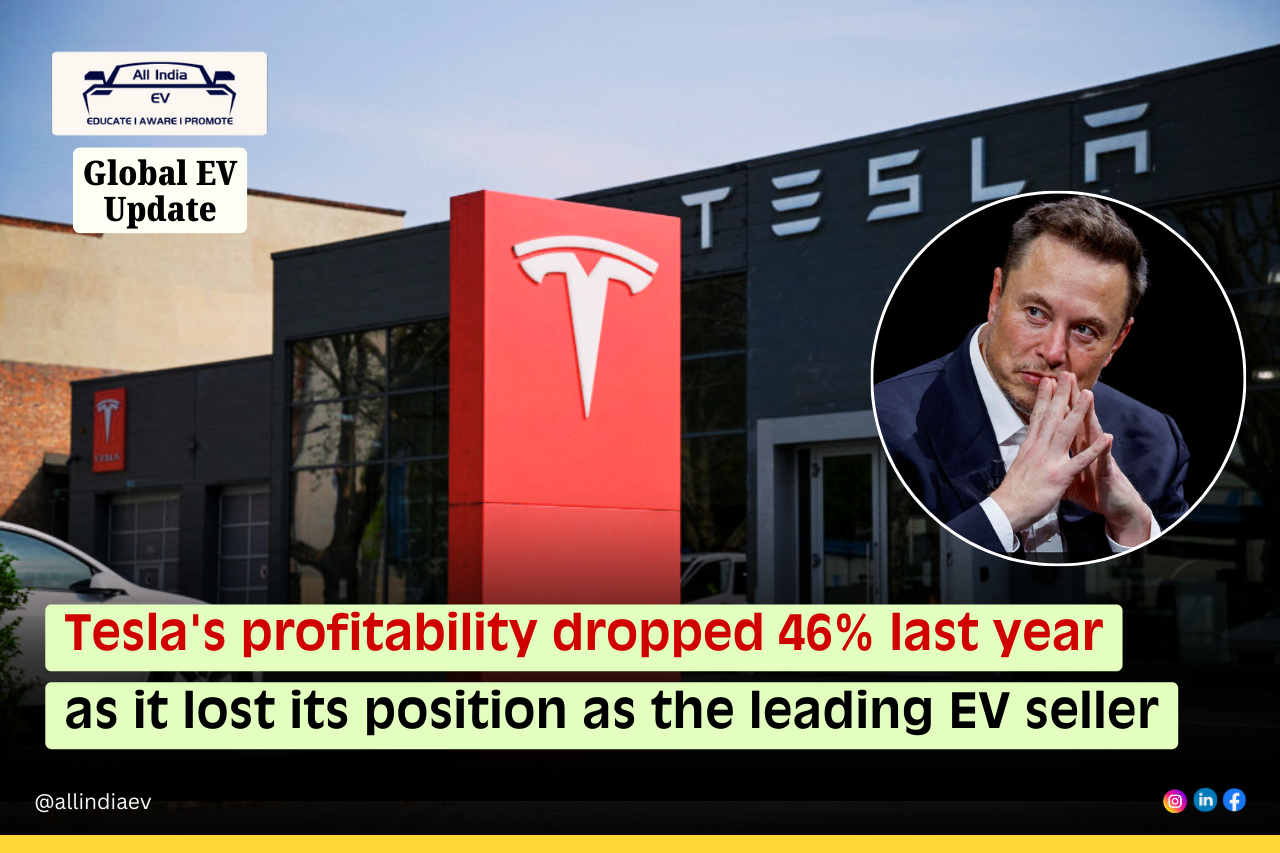
Tesla Inc. reported a significant downturn in its financial performance for the full year of 2025, with annual profits hitting their lowest levels since the pandemic five years ago. On Wednesday, the electric vehicle pioneer, led by Elon Musk, revealed that net income for the year plummeted 46% to $3.8 billion, marking the second consecutive year of steep declines.
The results highlight a challenging period for the Austin, Texas-based company, which has officially lost its crown as the world’s largest electric vehicle manufacturer to a Chinese rival. A combination of an aging product lineup, intensifying global competition, and consumer boycotts linked to Musk’s political involvement in the United States has significantly hampered the company’s traditional car sales.
The Pivot: From Cars to Androids
In an earnings call following the report, Elon Musk took a characteristic “look ahead” stance, urging shareholders to focus less on quarterly vehicle deliveries and more on a “bright new future” driven by Artificial Intelligence (AI).
To underscore this shift, Musk announced that Tesla would cease production of its two oldest models, the Model S and Model X, in the second quarter of 2026. The company plans to convert its Fremont, California factory—once the heart of its sedan production—into a manufacturing hub for Optimus, Tesla’s humanoid robot. Musk’s vision for Optimus includes robots performing household chores, such as watering plants and caring for the elderly, which he believes will eventually represent the majority of Tesla’s value.
A $20 Billion Bet on AI
Tesla’s transition into an AI-first company comes with a massive price tag. Management revealed that capital expenditures will more than double this year to $20 billion. A portion of this spending involves Musk’s other ventures; Tesla disclosed a $2 billion investment into xAI, the billionaire’s private artificial intelligence firm.
The move has already drawn scrutiny from corporate governance experts. Critics point to potential conflicts of interest, as Musk holds significant stakes in both entities. Furthermore, xAI’s “Grok” assistant has faced criticism for generating controversial content, including nonconsensual sexualized deepfakes, adding a layer of reputational risk to the investment.
More EV News
Quarterly Mixed Bag
While the annual figures were sobering, the fourth quarter of 2025 offered a few silver linings for investors:
- Earnings per Share (EPS): Excluding one-time charges, Tesla reported 50 cents per share, beating the 45 cents projected by Wall Street analysts.
- Profit Margins: Gross profit margins rose to 20%, up from 16% a year prior, suggesting that despite lower sales volume, the company is becoming more efficient at manufacturing.
- Energy Storage: The Tesla Energy division saw revenues surge 25% to $3.8 billion, driven by the massive power requirements of new AI data centers popping up across the U.S.
The Robotaxi “Faith”
Despite the 61% drop in Q4 net income (falling to $840 million), Tesla’s stock has remained resilient, up roughly 9% over the past year. Much of this is attributed to “The Musk Premium”—the belief that the company will successfully launch a global robotaxi network.
Dan Ives, a bullish analyst at Wedbush Securities, stated that he expects Tesla’s robotaxis to be operational in more than 30 cities by the end of 2026. Ives believes Tesla will eventually capture 70% of the global self-driving market. This optimism persists despite the fact that European regulators have yet to approve Tesla’s “Full Self-Driving” software, missing a deadline Musk predicted a year ago.
The “Distraction” Factor
Analysts remain divided on whether Musk can deliver on these ambitious goals while juggling his other responsibilities. After spending early 2025 leading a government cost-cutting team in Washington, Musk is now eyeing a massive IPO for SpaceX as early as June.
“They’ve got an aging product that is less and less competitive,” said Sam Abuelsamid, an analyst at Telemetry. “Furthermore, there is the general brand destruction caused by Musk’s involvement in politics, which has clearly turned off a segment of potential customers.”As Tesla enters 2026, the company finds itself at a crossroads. It is no longer just a car company, but a high-stakes laboratory for autonomous transport and robotics. Whether it can turn these “science fiction” goals into a sustainable profit engine remains the $20 billion question for the year ahead.