
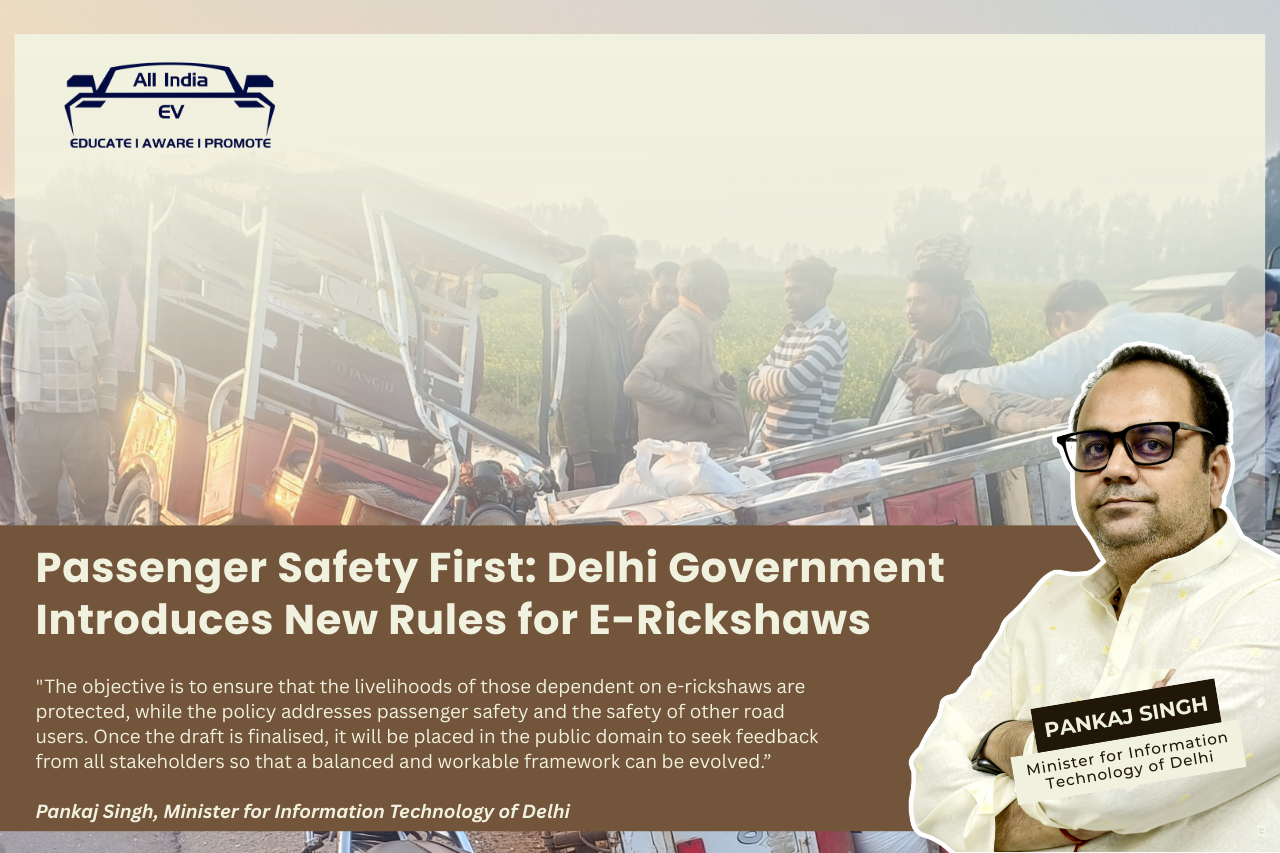

Draft framework to address safety lapses, registration gaps, parking and charging risks amid rapid growth of e-rickshaws in the capital
The Delhi government is preparing a comprehensive policy to regulate electric rickshaws (e-rickshaws) in the city after years of largely unregulated growth, with a sharpened focus on passenger safety and orderly road use. The transport department has been directed to draft the framework, which will be released publicly for stakeholder feedback once finalised.
E-rickshaws have become an indispensable part of the capital’s transport ecosystem, especially for last-mile connectivity. According to government figures, Delhi has well over 2 lakh registered passenger e-rickshaws, with numerous additional vehicles operating without formal registration. In some parts of the city, e-rickshaws now outnumber traditional auto-rickshaws, reflecting their widespread adoption among commuters such as students, women, and senior citizens.
However, this rapid proliferation has also brought significant challenges and safety concerns. Resident welfare groups and officials have highlighted issues such as unregistered vehicles plying on busy roads, drivers lacking licences, underage operation, haphazard parking, and unsafe charging practices at times linked to fires. These concerns have underscored the need for a structured regulatory approach that ensures safety without jeopardising the livelihoods of operators dependent on this mode of transport.
Policy Objectives: Safety First, Livelihoods Protected
According to Transport Minister Pankaj Singh, the draft policy aims to strike a balance between regulating the sector and protecting the rights of those who depend on e-rickshaws for their income. Key elements likely to be included are:
- Mandatory registration and fitness standards for both new and previously unregistered e-rickshaws, bringing all vehicles under a formal regulatory umbrella.
- Driver regulation, including licensing requirements, uniform standards, possible ID badges, and safety training to professionalise the workforce.
- Passenger safety measures, from vehicle design norms to loading limits, ensuring safer rides for all commuters.
- Designated parking and charging infrastructure, addressing issues of roadside congestion and reducing fire or electrical hazards linked to makeshift charging points.
Once drafted, the government plans to place the policy in the public domain to invite feedback from resident welfare associations (RWAs), e-rickshaw operators, market associations, transport officials and police. This consultative process is aimed at refining the framework so that it is both workable and balanced.
Background: A Growing But Unregulated Fleet
E-rickshaws emerged over a decade ago as an eco-friendly, affordable last-mile option. Their popularity surged due to ease of use, low operating costs, and rising demand for connectivity to metro stations and bus terminals areas where formal public transport often falls short. However, their unregulated growth has led to traffic congestion, safety risks and uneven distribution across the city.
More EV News

For example, north and east Delhi areas such as Rohini and Wazirpur account for a disproportionately large share of e-rickshaw operations, while south Delhi sees comparatively fewer vehicles. This uneven spread raises questions about integration with formal transport networks and equitable access for commuters across all city zones.
Judicial Attention and Public Interest
The push for regulation has also drawn judicial interest. The Delhi High Court has sought the government’s response to a public interest litigation (PIL) demanding stricter regulation of e-rickshaws, citing numerous accidents and safety lapses, including fatal crashes attributed to unregistered vehicles.
Road Ahead: Enforcement and Integration
Experts argue that a successful regulatory regime must not only ensure compliance with safety norms, but also facilitate better integration of e-rickshaws into the city’s broader urban mobility plan connecting them efficiently with buses, metros and other shared transport systems.As Delhi moves forward with its draft policy, the administration faces the twin challenges of formalising an informal transport sector and protecting the welfare of drivers and passengers alike. If well-implemented, the framework could serve as a model for other Indian cities grappling with similar e-rickshaw growth and safety concerns.