
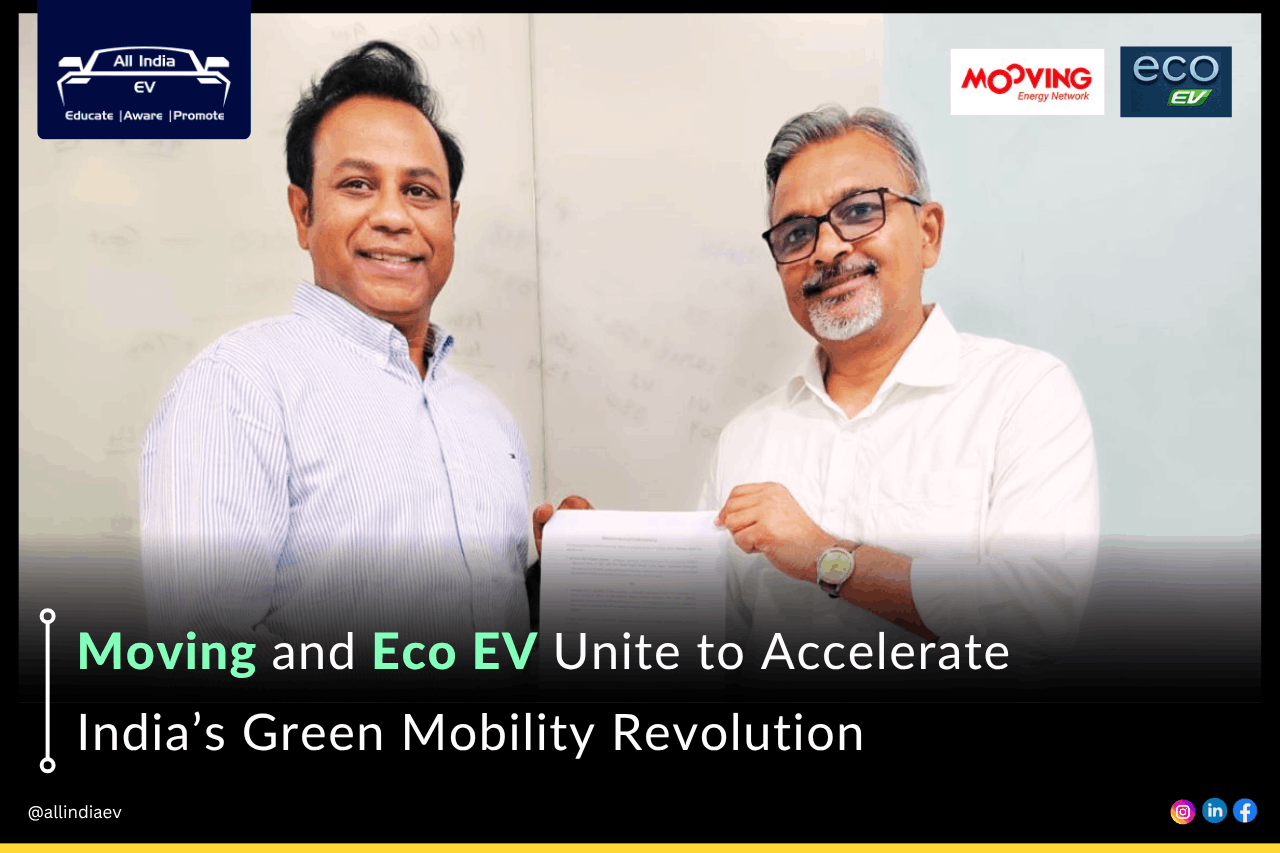


What: India-based EV energy platform Mooving is accelerating the expansion of its battery swapping and EV energy network across multiple Indian cities through partnerships, smart battery infrastructure deployment, and fleet-focused energy services.
The Number: Mooving claims to operate 900+ battery swap stations across India with services spanning 35+ cities, primarily targeting electric two-wheelers and three-wheelers.
The Impact: the rapid expansion of the Mooving battery swapping network could improve EV uptime for commercial fleets, reduce charging downtime, and strengthen India’s urban last-mile electrification ecosystem.

The Core News
The Mooving battery swapping network is emerging as a major infrastructure layer in India’s fast-growing commercial EV ecosystem. The Gurugram-based company is building a dense battery swapping architecture focused on electric two-wheelers, e-rickshaws, cargo mobility fleets, and urban delivery operations. Instead of relying on slow charging cycles, the company is pushing a battery-as-a-service model that enables near-instant battery replacement at automated swap stations.
The company’s recent activity indicates an aggressive infrastructure scale-up strategy. Mooving has been expanding station deployments in cities like Indore while also pursuing partnerships to integrate swapping infrastructure into larger mobility networks. Earlier, the company announced plans to collaborate with Hindustan Petroleum Corporation Limited for battery swapping deployment across fuel retail outlets, a move aimed at leveraging existing mobility infrastructure for EV adoption.
The broader significance lies in commercial EV economics. India’s delivery fleets, passenger three-wheelers, and hyperlocal logistics operators continue to face operational challenges linked to charging downtime, battery ownership cost, and inconsistent charging access. Battery swapping networks like Mooving’s attempt to solve these bottlenecks through standardized energy access, IoT-enabled battery management systems, and distributed urban energy nodes. This model is increasingly becoming critical for high-utilization commercial EV segments where vehicle uptime directly impacts daily earnings.
More EV News
Breaking Down the Update
• Mooving currently operates 900+ battery swapping stations across India
• The company’s services are active in more than 35 cities
• Infrastructure is focused mainly on electric 2W and 3W commercial mobility
• The platform uses IoT-enabled battery monitoring and smart energy management
• Battery-as-a-service reduces upfront EV ownership costs for fleet operators
• Partnerships with fuel retail and mobility companies could accelerate deployment scale
• Commercial fleet uptime and faster turnaround remain the primary business drivers
• Battery swapping is gaining traction in India’s last-mile delivery and urban transport sectors
How Mooving battery swapping network will help Indian EV Market
The Mooving battery swapping network can play an important role in solving some of India’s biggest EV adoption barriers, especially in the commercial mobility segment. One of the largest challenges for electric two-wheelers and three-wheelers remains charging downtime. Fleet operators, delivery riders, and passenger transport drivers lose productive hours while vehicles remain plugged into chargers. Battery swapping eliminates this delay by replacing depleted batteries within minutes.
The model also reduces the upfront purchase cost of EVs. Under battery leasing or battery-as-a-service structures, users do not need to buy expensive battery packs outright. This lowers the initial ownership burden and improves affordability for gig workers, logistics companies, and small commercial operators.
Another major advantage is urban scalability. India’s dense cities often lack dedicated parking and charging access. Distributed swap stations can function as compact energy nodes without requiring long charging durations or heavy real estate footprints.
If executed efficiently, the Mooving battery swapping network could support faster fleet electrification, improve EV utilization rates, and create a more practical energy access system for high-frequency mobility operations across Indian cities.
Conclusion & Next Steps
The expansion of the Mooving battery swapping network reflects a larger shift in India’s EV infrastructure strategy toward high-uptime energy models for commercial mobility. The next phase will depend on interoperability standards, battery standardization, station economics, and execution at scale. As fleet electrification accelerates, swapping operators that can maintain dense networks and reliable energy access may become central to India’s urban EV ecosystem. The growth of the Mooving battery swapping network will be closely watched by fleet operators, energy companies, and mobility startups alike.
Read More: Catch up on All India EV’s related coverage on India’s evolving commercial EV subsidies and battery swapping policies at All India EV