
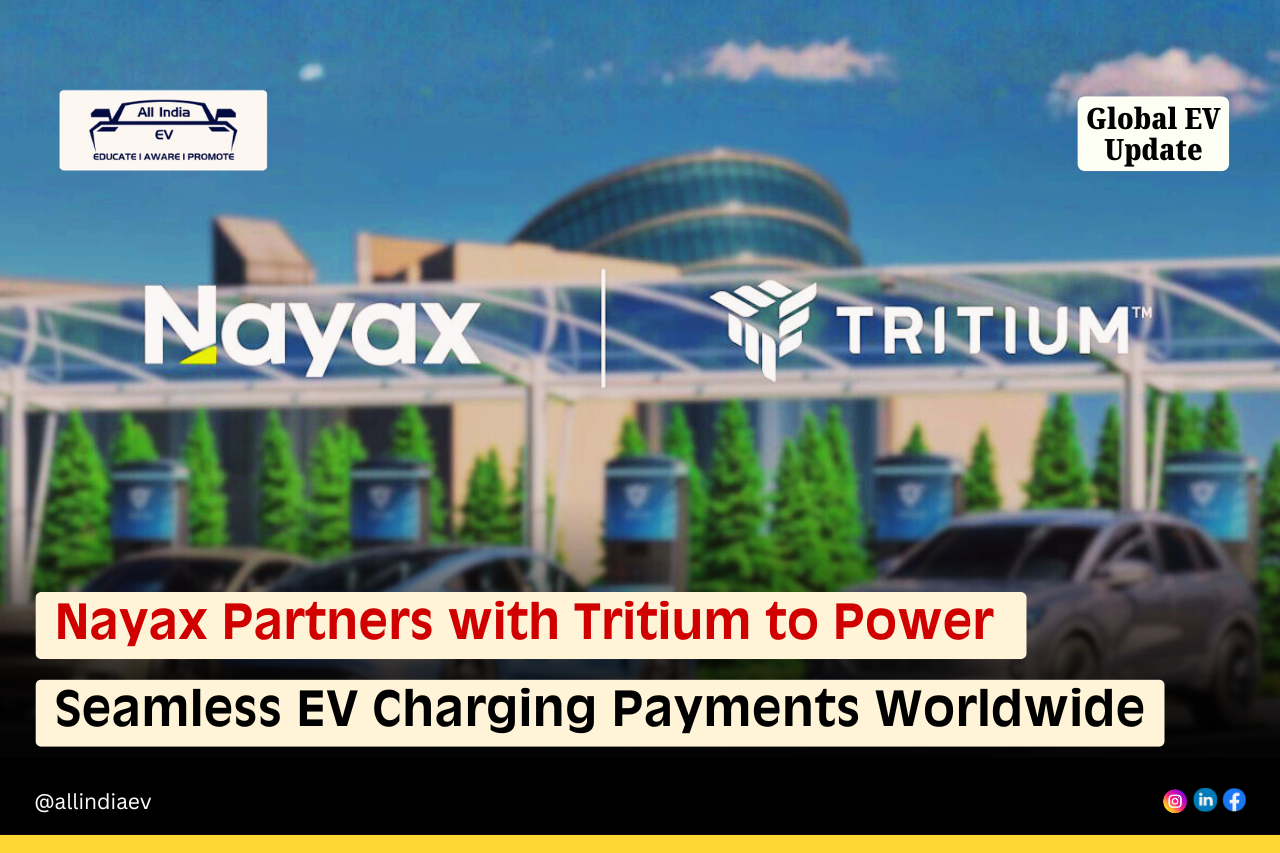


Deal Enables Tap-to-Pay Solutions Across 50+ Countries, Boosting EV Charging Usability and Adoption
In a major development for the electric vehicle (EV) ecosystem, Nayax Ltd. has officially announced a global strategic partnership with Tritium, marking a significant leap toward simplifying and expanding payment solutions across EV charging stations worldwide. This collaboration, unveiled on February 18, 2026, is expected to streamline the charging experience, encouraging broader consumer adoption of EVs by removing payment friction that has long challenged drivers.
Empowering EV Charging Payments Across the Globe
The partnership enables Tritium a leading manufacturer of DC fast charging solutions to implement Nayax’s unified card-present payment system across its extensive network of charging stations in more than 50 countries. Until now, many charging networks have relied heavily on mobile apps or dedicated user accounts for payments, which can deter some users. Integrating a standard credit and debit card payment method directly at the charger marks a crucial milestone toward broader accessibility.
Under the agreement, Tritium customers can retrofit existing chargers with Nayax payment devices that activate cashless payment acceptance within minutes, thanks to seamless cloud-based integration and a purpose-built mounting bracket designed by Tritium. Charger operators have the flexibility to manage payments through Nayax’s own Charge Point Management Software (CPMS), or choose from roughly 30 compatible third-party CPMS platforms already linked with the system globally.
Driving Ease and Inclusion in EV Payments
A central goal of the partnership is to enhance consumer choice and remove barriers for EV users who may not be comfortable using mobile apps. According to Dylan Winik, CEO of Nayax Oceania, adding credit and debit card acceptance “makes it easier for mass consumer adoption of EV charging” by allowing drivers to simply tap and pay without needing specialized software on their phones.
More EV News

Beyond enabling straightforward card payments, the integrated solution supports the full charging journey. Users and operators can start and stop charging sessions, monitor charging status in real time via web links, and receive customized digital receipts features designed to boost transparency and user satisfaction across charging networks.
Industry Perspective on the Partnership
Ian Agnew, Sales Director for Australia and New Zealand at Tritium, emphasized that this collaboration offers “greater flexibility and choice” for customers operating within Tritium’s global DC fast charging network. By merging Tritium’s hardware with Nayax’s payment expertise, the companies aim to strengthen the charging experience for networks and EV drivers alike.
Tritium’s global footprint, with over 21,000 deployed chargers spanning more than 50 nations, combined with this new payment capability, positions the duo to make a noticeable impact on the EV charging landscape. Tritium’s manufacturing presence across the United States, United Kingdom, and Australia further underscores the broad reach of this initiative.
Strategic Impact on EV Adoption and Market Growth
Simplifying payments at EV charging stations has been widely recognized as a critical step in improving the consumer experience. By enabling standard payment cards a method familiar to most drivers the partnership directly addresses a key obstacle that can deter new EV users. Experts have suggested that this move could accelerate EV adoption by lowering the entry barrier for charging, particularly among drivers who prefer traditional payment options over app-based systems.
In addition to advancing payment technologies, Nayax has maintained momentum with innovative product offerings and strategic moves in the EV charging space, earning positive investor attention and reinforcing its role in an evolving market.
Conclusion
The Nayax–Tritium partnership represents a significant evolution in EV infrastructure, bringing simplified, inclusive, and globally scalable payment solutions to the fast-charging ecosystem. As EV adoption continues to rise, such collaborations will be essential to building a user-friendly charging network that supports drivers of all preferences and technological comfort levels.