

The Quick Update
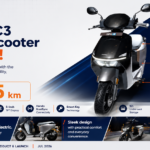
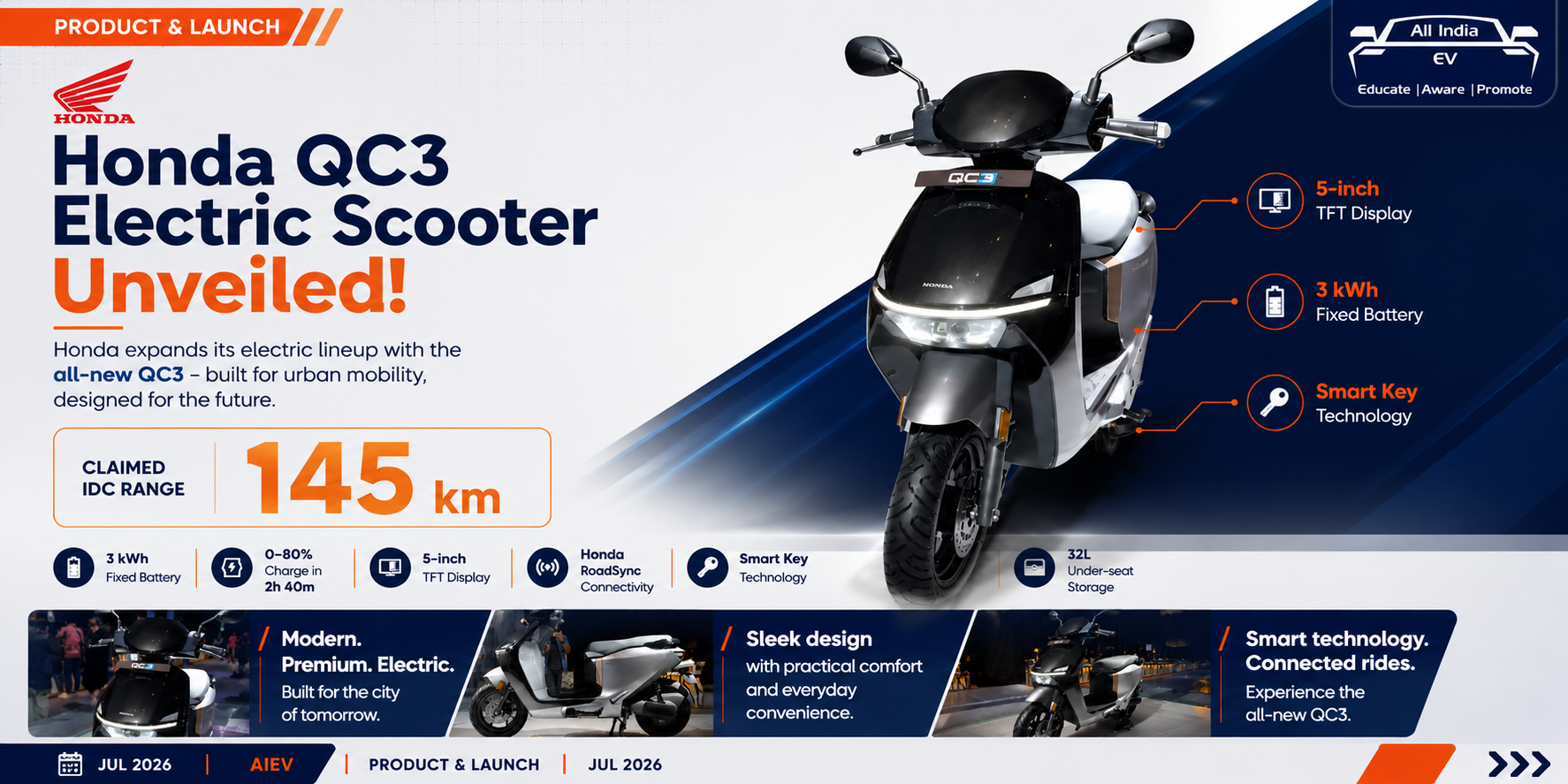
- What Happened: Honda Motorcycle & Scooter India (HMSI) has unveiled the QC3 electric scooter, expanding its domestic electric two-wheeler portfolio. Positioned above the QC1, the new model offers a larger battery, higher claimed range and a more premium feature set.
- The Key Number: 145 km claimed IDC (Indian Driving Cycle) range on a single charge.
- Why It Matters: The QC3 strengthens Honda’s presence in India’s fast-growing electric scooter segment by targeting customers seeking longer range, faster charging and enhanced everyday practicali
The Core News
The Facts
- Honda QC3 electric scooter has been unveiled as the third electric two-wheeler in Honda’s India portfolio after the Activa e: and QC1.
- The scooter is powered by a fixed 3 kWh lithium-ion battery with a claimed IDC-certified range of 145 km.
- Honda has not announced the QC3’s price or launch timeline.
The Context
- The QC3 sits above the QC1 and is aimed at riders looking for longer commuting range and additional connected features.
- The scooter was showcased alongside Honda’s broader lineup of new two-wheelers unveiled for the Indian market.
- Honda continues to expand its electric mobility strategy as competition intensifies in India’s electric two-wheeler market.
The Significance
- A 145 km claimed range could make the QC3 Honda’s longest-range electric scooter for India to date.
- Premium connected features indicate Honda’s focus on buyers seeking technology alongside daily usability.
- The model expands consumer choice in the premium electric scooter segment, where established and emerging manufacturers continue to compete.
Breaking Down the Update
- Battery: Fixed 3 kWh lithium-ion battery pack.
- Range: Claimed IDC-certified range of 145 km.
- Charging: 0-80% charging in 2 hours 40 minutes; full charge in about 4-5 hours.
- Technology: 5-inch TFT display with Honda RoadSync, Bluetooth connectivity and turn-by-turn navigation.
- Practicality: 32-litre under-seat storage and Smart Key system.
- Hardware: Telescopic front forks, dual rear shock absorbers, front disc brake and rear drum brake.
How Honda QC3 electric scooter Will Help the Indian EV Market
The Honda QC3 electric scooter adds another option to India’s rapidly expanding electric two-wheeler market, particularly for customers seeking longer riding range without moving to larger or more expensive electric vehicles. Its claimed 145 km IDC range addresses one of the primary concerns among EV buyers—range confidence—while the fixed battery architecture supports conventional home and workplace charging.
For consumers, the combination of connected features, a TFT display, smartphone integration and a 32-litre storage compartment improves the overall ownership experience by blending convenience with everyday practicality. The inclusion of faster charging further reduces downtime, making the scooter suitable for daily urban commuting.
For the broader industry, Honda’s continued investment in expanding its EV lineup signals stronger competition in the premium electric scooter segment. Greater participation from established manufacturers is expected to encourage improvements in technology, product quality and after-sales support across the market.
As India advances its electric mobility goals, new products such as the QC3 contribute to expanding consumer choice and accelerating EV adoption. Increased competition among manufacturers may also drive innovation and strengthen the country’s electric two-wheeler ecosystem over the long term.
Way Forward …
The Honda QC3 electric scooter marks another step in Honda’s expanding electric mobility strategy for India. While its claimed range, connected technology and practical features position it competitively within the premium scooter segment, pricing and launch timelines will ultimately determine its market reception. Those announcements, along with real-world performance and customer response, will be key developments to watch as Honda strengthens its position in India’s evolving EV landscape.
Read More: Catch up on All India EV’s related coverage on India’s evolving commercial EV subsidies and battery swapping policies at All India EV