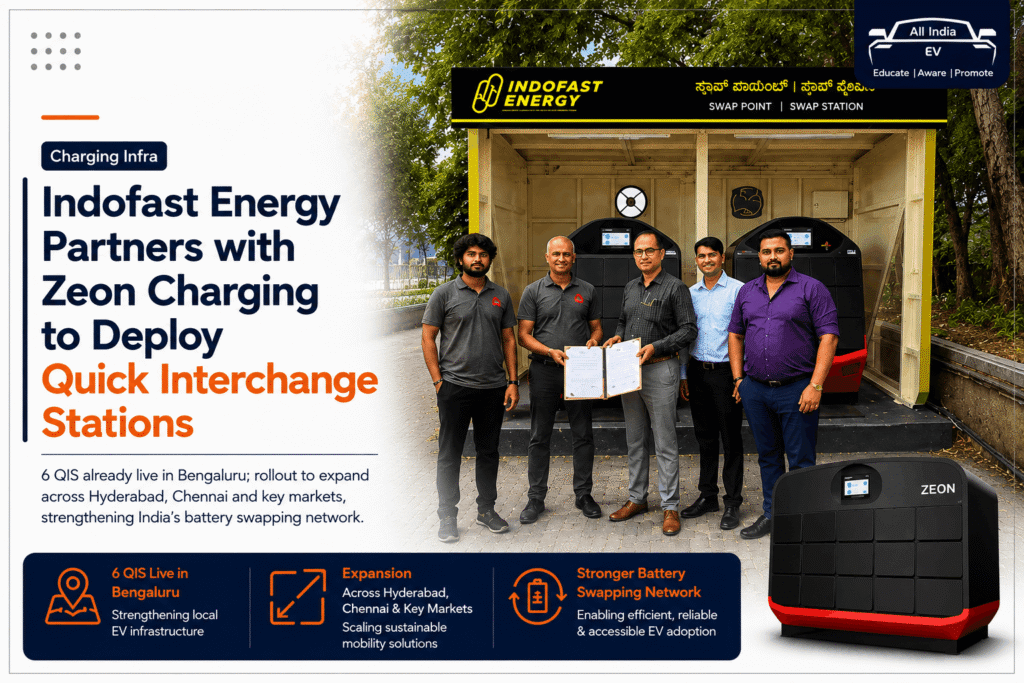


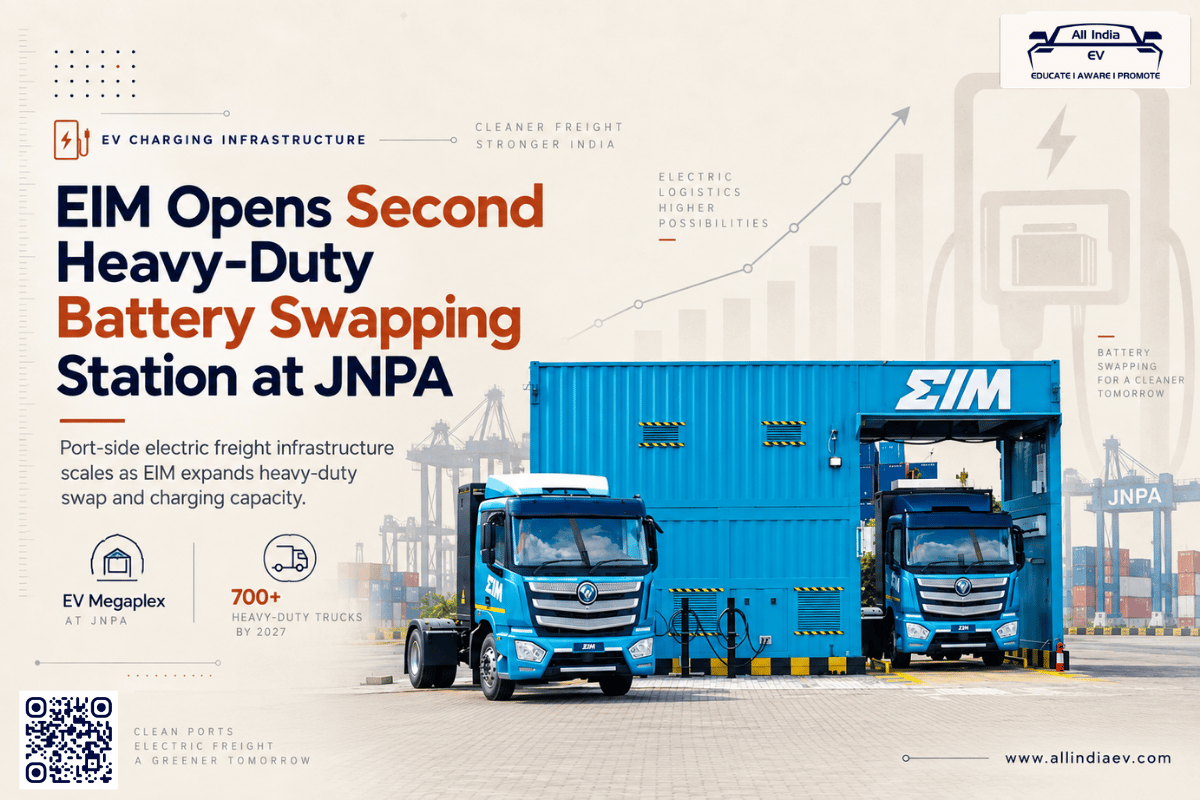
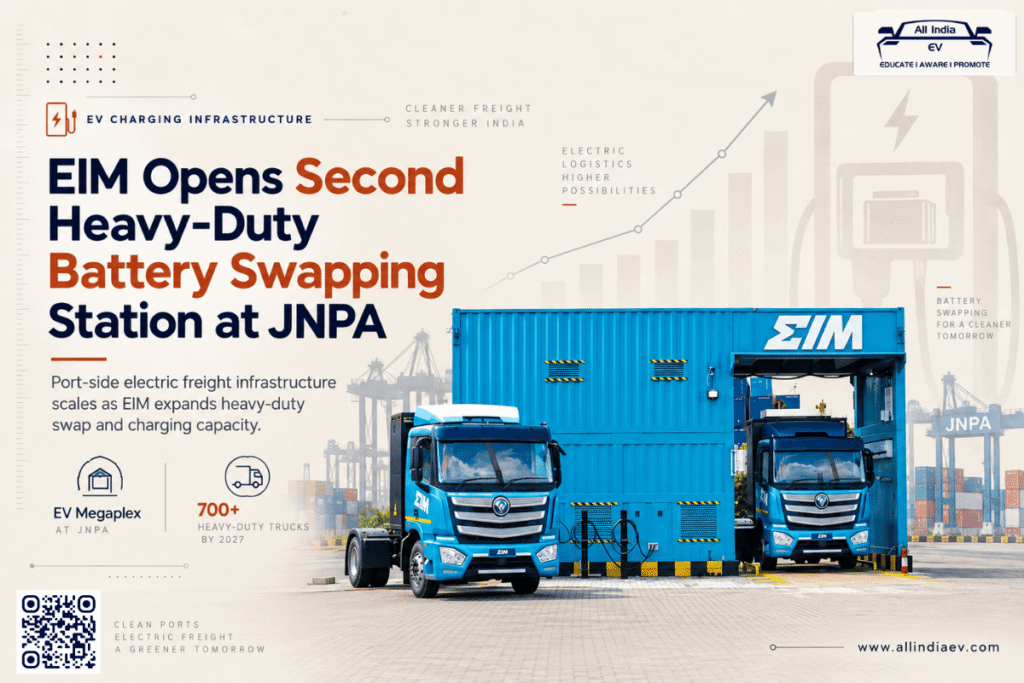
Energy In Motion (EIM) has inaugurated its second heavy-duty battery swapping-cum-charging station at the Nhava Sheva Distribution Terminal (NSDT) under the Jawaharlal Nehru Port Authority, expanding the energy infrastructure supporting electric truck operations at one of India’s largest container ports.
The new EIM battery swapping station is the next step toward a planned EV Megaplex at JNPA, which is expected to eventually support more than 700 heavy-duty electric trucks. The project also aligns with JNPA’s target of completing its energy transition by December 2027.
Nearly 150 EIM Electric Trucks Already Operate at JNPA
The second facility comes as EIM’s electric truck fleet at the port continues to expand.
According to the company, nearly 150 electric trucks are currently operating within the JNPA ecosystem. EIM’s first E5 battery-swapping facility at the port has already reached its stated operational capacity, creating the requirement for additional swapping and charging infrastructure.
This makes the new station different from infrastructure built in anticipation of future demand. It is being added after the first facility reached capacity, giving EIM a real-world utilisation case for expanding heavy-duty charging infrastructure.
For commercial vehicles, that distinction matters because charger economics ultimately depend on how consistently infrastructure is used.
EV Megaplex Will Combine Swapping, Service and Training
EIM’s larger plan extends beyond adding individual battery-swapping stations.
The proposed EV Megaplex is expected to include three battery swap-cum-charging stations, a dedicated service facility, a driver training centre and a heavy-vehicle simulator.
The idea is to bring energy, vehicle servicing and driver preparation into the same freight ecosystem.
Battery swapping is particularly relevant for heavy commercial vehicles because charging downtime directly affects the number of revenue-generating kilometres a truck can complete each day. EIM positions automated battery swapping as a way to return vehicles to operation within minutes rather than keeping trucks stationary for extended charging sessions.
Electric Freight Expands Beyond Port Movements
EIM is also extending its operations beyond dedicated movements inside the port.
Managing Director Narendra Murkumbi said electric freight operations are expanding into container freight station movements, requiring coordination between EIM, JNPA, terminal operators and logistics service providers. The company is also using slot-booking and optimisation systems to integrate electric trucks into high-throughput freight operations.
This is important because port electrification becomes more valuable when electric trucks move beyond controlled internal routes and begin handling a larger share of the surrounding logistics network.
EIM’s broader model combines electric heavy commercial vehicles, battery swapping, charging infrastructure, Battery-as-a-Service and energy-management software. Its network roadmap currently identifies 55 priority swap-station sites across India, including existing, upcoming and planned locations.
Why JNPA Is an Important Test for Heavy-Duty Battery Swapping
Port logistics offers conditions that can favour battery swapping: high vehicle utilisation, repetitive routes, concentrated freight demand and predictable operating patterns.
These characteristics allow energy infrastructure to be deployed where trucks are already moving frequently rather than relying on a widely dispersed public charging network.
For EIM, the JNPA deployment therefore provides more than another charging location. It gives the company an operating environment where it can test whether battery swapping can support heavy electric trucks at meaningful commercial scale.