


India’s electric vehicle (EV) market is expanding as consumers look for cleaner mobility and lower day-to-day running costs. However, new data highlights an important concern for EV owners: repairing an electric car after an accident can be more expensive than repairing a comparable petrol or diesel vehicle.
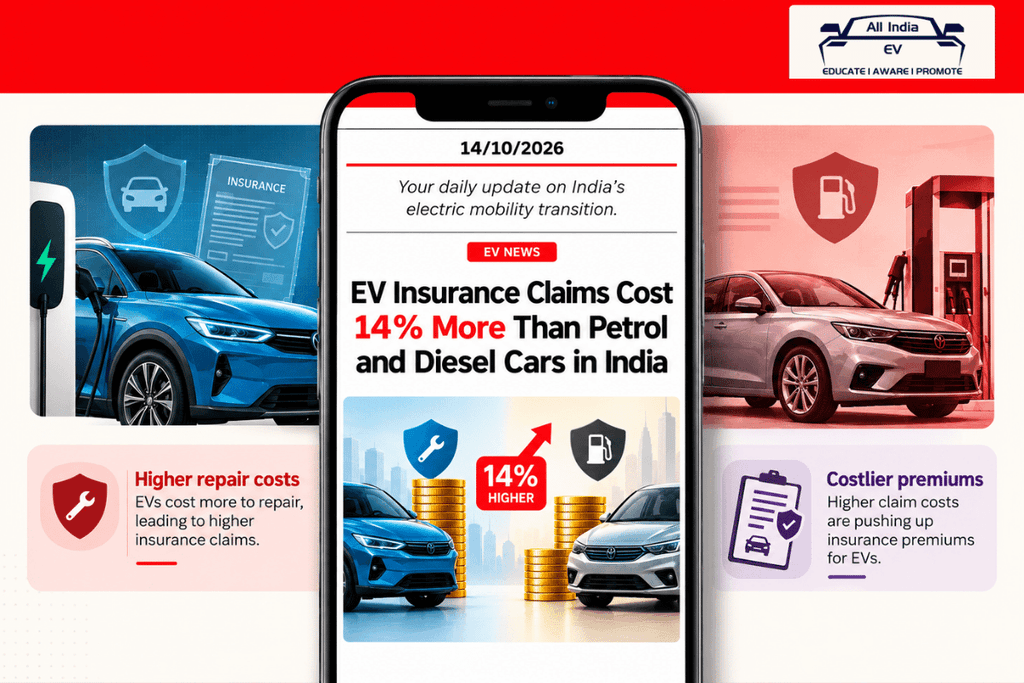
According to data released by insurance marketplace Policybazaar, insurance claims for electric cars cost around 14% more on average than claims for comparable internal combustion engine (ICE) vehicles. The findings underline the importance of selecting the right motor insurance policy as electric mobility gains momentum across India.
EV Repair Claims Are More Expensive
Policybazaar’s data shows that the average insurance claim cost for an electric car stands at ₹41,543, compared with ₹36,185 for a comparable petrol or diesel car. The comparison covers vehicles priced between ₹10 lakh and ₹15 lakh during their first three years of ownership, excluding large-loss claims.
The difference reflects the specialised components used in electric vehicles, including high-voltage battery packs, electric motors, battery cooling systems and advanced electronic systems. Damage to these components can result in substantial repair or replacement expenses.
Battery packs are among the most expensive parts of an electric car. Depending on the model, replacing the battery can cost as much as 40–50% of the vehicle’s total value. The availability of imported components, specialised technicians and suitable repair facilities can further increase the cost of restoring a damaged EV.
While electric vehicles can offer savings on fuel and routine maintenance, these figures show that owners should also consider the potential cost of accident repairs when calculating the overall cost of ownership.
Monsoon Conditions Increase Insurance Claim Costs
Weather-related risks are another concern for electric car owners, particularly during India’s monsoon season. Waterlogging, flooding and heavy rainfall can expose vehicles to damage that may require expensive inspection, repair or replacement of electrical components.
Policybazaar data indicates that the average EV insurance claim cost rises to nearly ₹65,000 during the monsoon, compared with approximately ₹52,000 during the rest of the year. This represents an increase of around 25%.
EV owners should therefore exercise caution when driving through flooded roads and avoid taking vehicles into deep standing water. They should also check their insurance policy to understand whether specific types of water-related or battery damage are covered.
Battery Protection Cover Gains Popularity
As awareness of EV repair expenses increases, more owners are choosing additional insurance protection. Policybazaar reports that around 80% of electric car owners opt for at least two key add-ons, such as battery protection, zero depreciation, roadside assistance and consumables cover.
By comparison, the corresponding share stands at 75% among petrol car owners and 77% among diesel car owners. Battery protection cover adoption among EV owners has also increased from 51% to 70% over the six months covered by the data.
These add-ons can help reduce certain financial risks, but their benefits depend on the specific policy terms, exclusions and claim conditions. Owners should confirm what is covered before purchasing additional protection.
SUVs Record the Highest Claim Frequency
The data also highlights differences in claim frequency across electric car body styles. Electric SUVs recorded 31 claims per 100 insured vehicles, followed by hatchbacks at 28 and sedans at 26.
Higher claim frequency may be associated with driving conditions, vehicle usage, traffic density and the likelihood of underbody, tyre or suspension damage. However, claim frequency alone does not determine the repair cost or insurance premium for an individual vehicle.
Tier-II Cities See More EV Insurance Claims
Electric vehicle insurance claims are also becoming an important consideration beyond India’s major metropolitan areas. Policybazaar recorded 33 claims per 100 insured EVs in Tier-II cities, compared with 30 in Tier-I cities. East India reported the highest regional claim frequency at 41 claims per 100 insured vehicles, followed by North India at 34.
These figures highlight the importance of access to suitable repair facilities and insurance services as EV adoption expands into smaller cities.
What EV Owners Should Check Before Buying Insurance
Electric car owners should compare policies based on more than just the premium. Battery damage coverage, zero-depreciation benefits, deductibles, exclusions, roadside assistance and access to authorised EV repair centres are important factors to review.
A comprehensive policy does not automatically cover every battery-related problem. Owners should carefully examine the conditions applicable to accidental damage, water ingress and other electrical failures.
Electric vehicles can deliver meaningful savings during everyday use, but higher repair-related insurance claims remain a key ownership consideration. Choosing suitable coverage and understanding policy exclusions can help EV owners manage unexpected expenses while supporting India’s transition towards electric mobility.