

The Quick Update
What Happened:
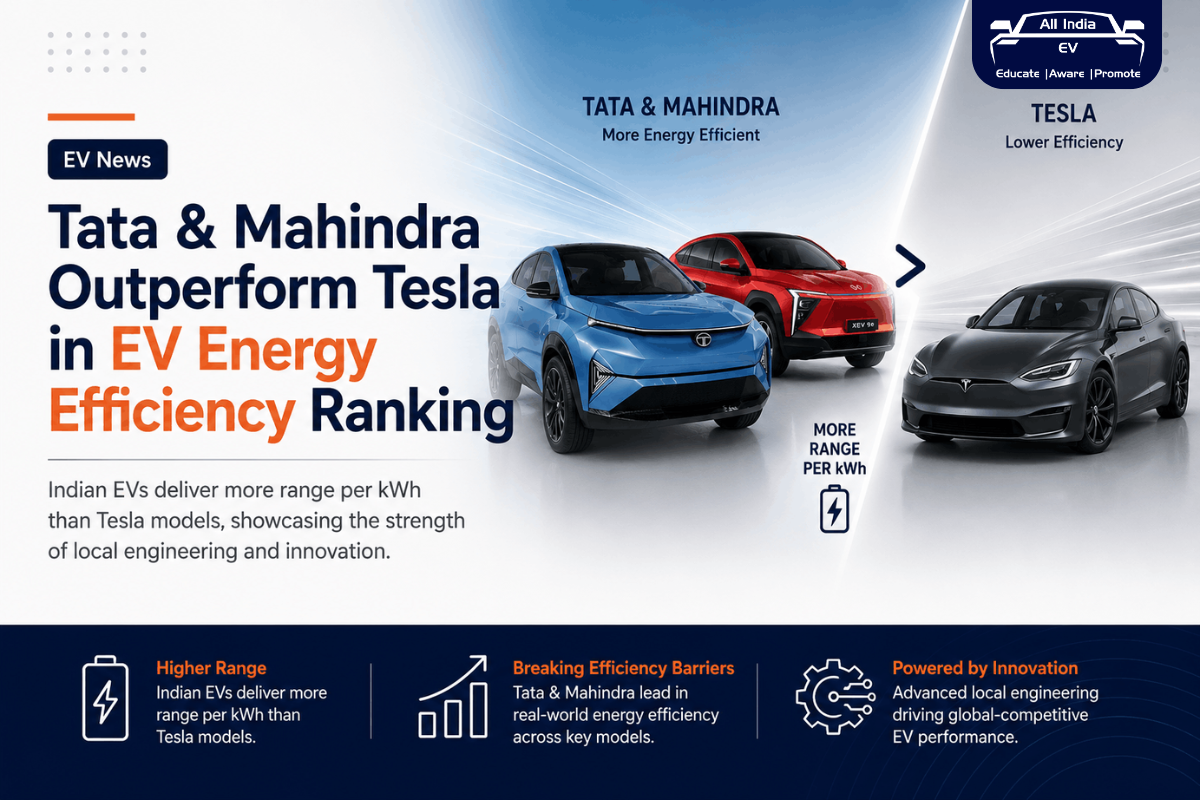
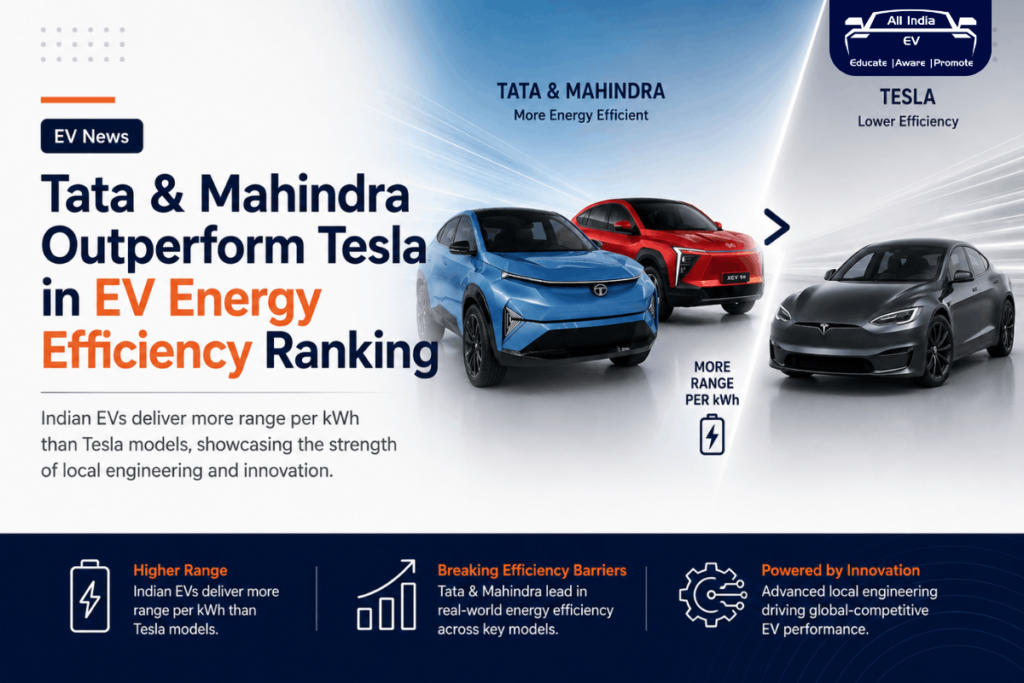
Indian automakers Tata Motors and Mahindra have secured the top two positions in the International Council on Clean Transportation (ICCT) Global Automaker Rating 2025 for battery electric vehicle (BEV) energy efficiency, overtaking global EV leaders Tesla and BYD.
The Key Number:
106 Wh/km — Tata Motors recorded the world’s lowest average energy consumption across its BEV portfolio, followed by Mahindra at 113 Wh/km.
Why It Matters:
The rankings demonstrate that Indian automakers are becoming global leaders in energy-efficient EV engineering. Rather than relying on larger battery packs, Tata and Mahindra have optimized vehicle design, enabling lower energy consumption while helping reduce production costs and vehicle weight.
The Core News
India’s EV energy efficiency ranking has received global recognition after Tata Motors and Mahindra topped the International Council on Clean Transportation’s (ICCT) 2025 assessment of battery electric vehicle manufacturers. Evaluating 22 global automakers, the report placed Tata first with an average energy consumption of around 106 Wh/km and Mahindra second at approximately 113 Wh/km, ahead of Tesla and BYD.
The findings highlight India’s engineering approach to electric mobility. Unlike manufacturers that prioritize larger battery packs and maximum driving range, Tata and Mahindra have focused on compact, lightweight electric SUVs tailored for urban mobility and price-sensitive markets. This strategy enables sufficient driving range while using smaller batteries, lowering both energy consumption and manufacturing costs without compromising everyday usability. However, the ICCT assessment measures fleet-wide efficiency and does not imply that Tata or Mahindra outperform Tesla or BYD across all performance metrics such as charging speed, acceleration or driving range.
The achievement reinforces India’s growing position in the global EV industry. As battery packs remain among the most expensive components in an electric vehicle, improvements in energy efficiency can significantly reduce vehicle weight, material usage and ownership costs. For OEMs, the ranking validates a design philosophy centered on efficiency rather than simply increasing battery capacity, an approach that could influence future EV development worldwide.
Breaking Down the Update
- Global Ranking: Tata Motors ranked first and Mahindra second in the ICCT Global Automaker Rating 2025 for BEV energy efficiency.
- Energy Consumption: Tata averaged 106 Wh/km, while Mahindra recorded 113 Wh/km across their EV portfolios.
- Global Competitors: Tesla and BYD finished third and fourth respectively among 22 evaluated manufacturers.
- Competitive Advantage: Smaller battery packs reduce vehicle weight, manufacturing costs and overall energy consumption.
- Assessment Method: ICCT evaluates the average efficiency of an automaker’s complete BEV lineup rather than individual vehicle models.
- Industry Insight: The report highlights that efficient vehicle engineering can be as important as extending driving range with larger batteries.
How EV energy efficiency ranking Will Help the Indian EV Market
India’s strong performance in the EV energy efficiency ranking reinforces the country’s growing capabilities in electric vehicle engineering and product optimization. As battery packs account for a substantial share of EV manufacturing costs, improving energy efficiency enables manufacturers to achieve practical driving ranges with smaller batteries. This can lower production expenses, reduce vehicle weight and improve affordability for Indian consumers.
The recognition also strengthens the global credibility of Indian automakers. Tata Motors and Mahindra have demonstrated that engineering focused on efficient powertrains, lightweight platforms and optimized battery management systems can compete with established international EV manufacturers. This could encourage further investments in research and development, localization of advanced EV technologies and exports of Indian-designed electric vehicles.
For policymakers, the results support India’s broader goals of expanding EV adoption while reducing dependence on imported energy. Efficient electric vehicles require less electricity per kilometre, reducing pressure on charging infrastructure and the power grid as EV penetration increases. Over the long term, continued improvements in efficiency can help accelerate India’s transition toward sustainable mobility by making electric vehicles more accessible, economical and environmentally beneficial across multiple vehicle segments.
Way Forward …
The EV energy efficiency ranking highlights a significant milestone for India’s automotive industry, demonstrating that domestic manufacturers can compete globally through engineering efficiency rather than battery size alone. Going forward, the focus will shift toward translating these technical achievements into stronger market adoption through improved charging infrastructure, longer real-world range, faster charging capabilities and competitive pricing. As global automakers increasingly prioritize efficient vehicle architectures, India’s approach could shape the next phase of affordable electric mobility worldwide.