

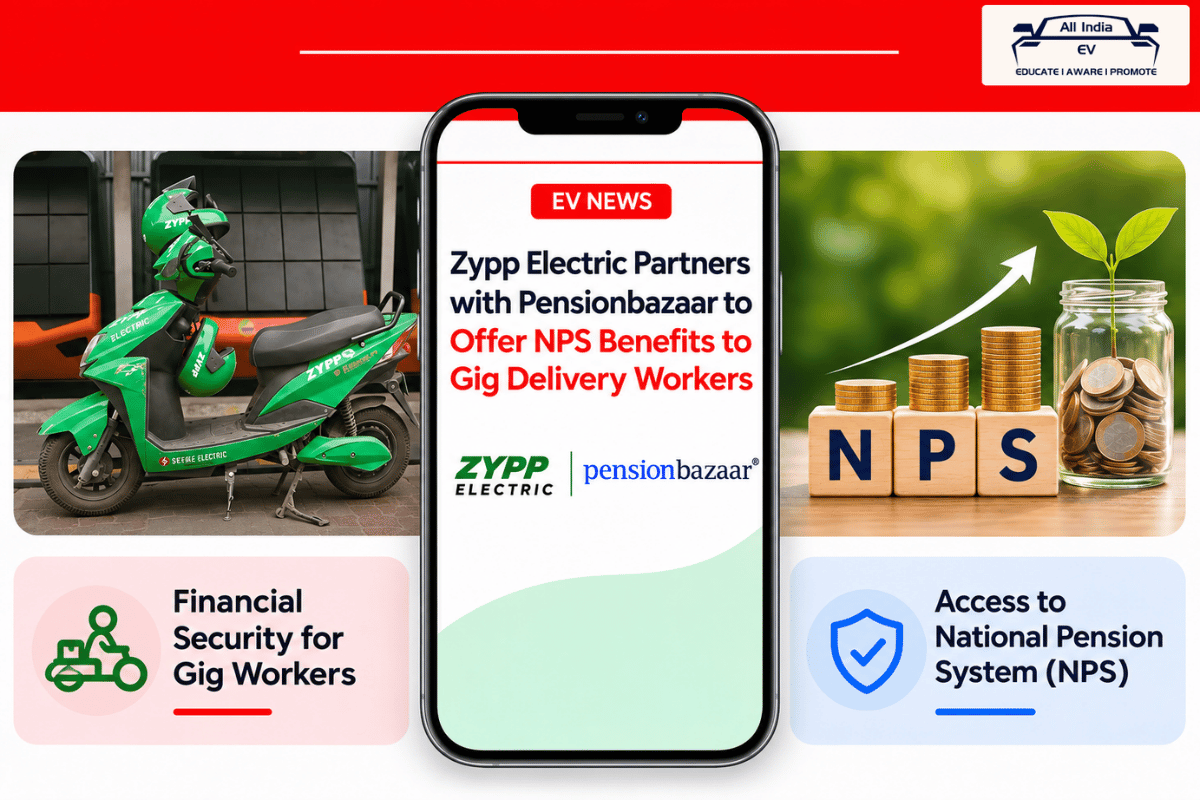
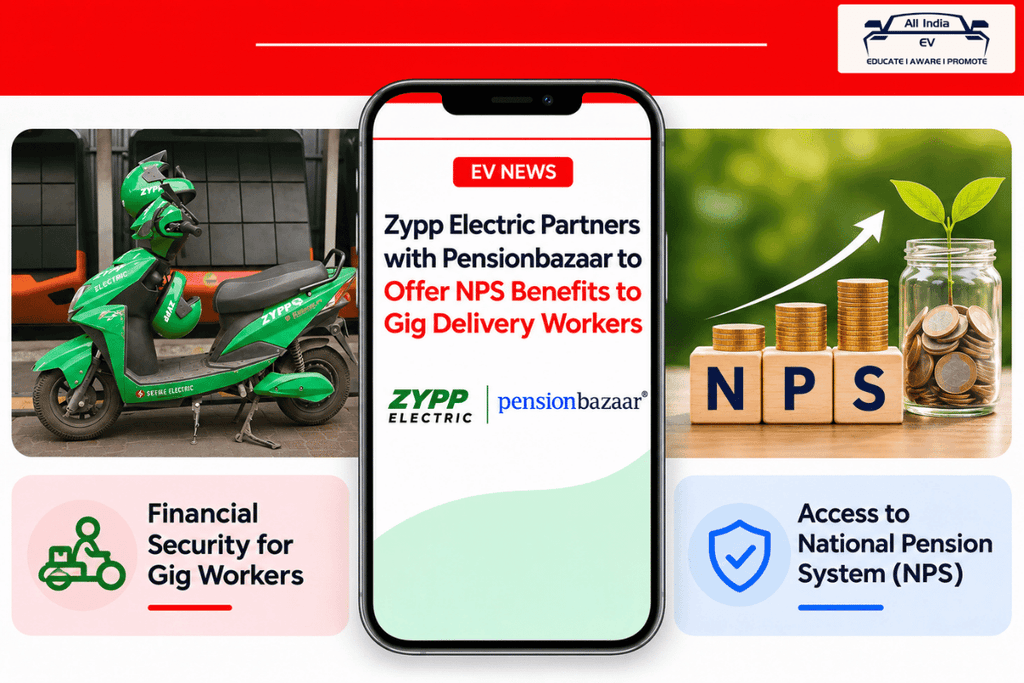
Zypp Electric, one of India’s leading electric vehicle-based last-mile delivery platforms, has partnered with Pensionbazaar to extend National Pension System (NPS) benefits to its gig delivery partners. The initiative aims to provide financial security and encourage long-term retirement planning among delivery workers who often operate without access to traditional employment benefits.
The partnership marks an important step towards improving the social security framework for India’s growing gig workforce. Through this collaboration, eligible Zypp Electric delivery partners will be able to digitally enrol in the National Pension System and start building retirement savings through a structured investment scheme.
Zypp Electric currently operates a fleet of more than 30,000 electric vehicles across eight cities in India. The company aims to bring 60–70% of its eligible delivery partners under the pension programme within the first six to twelve months of the partnership.
Digital NPS Enrolment for Delivery Partners
Under the partnership, eligible delivery partners can complete their NPS registration through a consent-based digital onboarding process. The enrolment and account activation process will be subject to applicable eligibility criteria and Know Your Customer (KYC) requirements.
The digital approach is designed to make pension facilities more accessible to gig workers, eliminating several challenges associated with traditional retirement savings programmes.
Delivery partners will also have the flexibility to contribute towards their pension accounts based on their individual earnings and financial capacity. Contributions can be made through multiple digital payment methods, including Unified Payments Interface (UPI), net banking and debit or credit cards.
This flexible contribution structure is particularly relevant for gig workers, whose incomes can fluctuate depending on delivery volumes, working hours and platform activity.
Focus on Long-Term Financial Security
Gig delivery workers play an important role in India’s rapidly expanding e-commerce, quick-commerce and last-mile logistics sectors. However, many workers lack access to retirement benefits, provident funds and other forms of formal financial protection.
The Zypp Electric and Pensionbazaar partnership seeks to address this gap by introducing a structured retirement savings option for delivery partners.
Akash Gupta, Co-founder and CEO of Zypp Electric, highlighted that the initiative would help delivery partners begin building retirement savings through a formal pension scheme. He also indicated that the company aims to expand its platform and ecosystem to support more than 25 lakh gig workers over the next two to three years.
Vishwajeet Goel, Head of Pensionbazaar, stated that the partnership would make retirement planning more accessible through simplified digital enrolment and flexible contribution options suited to workers with irregular incomes.
Portable Pension Accounts for Gig Workers
Another important feature of the National Pension System is account portability. Delivery partners can continue maintaining their pension accounts even if they move between different gig platforms or employment arrangements, subject to applicable NPS regulations.
Contributions may come from workers, platform aggregators or both, depending on the arrangement. Since NPS investments are market-linked, the final retirement corpus will depend on contribution amounts, investment performance and applicable withdrawal regulations.
Strengthening India’s EV Gig Economy
The partnership highlights how electric mobility companies are expanding their focus beyond vehicle deployment and operational efficiency towards workforce welfare.
As India’s electric two-wheeler delivery ecosystem continues to grow, initiatives offering financial protection and retirement savings could help improve worker retention and strengthen the long-term sustainability of last-mile EV operations.
By combining electric mobility with accessible pension solutions, Zypp Electric and Pensionbazaar are taking a step towards creating a more financially secure and inclusive gig economy in India.