



Ola Electric is looking to achieve a significant reduction in electric vehicle manufacturing costs through its in-house battery cell production strategy. The company expects its indigenously manufactured battery cells to deliver a cost advantage of approximately 20% once production reaches the required scale, according to founder, Chairman and Managing Director Bhavish Aggarwal.
Speaking during the company’s Q2 FY2027 earnings conference call on November 12, Aggarwal highlighted the financial benefits of manufacturing battery cells internally rather than depending entirely on external suppliers. He explained that producing cells in-house could help Ola Electric lower its overall battery costs and improve the competitiveness of its electric scooters.
The strategy is part of the company’s broader efforts to strengthen its manufacturing capabilities, reduce dependence on imported components and improve its overall cost structure.
Ola Electric Focuses on In-House Battery Manufacturing
Battery cells represent a major component of electric vehicle manufacturing costs. By developing its own battery cell manufacturing capabilities, Ola Electric aims to gain greater control over production expenses, technology development and supply chain operations.
The company has recently commissioned an additional 3.5 GWh of battery cell manufacturing capacity at its gigafactory, taking its total installed capacity to 6 GWh annually.
Ola Electric is working on two major battery chemistries: Nickel Manganese Cobalt (NMC) and Lithium Iron Phosphate (LFP). The company has already started integrating its in-house NMC cells into its electric vehicles, while LFP cell production is being scaled up.
According to Aggarwal, approximately 30% of the company’s automotive business is expected to use NMC cells, while the remaining 70% will utilise LFP technology.
Manufacturing Efficiency to Drive Cost Savings
Improving manufacturing yields will be critical to achieving the targeted cost advantage. Ola Electric stated that its NMC cell manufacturing yields are currently in the mid-70% range, with plans to improve them to the mid-80% level over the coming months.
For LFP cells, the company expects manufacturing yields to reach approximately 70% by the end of Q4 FY2027. At this level, in-house cell production is expected to become cost-neutral compared with purchasing cells from external suppliers.
The company further expects manufacturing yields to reach around 90% in Q1 FY2028. At an 85% yield, Ola Electric estimates that its in-house cells could deliver savings of approximately 10–15% compared with externally sourced alternatives.
Once production reaches the right scale and manufacturing efficiency improves, the company believes it can achieve the targeted 20% cost advantage.
Ola Electric Plans to Increase Battery Cell Utilisation
Ola Electric expects its automotive business to consume approximately 2–3 GWh of battery cell capacity in FY2028. The company plans to gradually increase production and integrate more locally manufactured cells into its electric two-wheelers.
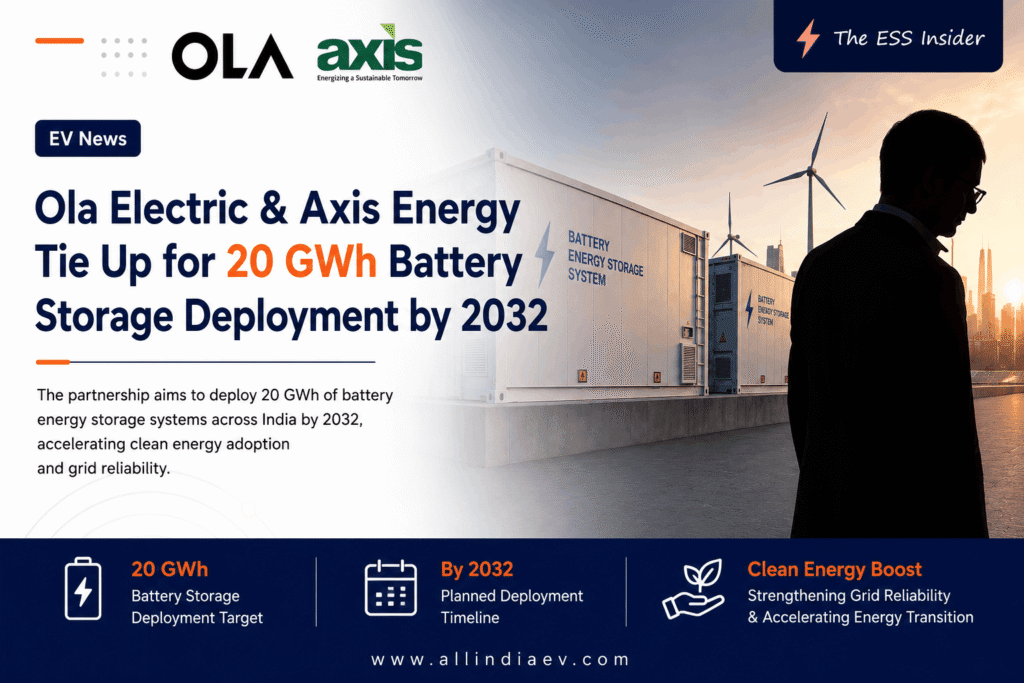
The expansion of its battery manufacturing operations is also expected to support its broader energy storage ambitions, including its Shakti battery energy storage system (BESS) portfolio.
However, domestic battery cell manufacturing continues to face cost-related challenges. Industry executives have pointed out that Indian-produced cells remain approximately 20% more expensive than Chinese imports, highlighting the importance of improving manufacturing efficiency and achieving economies of scale.
Strengthening India’s EV Manufacturing Ecosystem
Ola Electric’s in-house battery manufacturing strategy reflects the growing importance of domestic battery production in India’s electric mobility industry. Reducing dependence on imported battery cells could improve supply chain resilience while supporting the development of local battery technology and manufacturing capabilities.
If the company successfully improves production yields and achieves large-scale manufacturing, the cost benefits could strengthen its competitive position in India’s electric two-wheeler market.
The targeted 20% cost advantage remains dependent on production scale, manufacturing efficiency and successful integration of in-house battery cells. Nevertheless, Ola Electric’s investment in battery technology represents an important step towards building a more integrated EV manufacturing ecosystem in India.