

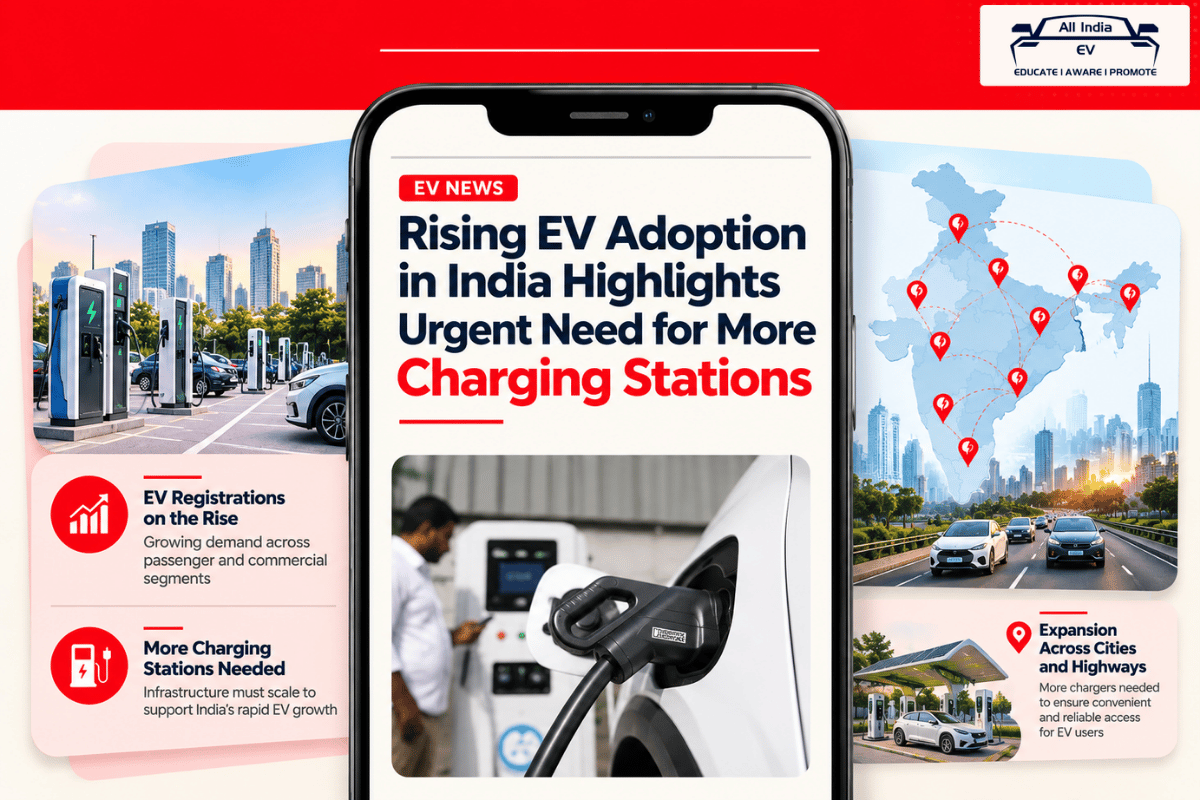
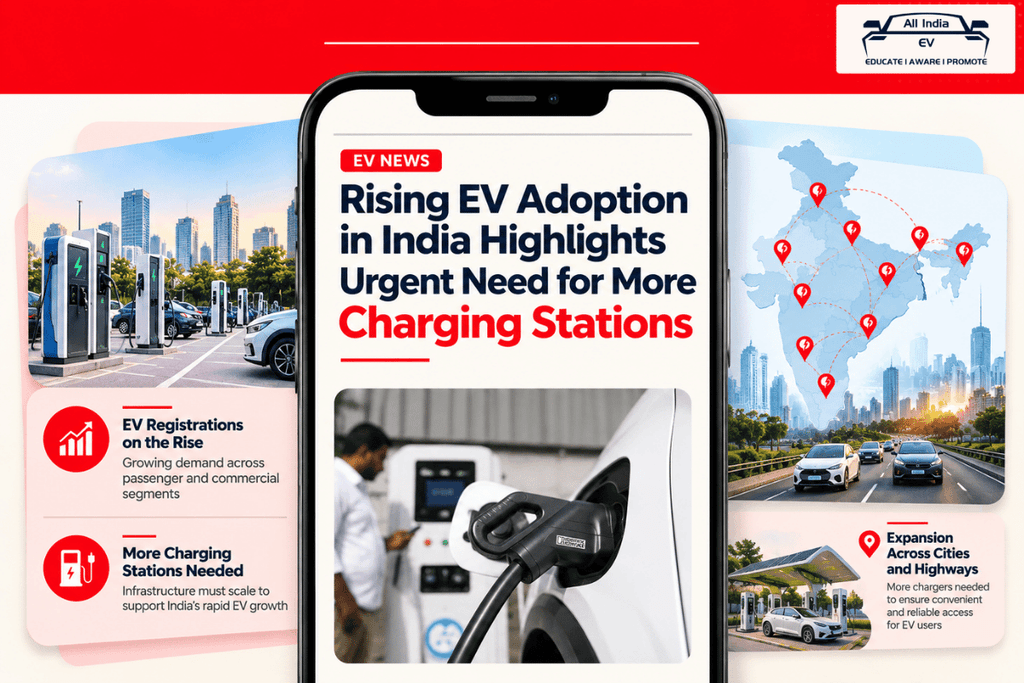
India’s electric vehicle (EV) market is expanding steadily, highlighting the growing need to strengthen public charging infrastructure across the country. While electric mobility is gaining momentum, differences in EV adoption and charging station availability across States could become a challenge for the sector’s long-term growth.
According to data reported by The Hindu, electric vehicles and hybrids accounted for 12.7% of India’s total vehicle registrations during the first five months of the 2026–27 financial year. Around 16.5 lakh vehicles in this category were registered out of approximately 1.29 crore total vehicle registrations during the period.
The figures reflect the growing acceptance of alternative-fuel vehicles in India. However, the uneven distribution of charging facilities indicates that infrastructure development needs to keep pace with the increasing number of EVs on Indian roads.
Kerala, Delhi and Karnataka Lead EV Adoption
Kerala, Delhi, Karnataka, Odisha and Telangana emerged as leading regions for EV and hybrid vehicle registrations, with these vehicles accounting for at least 15% of new registrations in each.
However, the factors driving adoption differ across States. Electric three-wheelers are contributing significantly to the growing EV share in Telangana, Assam, Bihar, West Bengal and Uttar Pradesh. These vehicles are increasingly important for passenger transport and last-mile connectivity.
The data also highlights the influence of commercial mobility on India’s electric transition. Affordable electric three-wheelers are helping expand adoption beyond private passenger vehicles, particularly in markets where they support daily transport and business operations.
Nevertheless, excluding three-wheelers would bring the EV and hybrid share of new registrations in many States to well below 5%. This demonstrates the importance of the segment in supporting the country’s broader electric mobility transition.
Charging Infrastructure Remains Uneven
The gap between EV adoption and charging infrastructure availability remains a significant concern. States with a growing number of electric vehicles do not always have sufficient public charging facilities to meet demand.
Maharashtra performed strongly in both the availability and usage of public charging stations, measured through electricity consumption. Delhi recorded relatively high charging activity despite having fewer charging locations, while Karnataka had a large network of charging facilities but comparatively lower utilisation.
These differences suggest that expanding the number of charging stations alone may not be sufficient. Their location, accessibility, charging capacity and utilisation also need attention to ensure that infrastructure investments meet actual demand.
Urban Concentration Creates Further Challenges
The distribution of charging stations within individual States presents another challenge. Karnataka, for example, has approximately 6,000 public charging locations, with around two-thirds concentrated in and around Bengaluru.
Such concentration can leave smaller cities, towns and less-developed areas with fewer convenient charging options. Assam faces a particularly significant infrastructure gap, with approximately one public charging location for every 997 registered EVs covered by the analysis. Karnataka, by comparison, has one location for every 144 EVs registered during the period examined.
These differences highlight the need for a more balanced approach to charging infrastructure development.
Building a Stronger EV Ecosystem
India needs coordinated efforts from government agencies, electricity distribution companies and private charging operators to support the next phase of EV adoption. Charging stations must be developed in line with regional demand, including residential areas, commercial centres, transport hubs and major highways.
Improving charger reliability, simplifying access to charging services and ensuring adequate electricity supply will also be essential. Better planning can help reduce range anxiety, encourage more consumers to consider electric vehicles and improve the utilisation of existing facilities.
As India moves towards cleaner mobility, the success of its EV transition will depend not only on vehicle sales but also on the supporting infrastructure. A reliable and geographically balanced charging network will be crucial to making electric mobility more practical, accessible and sustainable across the country.