

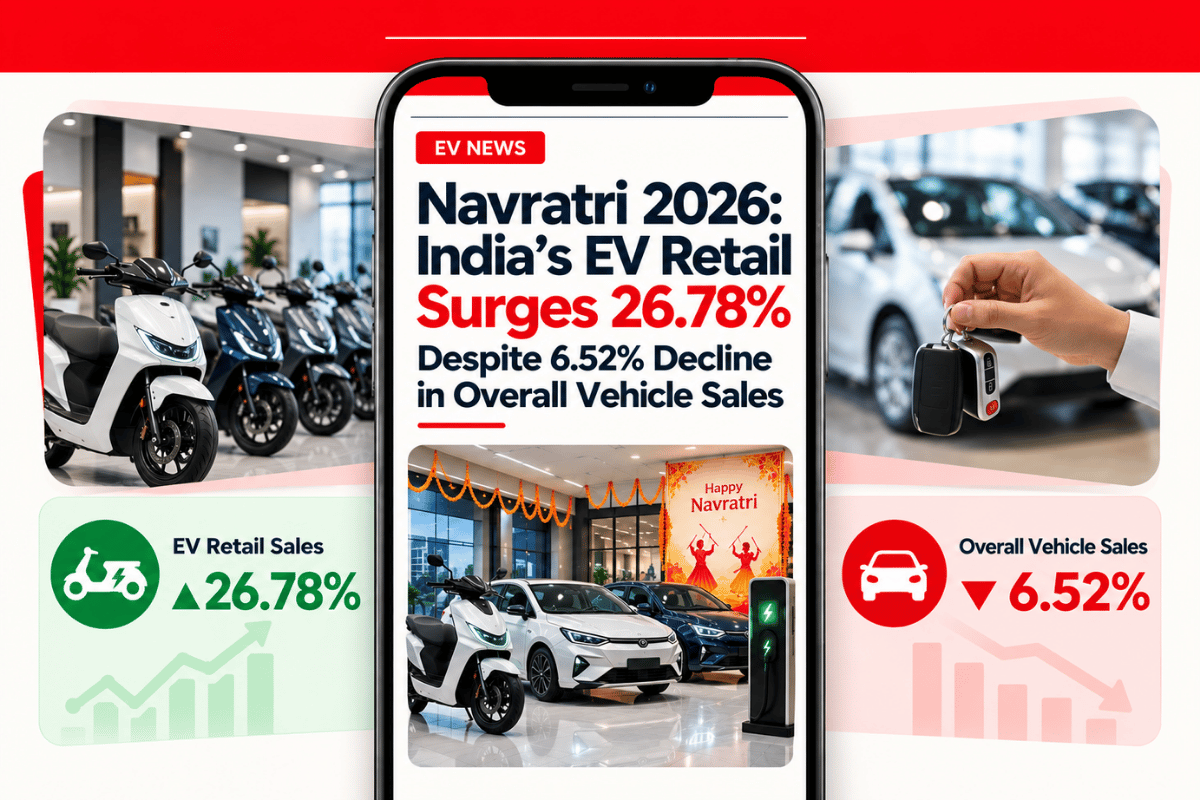
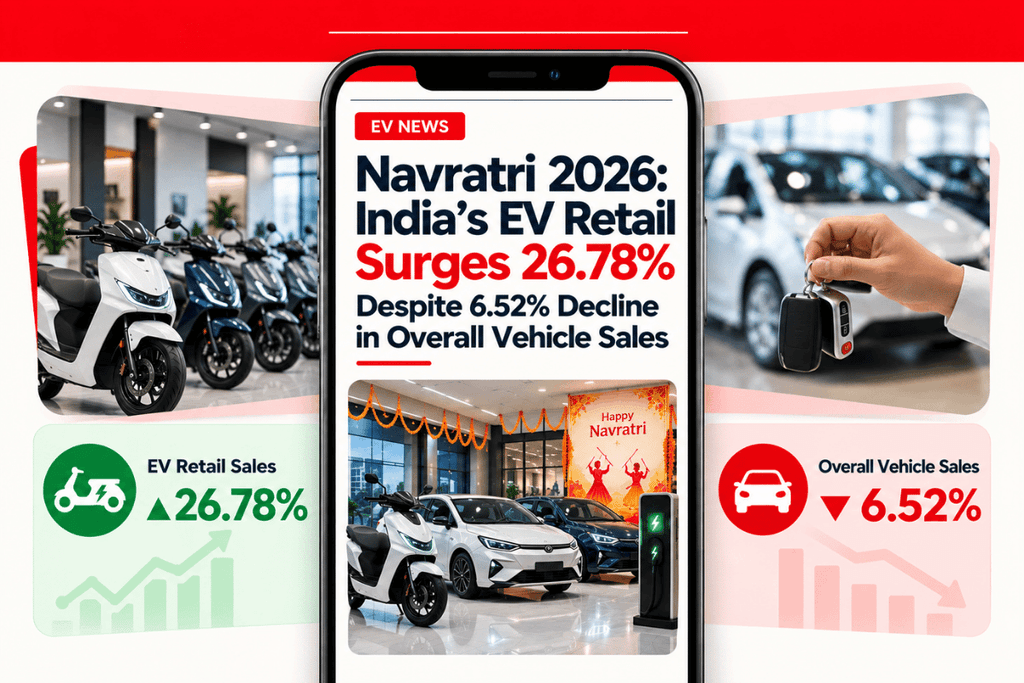
India’s electric vehicle (EV) market recorded strong growth during Navratri 2026, even as overall automobile retail sales declined compared with the previous year. According to provisional data released by the Federation of Automobile Dealers Associations (FADA), electric vehicle retail sales increased by 26.78% year-on-year to 1,17,437 units during the 10-day festive period from October 11 to October 20, 2026.
In comparison, total vehicle retail sales across India fell by 6.52% to 11,23,086 units, down from 12,01,479 units during Navratri 2025. The contrasting performance highlights the growing contribution of electric mobility to India’s automotive market.
EVs Increase Their Share of Festive Vehicle Sales
Electric vehicles accounted for approximately 10.5% of total vehicle retail sales during Navratri 2026, compared with around 7.7% in the corresponding period last year. This increase indicates that EVs are becoming a more prominent choice among Indian consumers during major vehicle-buying occasions.
The EV market also demonstrated substantial growth compared with Navratri 2024. Retail sales rose by 83.06% from 64,153 units recorded two years earlier, reflecting the expanding demand for electric mobility across multiple vehicle categories.
FADA attributed the broader market trends to a combination of changing consumer preferences, improving affordability and the impact of last year’s Goods and Services Tax (GST) reforms. Navratri 2025 included an additional day and coincided with the introduction of revised GST rates, encouraging many customers to bring forward their purchases.
Electric Two-Wheelers Lead the Market
Electric two-wheelers remained the largest contributor to EV retail sales during the festive period. Sales increased by 33.41% year-on-year to 75,758 units, compared with 56,787 units in Navratri 2025.
Growing interest in cost-effective personal transportation, along with the potential savings on fuel and routine running costs, continues to support demand for electric scooters and motorcycles. Their expanding role in everyday commuting is helping strengthen the electric mobility ecosystem in India.
Electric three-wheeler retail sales also recorded positive growth, rising 10.51% to 28,086 units. These vehicles continue to support electrification in passenger transport and last-mile delivery, where operating costs are an important consideration for drivers and fleet operators.
Electric Cars and Commercial Vehicles Record Growth
Electric passenger vehicle retail sales grew by 25.97% to 12,305 units during Navratri 2026, compared with 9,768 units in the previous year. The increase points to rising interest in electric cars as more consumers consider alternatives to conventional petrol and diesel vehicles.
Electric commercial vehicles registered the fastest growth among the reported EV categories. Sales nearly doubled, increasing by 96.04% to 1,288 units from 657 units a year earlier. Although the segment remains comparatively small, its performance indicates expanding interest in electrifying commercial transportation.
Supply Chain Challenges Remain a Concern
Despite the strong sales figures, EV availability has emerged as a challenge for dealerships. FADA President Sai Giridhar highlighted concerns about vehicle shortages, linking supply pressures to global logistics disruptions and difficulties transporting EV-related materials.
If these constraints continue, manufacturers could face challenges meeting rising customer demand during the remaining festive season. Improving production planning, logistics and dealership inventory will therefore be important for sustaining the current momentum.
Outlook: EV Demand Remains Strong Ahead of Diwali
As India enters the Dhanteras-to-Diwali buying period, the latest retail figures offer encouraging signs for the electric mobility sector. Rising EV sales, increasing market share and growth across two-wheelers, three-wheelers, passenger cars and commercial vehicles point towards a broader shift in consumer demand.
However, the ability of manufacturers to maintain adequate vehicle supplies will be crucial to converting interest into deliveries. Navratri 2026 has demonstrated that electric vehicles can outperform the wider automobile market, reinforcing their growing importance in India’s transition towards cleaner transportation.