

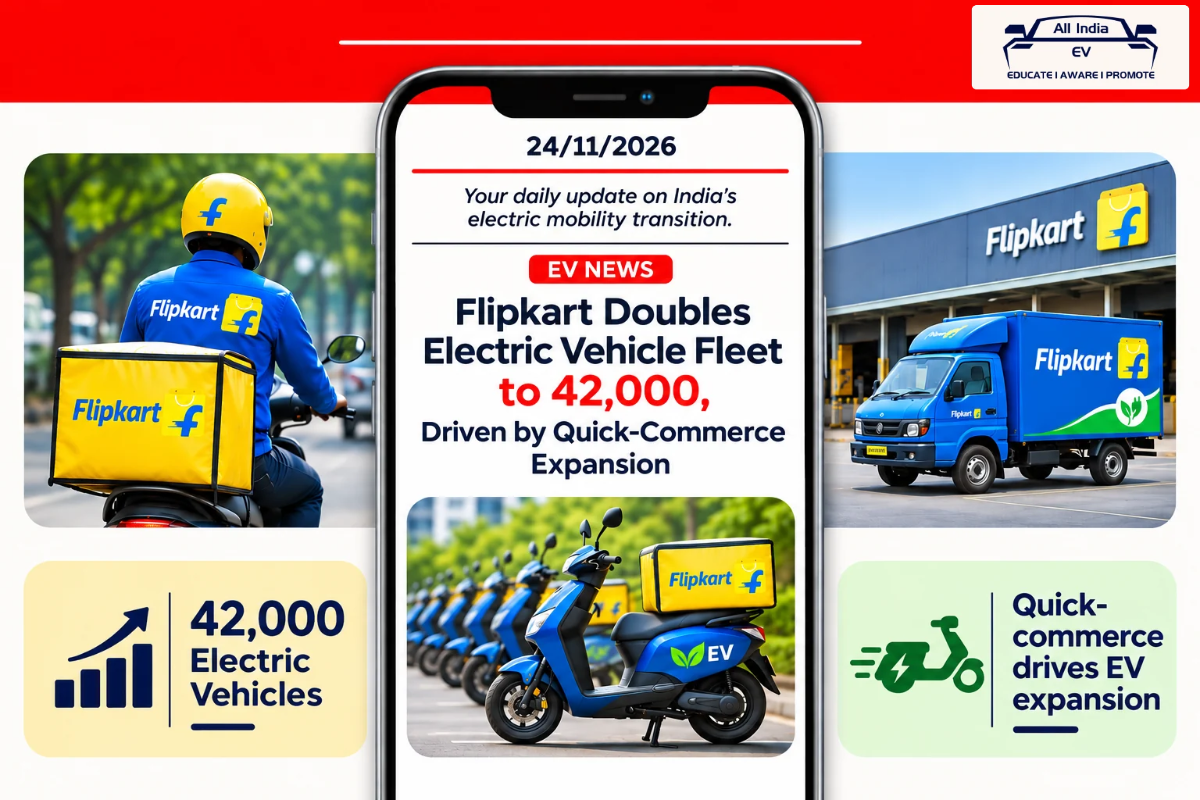
Flipkart has significantly expanded its electric vehicle (EV) deployment for last-mile deliveries, doubling its fleet to 42,000 vehicles in 2026 from more than 20,000 in 2025. The expansion reflects the growing role of electric mobility in India’s e-commerce and quick-commerce sectors, as the company moves closer to its target of achieving 100% electric last-mile deliveries by 2030.
The company is undertaking this transition under the EV100 initiative led by the Climate Group, which encourages businesses to accelerate the adoption of electric vehicles and support cleaner transportation.
According to Flipkart, electric two-wheelers account for approximately 77% of its total EV fleet. A significant portion of these vehicles supports its quick-commerce platform, Flipkart Minutes, which has been expanding its delivery operations to meet increasing demand for faster deliveries. Nearly 20% of the electric fleet is deployed across the company’s broader e-commerce delivery network.
The expansion has been particularly strong in major metropolitan markets, including Bengaluru, Mumbai, Chennai, Pune and Gurugram. These cities have emerged as important centres for electric last-mile logistics due to their growing online shopping activity and demand for rapid delivery services.
EV Adoption Among Delivery Partners Gains Momentum
Flipkart’s internal survey of more than 9,400 delivery partners, known as Wishmasters, highlights the growing acceptance of electric mobility among delivery workers. The survey included both electric vehicle users and delivery partners operating petrol-powered internal combustion engine (ICE) vehicles.
The findings revealed that delivery partners who have experienced riding an EV are nearly four times more likely to consider switching to electric mobility. Among existing EV users, around 59% identified lower operating costs as a major reason for adopting electric vehicles.
However, financial assistance remains an important factor in encouraging conventional vehicle users to make the transition. Approximately 55% of ICE vehicle users said that support through EMI-based loans, down-payment assistance and flexible daily EMI payment options could motivate them to adopt electric two-wheelers.
The survey also highlighted a difference in awareness of government incentives. Around 58% of EV riders were aware of available government benefits, compared with 37% of delivery partners using conventional vehicles.
Flipkart Strengthens EV Financing and Charging Support
To make electric mobility more accessible, Flipkart has introduced EV Assist, a programme that connects delivery partners with electric two-wheeler rental providers. The initiative allows riders to use electric vehicles without making an upfront purchase.
The programme has received encouraging demand in Delhi-NCR, Patna and Bengaluru. The company is also conducting training programmes, awareness campaigns, EV roadshows and digital learning initiatives to educate delivery partners about financing options and government incentives.
Charging infrastructure is another major focus area. Flipkart is working with YUMA, a battery-swapping company, and other ecosystem partners to establish charging and battery-swapping facilities across its delivery hubs and micro-fulfilment centres. Currently, eight battery-swapping stations are operational in Bengaluru, with plans to expand the network to other metropolitan cities.
Supporting India’s Electric Mobility Transition
Flipkart’s growing EV fleet demonstrates how large e-commerce companies can contribute to India’s electric mobility transition. The increasing use of electric two-wheelers in quick-commerce operations can help reduce dependence on conventional fuel-powered vehicles while supporting more cost-efficient last-mile logistics.
With continued investments in EV accessibility, financing assistance and charging infrastructure, Flipkart is working towards its 2030 electrification target. Its expansion also highlights the importance of collaboration between e-commerce companies, EV manufacturers, financing institutions and charging infrastructure providers in accelerating electric vehicle adoption across India.