

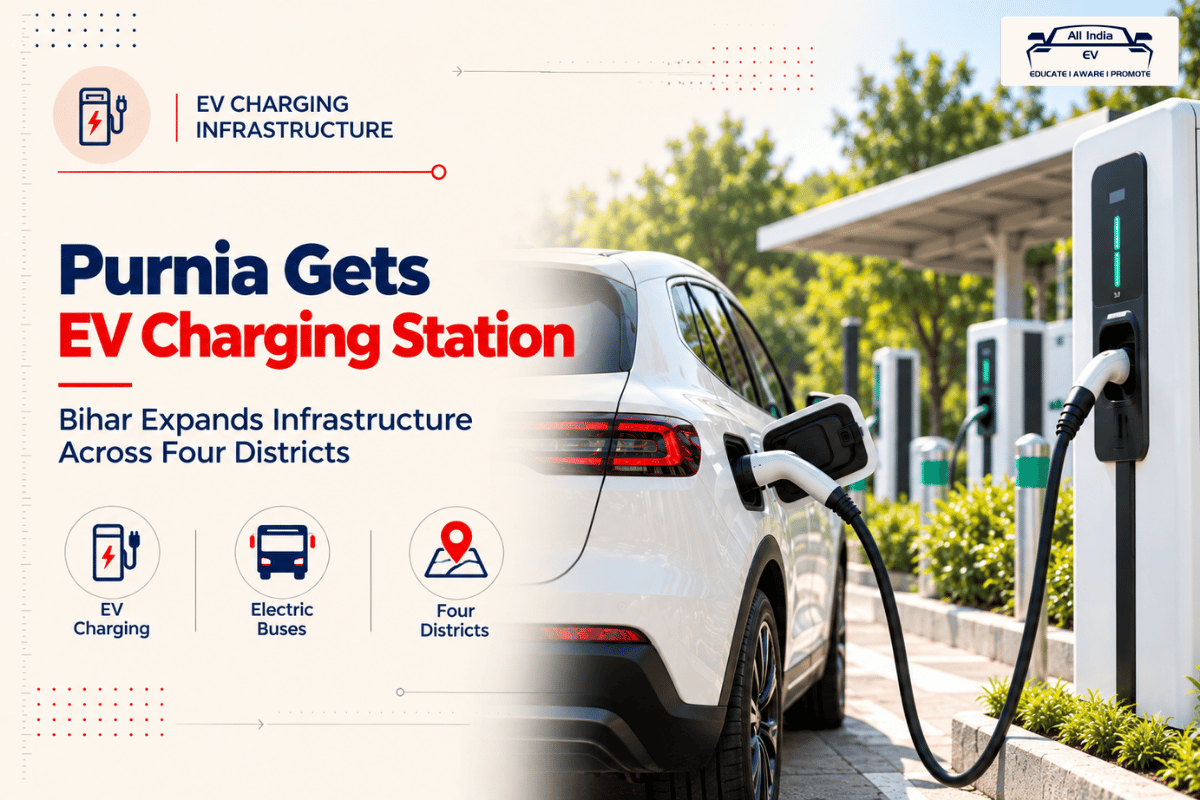
Bihar is strengthening its electric vehicle (EV) charging infrastructure, with the state transport department completing the installation of a charging station in Purnia and progressing with similar projects in Patna, Muzaffarpur, Darbhanga and Gaya. The initiative aims to improve charging accessibility, support electric bus operations and encourage wider adoption of electric mobility across the state.
The expansion is part of Bihar’s broader efforts to develop a reliable charging network for electric vehicles, including electric buses, cars, two-wheelers and three-wheelers. By increasing the availability of charging facilities, the state aims to make EV ownership and operation more convenient for public transport operators, private vehicle owners and commercial users.
Eight Charging Points Planned for Bus Depots
According to the state transport department, eight charging points are being established at each planned depot facility, with each depot designed to cater to 50 electric buses. The estimated charging time for an electric bus is approximately one to one-and-a-half hours.
Charging infrastructure is already operational at bus depots in Phulwarisharif, Rajgir and Muzaffarpur. The completion of the Purnia installation and ongoing work in four other districts indicate continued investment in the infrastructure required to support electric public transportation.
Electric bus charging facilities are essential for maintaining fleet availability, reducing operational interruptions and supporting the transition from conventional diesel-powered buses to cleaner alternatives. Adequate depot charging capacity can also help transport authorities organise charging schedules around daily bus operations.
Patna to Get DC Fast-Charging Stations at Government Locations
Alongside bus depot infrastructure, Bihar is expanding public EV charging facilities for privately owned vehicles. In Patna, direct-current (DC) charging stations are being established at 10 government office campuses and public facilities.
The proposed locations include the Main Secretariat, state assembly, collectorate, Vishwesaraiya Bhawan, Vikas Bhawan, Sinchai Bhawan, the multimodal hub at Kankarbagh, Beur Mor and Hardinge Road.
Indian Oil Corporation Limited (IOCL) is developing these charging stations under a memorandum of understanding with the state transport department. The facilities are intended to serve private electric cars, two-wheelers and three-wheelers.
According to the department, charging an electric car at these facilities is expected to take approximately 45 to 60 minutes. The availability of DC charging infrastructure at accessible locations could help reduce charging-related concerns among EV users and make electric vehicles more practical for everyday travel.
Bihar Offers Subsidies for EV Charging Station Installation
To encourage private investment in charging infrastructure, the Bihar transport department has introduced a subsidy scheme for individuals and private entities willing to establish EV charging stations. Eligible applicants can receive financial assistance equivalent to 25% of the cost of machinery and equipment, subject to a maximum subsidy of ₹10 lakh per charging unit.
The scheme allows charging stations to be established at several types of locations, including government buildings, commercial complexes, hotels, hospitals, shopping malls, multiplexes, petrol pumps, highway restaurants, dhabas, bus stands and parking areas. Residential apartments and housing societies with more than five families are also eligible.
This incentive could encourage property owners, businesses and charging infrastructure operators to invest in EV charging facilities. Expanding the number of charging points across commercial and residential areas would help improve accessibility for EV users while creating opportunities for businesses involved in charging equipment, installation and maintenance.
Boost for Electric Mobility in Bihar
Bihar’s charging infrastructure expansion represents an important step towards building an ecosystem that supports electric public transport and private EV adoption. The combination of bus depot charging facilities, public fast chargers and financial incentives for private operators could help address one of the major challenges associated with electric mobility: the availability of convenient charging facilities.
For electric bus operators, dedicated depot infrastructure can support fleet operations and charging schedules. For private EV owners, the proposed charging stations could provide additional options for recharging vehicles during daily travel.
As work progresses in Patna, Muzaffarpur, Darbhanga and Gaya, the timely completion and commissioning of these facilities will be important to the success of the initiative.
Bihar’s approach combines public infrastructure development with incentives for private participation, potentially creating a broader charging network over time. The expansion is expected to support the state’s transition towards cleaner transportation, although the overall impact will depend on the operational availability, accessibility and continued development of charging stations.