

The Quick Update
What Happened:
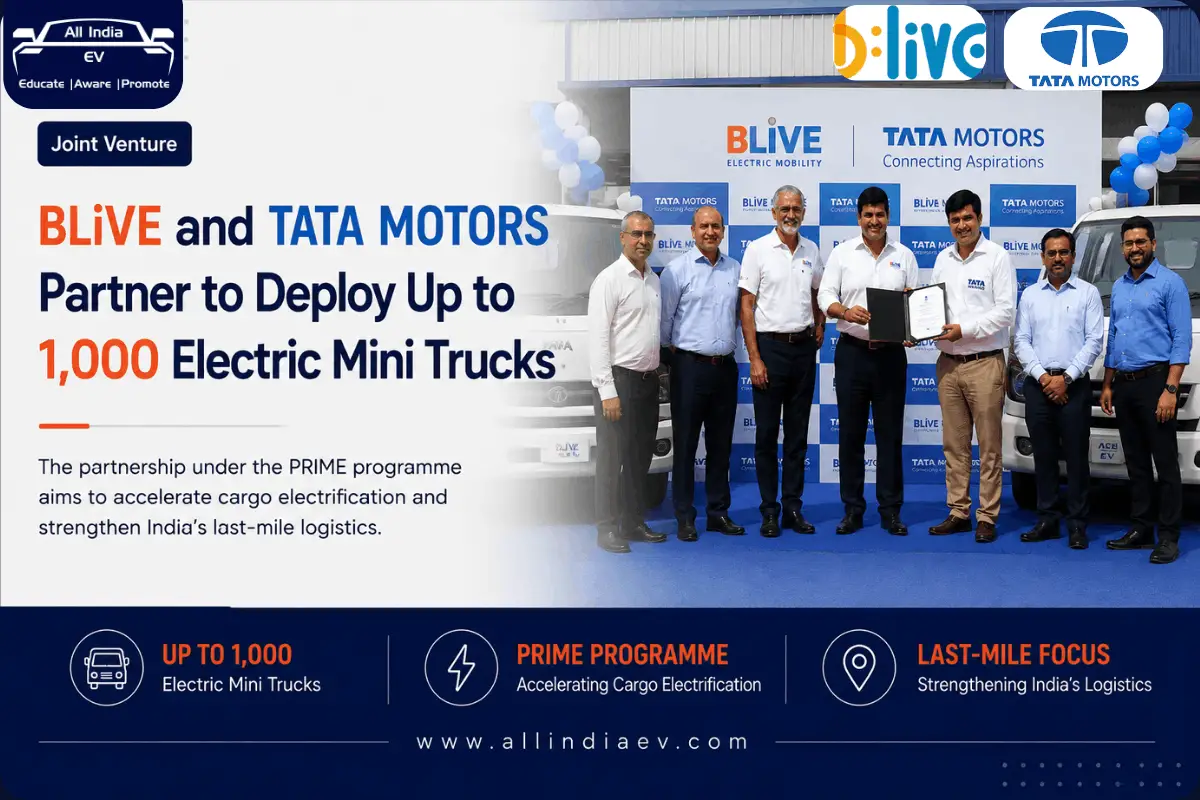
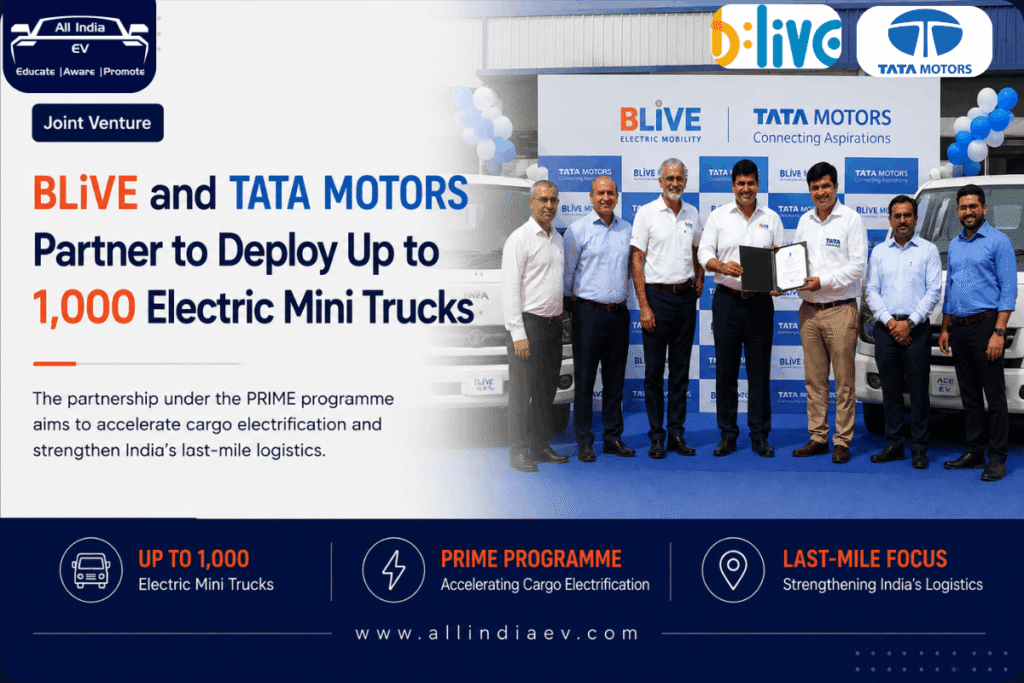
BLive has signed an MoU with Tata Motors to deploy up to 1,000 electric mini trucks through its BLive PRIME franchise-owned commercial EV fleet programme, targeting last-mile and intra-city logistics. The first batch of Tata Ace Pro EVs has already been inducted for enterprise logistics operations.
The Key Number:
1,000 electric mini trucks — the planned scale of the Tata Motors-BLive deployment.
Why It Matters:
The partnership targets India’s largely diesel-dependent light commercial vehicle market, where electric penetration in cargo LCVs remains below 1%. It also combines vehicle deployment with charging, maintenance, fleet technology and operational management.
The Core News
The Facts
The BLive Tata Motors 1,000 electric mini trucks programme will deploy Tata electric mini trucks through BLive PRIME, with the first batch of Ace Pro EVs already entering enterprise logistics operations. Additional vehicles are expected to be deployed in phases, with applications spanning e-commerce, quick commerce, retail distribution, manufacturing and third-party logistics.
The Context
India has an estimated 4.5 million to 5 million light commercial vehicles on the road, with the majority still powered by diesel. BLive says electric penetration in the cargo LCV segment remains below 1%, leaving substantial room for electrification. The company has committed ₹100 crore to BLive PRIME to support large-scale commercial EV fleet adoption.
The Significance
The BLive Tata Motors 1,000 electric mini trucks deployment is significant because the model goes beyond vehicle procurement. BLive PRIME allows franchise owners to own electric cargo fleets while BLive manages enterprise demand, vehicle deployment, charging integration, maintenance, fleet technology and daily operations. The structure is intended to reduce some of the operational complexity associated with commercial EV ownership.
Breaking Down the Update
- Deployment Target: Up to 1,000 Tata electric mini trucks are planned under the partnership.
- First Vehicle Batch: Tata Ace Pro EVs have already been inducted for enterprise logistics operations.
- BLive PRIME Investment: The programme has been launched with a ₹100 crore investment commitment for large-scale EV fleet adoption.
- Franchise Entry: Businesses and entrepreneurs can invest approximately ₹45 lakh to own an electric cargo fleet under the PRIME model.
- Fleet Management: BLive manages deployment, utilisation, maintenance, technology and charging ecosystem integration.
- Target Sectors: Manufacturing, warehousing, e-commerce, quick commerce, FMCG, retail distribution, construction, pharmaceuticals and 3PL are among the targeted applications.
- Market Headroom: India’s cargo LCV electric penetration is currently below 1%, according to the source report.
- Tata EV Portfolio: Tata Motors offers the Ace Pro EV, Ace EV and Intra EV across different small commercial vehicle and pickup applications.
How BLive Tata Motors 1,000 electric mini trucks Will Help the Indian EV Market
The BLive Tata Motors 1,000 electric mini trucks deployment could strengthen India’s commercial EV ecosystem by moving electrification deeper into the light commercial vehicle segment. Cargo LCVs are particularly relevant to urban logistics because they operate frequently on fixed or semi-predictable routes, making them suitable candidates for structured charging and fleet-management systems.
For fleet operators, the combination of vehicle supply and managed operations can address several barriers to EV adoption. Instead of independently handling vehicle procurement, charging, maintenance and utilisation, enterprise customers can access professionally managed electric cargo fleets. This could make EV deployment more practical for businesses operating high-utilisation delivery networks.
For Tata Motors, the partnership provides another channel for deploying its electric small commercial vehicle portfolio in enterprise logistics. For BLive, the programme creates a mechanism to expand fleet capacity without requiring the company itself to own the entire vehicle base.
The larger opportunity is the sizeable diesel-dominated LCV market. With electric penetration still below 1%, even a modest increase in adoption could translate into substantial vehicle volumes. However, sustained growth will depend on total cost of ownership, vehicle uptime, charging availability, financing and residual-value economics rather than deployment commitments alone.
Way Forward …
The BLive Tata Motors 1,000 electric mini trucks partnership marks a move toward fleet-scale electrification of India’s intra-city cargo network, with the first Tata Ace Pro EVs already entering operations. The next milestones will be the pace of phased deployment, fleet utilisation, charging performance and the ability of the franchise-owned model to generate sustainable economics for operators. If those parameters hold up at scale, the programme could provide a commercially replicable pathway for accelerating electric LCV adoption across India’s logistics sector.