

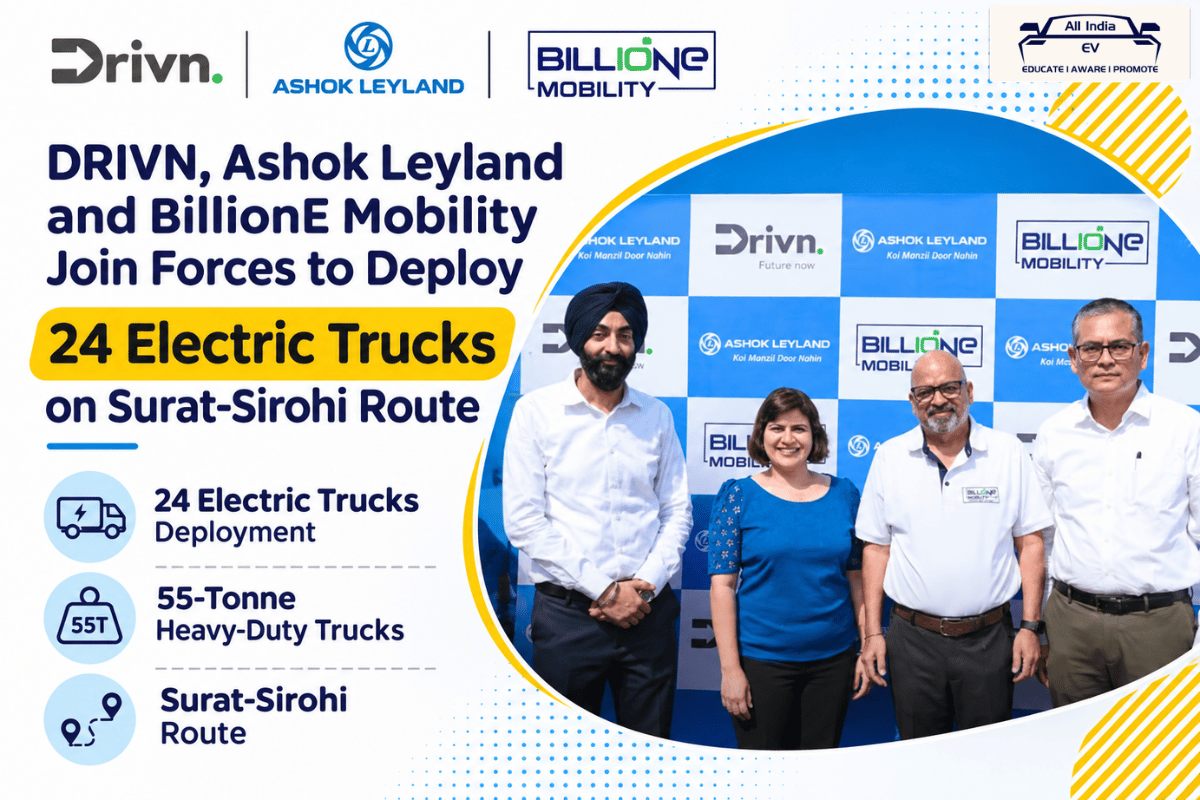
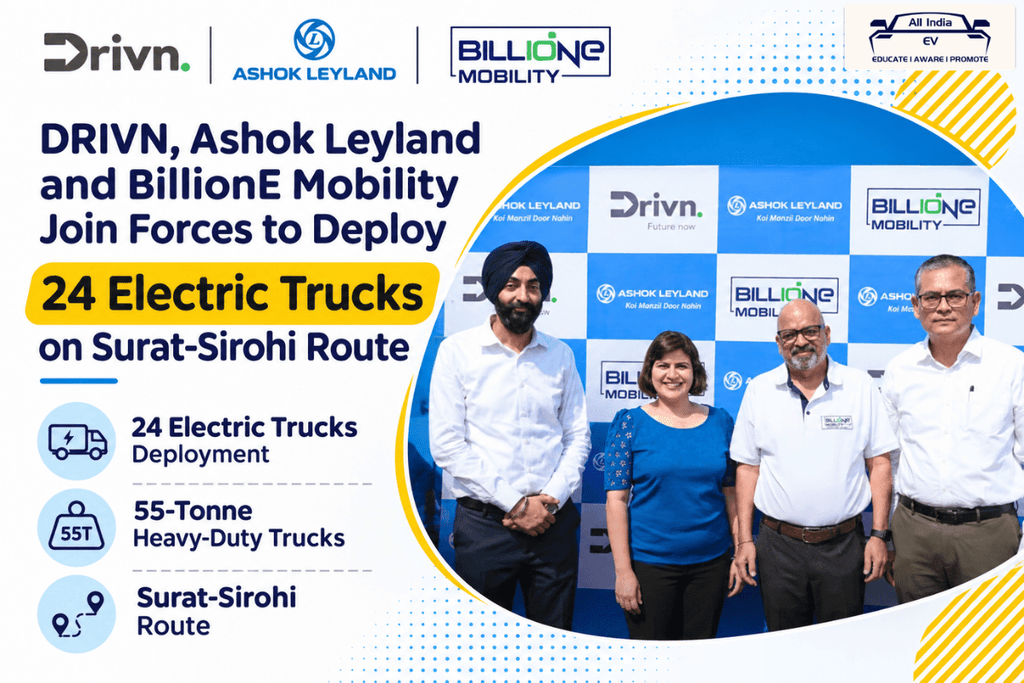
India’s electric commercial vehicle sector has achieved another significant milestone as DRIVN, Ashok Leyland and BillionE Mobility have collaborated to deploy 24 heavy-duty electric trucks on the Surat-Sirohi route. The initiative aims to accelerate the adoption of electric freight transportation and demonstrate the growing potential of battery-powered trucks in India’s long-distance logistics industry.
The 24 electric trucks, manufactured by Ashok Leyland, have a gross vehicle weight capacity of 55 tonnes each. The vehicles were recently flagged off from Ashok Leyland’s Khalapur facility near Mumbai. They will operate along the Surat-Sirohi corridor, supporting the transition towards cleaner and more sustainable freight movement.
The deployment highlights the increasing role of industry partnerships in addressing the operational and infrastructure requirements of heavy-duty electric transportation. By bringing together vehicle manufacturing, fleet financing and electric mobility solutions, the collaboration aims to make large-scale commercial EV adoption more practical for logistics operators.
Ashok Leyland is contributing its heavy-duty electric vehicle technology to the initiative, while DRIVN is supporting the commercial electric mobility ecosystem through its asset ownership and leasing model. BillionE Mobility, an electric Mobility-as-a-Service (eMaaS) company and part of the ChargeZone group, brings expertise in electric fleet operations and integrated mobility solutions.
The partnership reflects a broader shift in India’s logistics industry, where businesses are increasingly exploring electric trucks to reduce dependence on conventional diesel-powered vehicles. Heavy-duty electric trucks can help lower tailpipe emissions, reduce noise pollution and improve the environmental performance of freight transportation.
However, successful electrification of long-distance freight requires more than electric vehicles. Reliable charging infrastructure, efficient route planning, battery management and fleet utilisation are equally important for maintaining operational efficiency. The involvement of companies with complementary capabilities is expected to support these requirements.
The Surat-Sirohi deployment also demonstrates the growing confidence of industry stakeholders in electric trucks for demanding commercial applications. With improved vehicle technology and expanding charging infrastructure, electric freight solutions are gradually moving beyond pilot projects towards larger commercial deployments.
For India’s electric mobility ecosystem, this collaboration represents another step towards transforming heavy-duty transportation. As logistics companies seek cost-effective and environmentally responsible alternatives, partnerships between OEMs, fleet operators and mobility service providers could play an important role in accelerating commercial vehicle electrification across the country.