

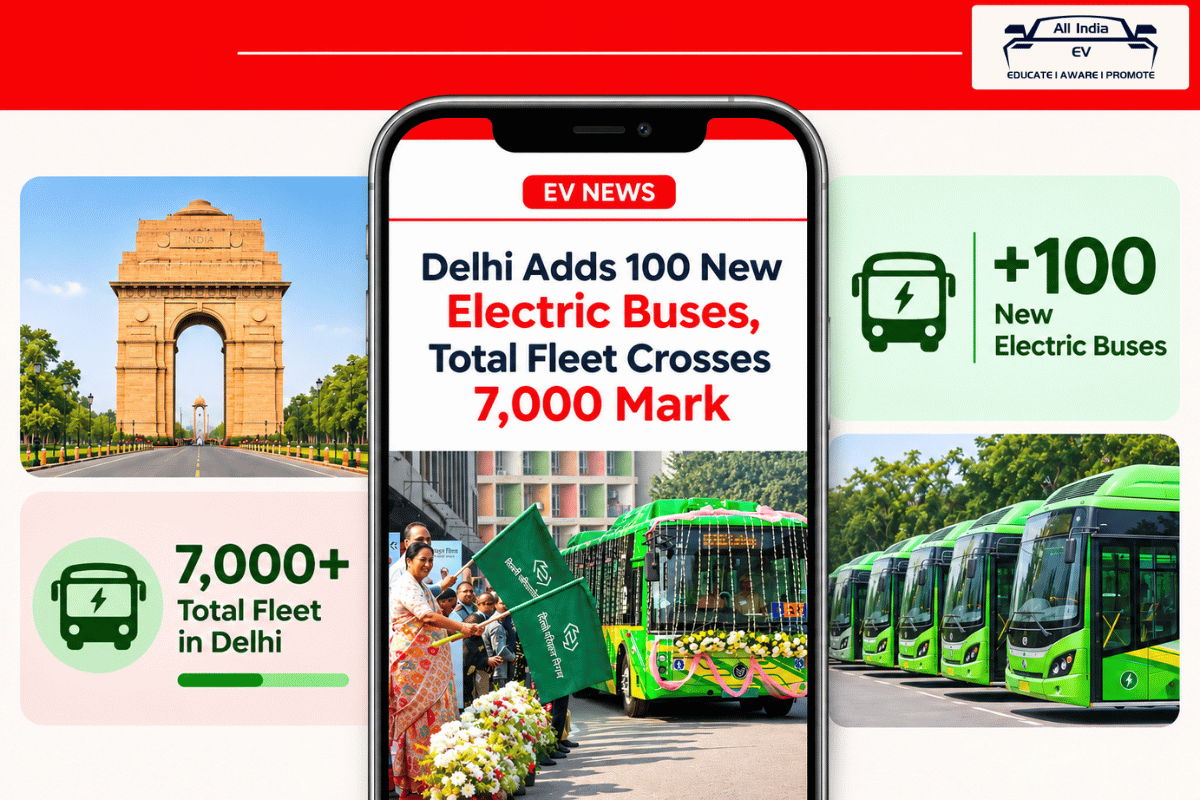
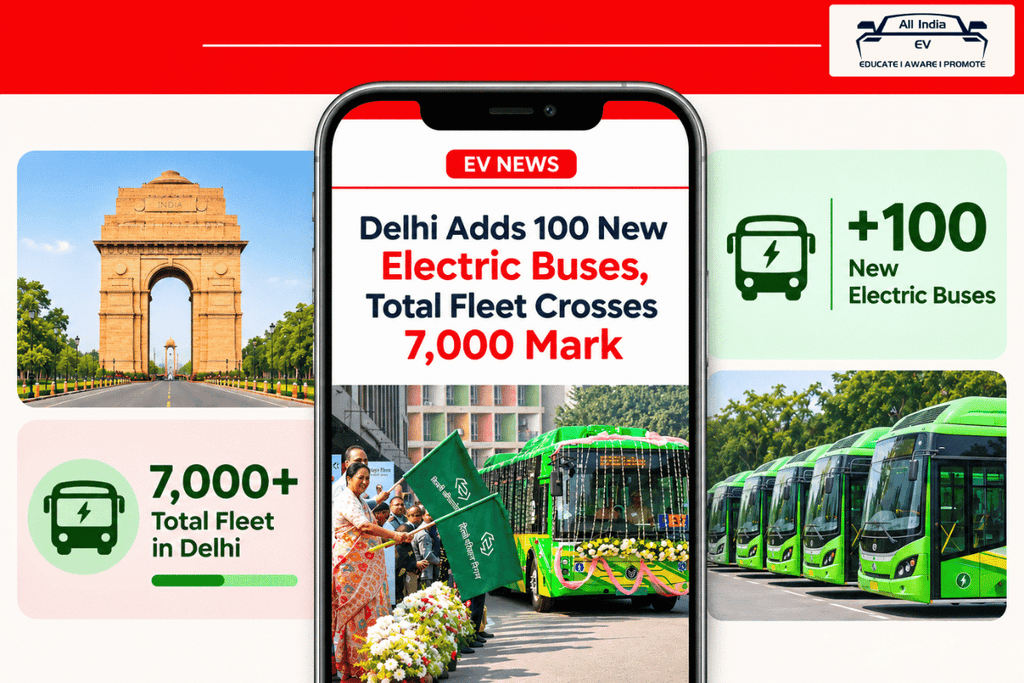
Delhi has taken another significant step towards sustainable public transportation with the launch of 100 new electric buses, taking the national capital’s total public bus fleet to approximately 7,088 vehicles. The initiative aims to strengthen public transport connectivity, reduce dependence on private vehicles and support efforts to tackle rising air pollution.
Delhi Chief Minister Rekha Gupta flagged off the newly inducted electric buses on November 20, 2026, at the Kashmere Gate Inter-State Bus Terminus (ISBT). Delhi Transport Minister Pankaj Kumar Singh was also present during the launch.
The newly introduced fleet comprises 50 nine-metre buses and 50 twelve-metre buses. With this addition, Delhi’s electric bus fleet has increased to 5,338 vehicles, while the remaining 1,750 buses operate on compressed natural gas (CNG). This further strengthens Delhi’s position as the city with the largest electric bus fleet in India.
Delhi Expands Electric Public Transportation
The latest induction is part of the Delhi Government’s broader strategy to modernise public transportation and accelerate the adoption of cleaner mobility solutions. The government aims to provide commuters with safer, more comfortable and environmentally friendly transportation options.
Speaking at the launch, Chief Minister Rekha Gupta highlighted the importance of expanding electric public transport, particularly during the winter season when air pollution remains a major concern in Delhi. She stated that the introduction of additional electric buses would improve commuter convenience and contribute towards a cleaner urban environment.
The newly inducted buses are designed to offer improved passenger comfort and safety. They feature modern facilities, including CCTV cameras, panic buttons, real-time vehicle tracking systems and accessibility provisions for passengers with disabilities.
Delhi-Hapur Electric Bus Service Strengthens Interstate Connectivity
Alongside the expansion of its city bus fleet, the Delhi Government has also introduced an interstate electric bus service connecting Anand Vihar ISBT in Delhi with Hapur in Uttar Pradesh.
The service will operate with 12 fully electric buses, providing a cleaner and more convenient travel option for passengers commuting between Delhi, Ghaziabad, Pilkhuwa and Hapur.
According to the announced service schedule, buses will operate in both directions at intervals of approximately 20 minutes. The fare for the Delhi-Hapur journey has been fixed at ₹124.
The initiative is expected to improve regional connectivity while encouraging commuters to choose public transportation instead of private vehicles.
Delhi’s ₹15,000 Crore EV Policy Supports Electric Mobility
The Chief Minister also highlighted the government’s ₹15,000 crore electric vehicle policy, which aims to accelerate EV adoption across different vehicle categories. The policy includes purchase subsidies and incentives for scrapping older vehicles.
Under the existing provisions, owners of Delhi-registered BS-IV or older vehicles can claim scrapping incentives when their vehicles are scrapped at authorised facilities.
The government believes that combining financial incentives with the expansion of electric public transportation will help accelerate the transition towards cleaner mobility.
Delhi Targets 14,000 Buses by 2028-29
Delhi Transport Minister Pankaj Kumar Singh reiterated the government’s commitment to expanding the city’s public transportation network. The government has set a target of increasing the total bus fleet to approximately 14,000 vehicles by 2028-29.
The addition of 100 electric buses represents another milestone in Delhi’s public transport electrification journey. With thousands of electric buses already operating across the capital, continued fleet expansion could help reduce tailpipe emissions, improve urban connectivity and support India’s broader electric mobility goals.
As Delhi continues investing in electric buses and interstate connectivity, the latest development highlights the growing role of electrified public transportation in building cleaner and more sustainable cities.