

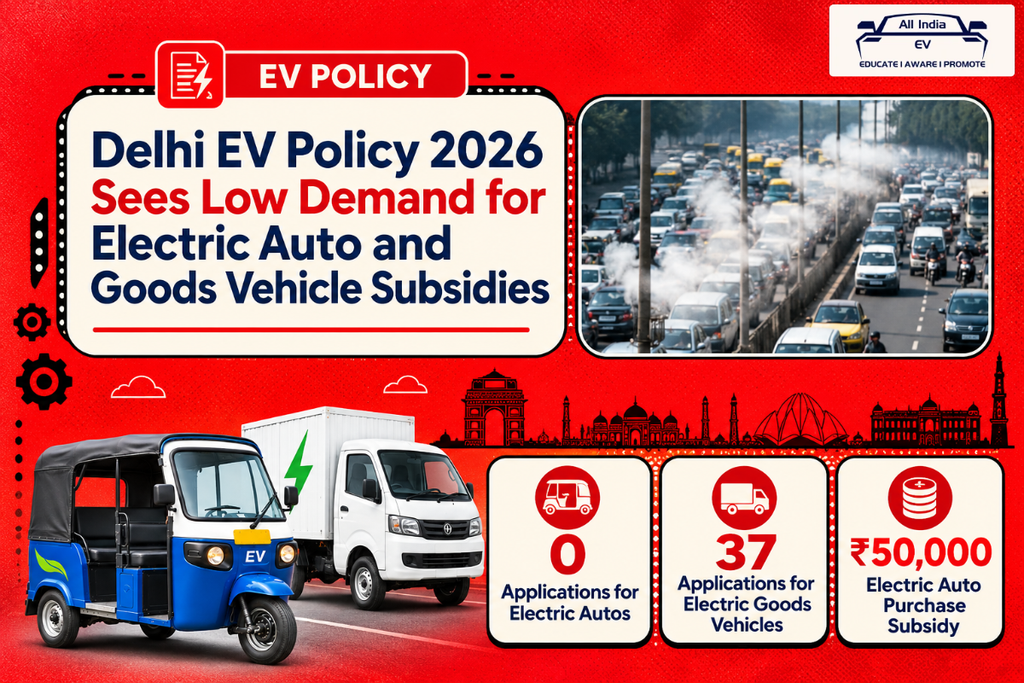
Delhi’s ambitious push towards electric mobility is facing challenges, with government subsidies for electric auto-rickshaws and electric goods vehicles attracting very few applications. Nearly five months after the Delhi Electric Vehicle Policy 2026 came into effect, the response from commercial vehicle buyers remains significantly lower than expected, raising concerns about the pace of electrification in the national capital.
The policy was introduced to accelerate the adoption of electric vehicles, reduce dependence on conventional fuel-powered vehicles and improve Delhi’s air quality. However, the latest government data indicate that financial incentives alone may not be sufficient to encourage commercial vehicle operators to transition to electric mobility.
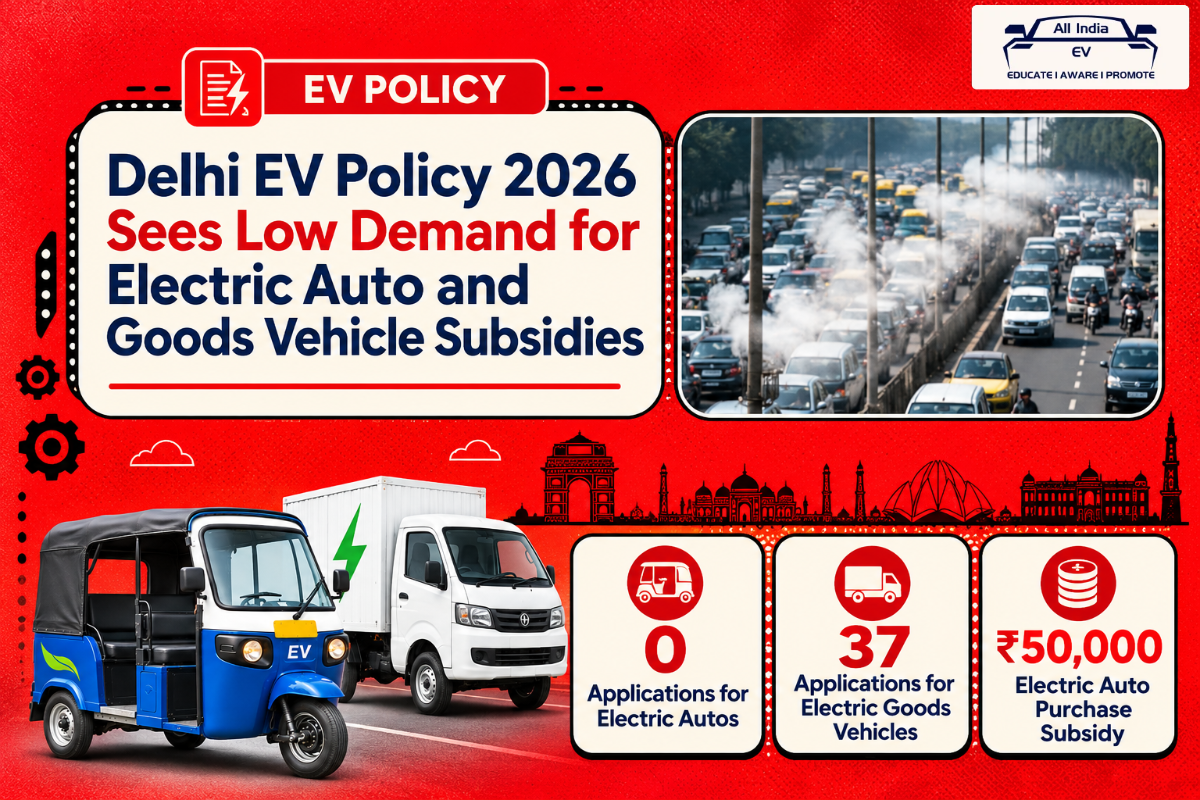
According to the data, the government has not received any applications for the purchase incentive offered on electric auto-rickshaws. Only 37 applications have been submitted for electric goods carriers. The response to vehicle scrapping incentives has also been limited.
The government has received no applications for the ₹25,000 incentive offered to scrap conventional-fuel three-wheelers. Meanwhile, only one application has been submitted for the ₹50,000 incentive available for scrapping old goods carriers.
Two-Wheeler Subsidies Receive Stronger Response
The response to electric two-wheelers has been considerably stronger compared with commercial EV segments. Government figures show that the purchase incentive for electric two-wheelers has received 12,584 applications. However, the scrapping incentive of ₹10,000 for replacing old two-wheelers has attracted only 237 applications.
Electric two-wheelers account for a significant share of Delhi’s vehicle population, representing more than two-thirds of the total vehicle stock. Their higher adoption rate indicates that consumers are comparatively more comfortable switching to electric vehicles in this segment.
According to the Commission for Air Quality Management (CAQM), vehicular emissions contribute approximately 23% of Delhi’s winter air pollution, making the transition to cleaner transportation an important priority.
High Vehicle Costs and Charging Infrastructure Remain Challenges
Several factors are contributing to the slow adoption of electric commercial vehicles. Industry representatives have highlighted technical issues with the Delhi EV subsidy portal, particularly for electric goods carriers classified under the N1 category.
These vehicles must meet localisation requirements under the policy, meaning major components must be manufactured or assembled in India. However, some industry executives have reported that eligible models certified under central government schemes are not appearing on the Delhi EV portal, preventing customers from submitting subsidy applications.
Government sources have also indicated that the number of electric goods vehicle models meeting the required localisation criteria remains limited.
Apart from technical issues, the high purchase and maintenance costs of electric commercial vehicles are discouraging potential buyers. Transport operators believe the available financial assistance does not adequately compensate for the additional investment required to switch from conventional vehicles.
Auto-rickshaw operators have also raised concerns about charging time and the limited availability of charging stations. Unlike CNG vehicles, which can be refuelled within minutes, electric vehicles require longer charging periods, potentially affecting daily earnings and vehicle utilisation.
Transport representatives believe the ₹50,000 purchase incentive for electric auto-rickshaws is insufficient and have called for higher financial support.
Delhi EV Policy Aims to Accelerate Commercial Electrification
Delhi’s EV Policy 2026 includes a phased reduction in purchase incentives to encourage early adoption. The subsidy for electric auto-rickshaws currently stands at ₹50,000, which will decrease to ₹40,000 in the second year and ₹30,000 in the third year.
For electric goods carriers, the first-year purchase incentive goes up to ₹1 lakh, with benefits scheduled to decline in subsequent years. Scrapping incentives are also linked to purchasing a replacement electric vehicle within six months of scrapping the old vehicle.
The policy aims to reduce conventional fuel consumption, increase electric vehicle adoption and improve the capital’s air quality through cleaner transportation.
Delhi Transport Minister Pankaj Singh has indicated that the adoption of electric commercial vehicles could improve as charging infrastructure expands.
The latest application figures highlight the need for better charging facilities, improved subsidy portal operations and more attractive financial incentives. Addressing these challenges will be essential for Delhi to achieve its commercial vehicle electrification targets and strengthen its transition towards sustainable urban mobility.