
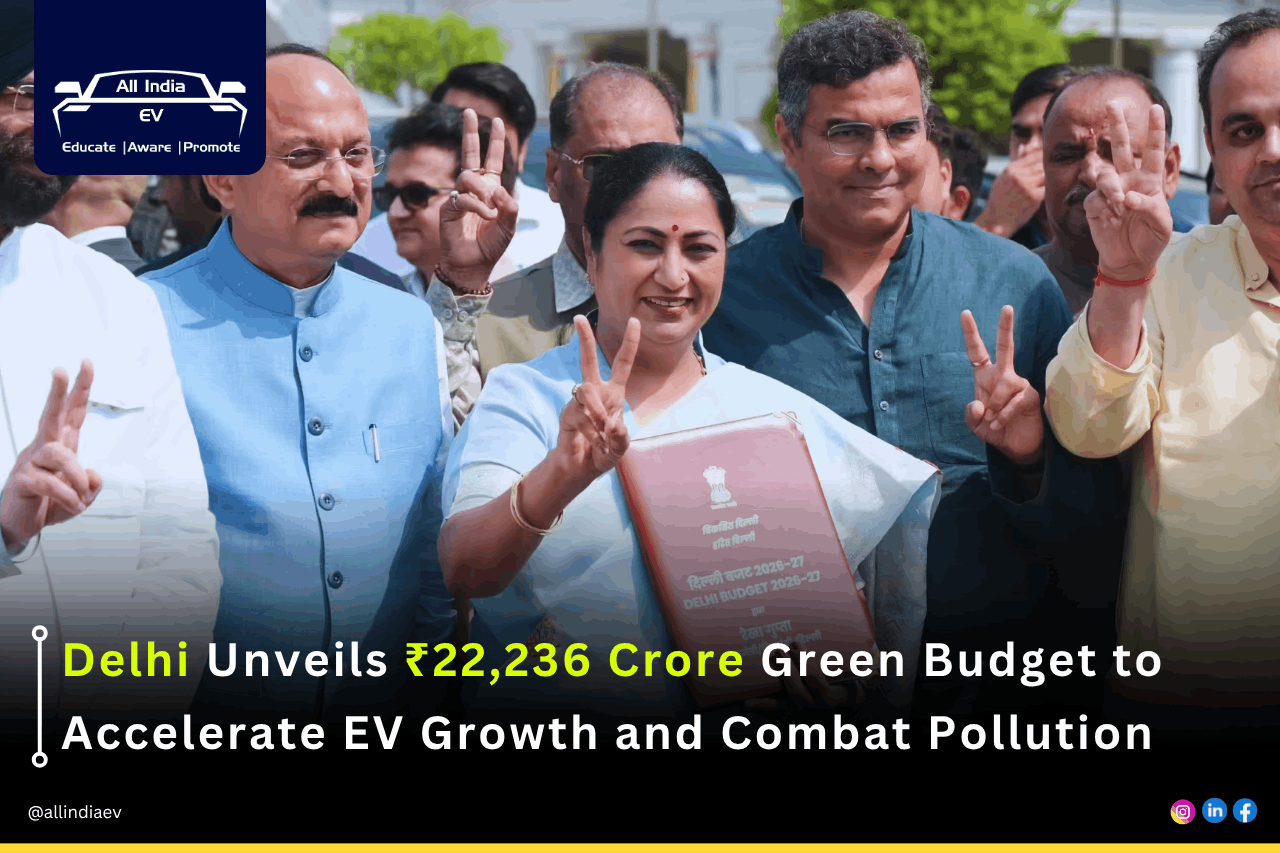


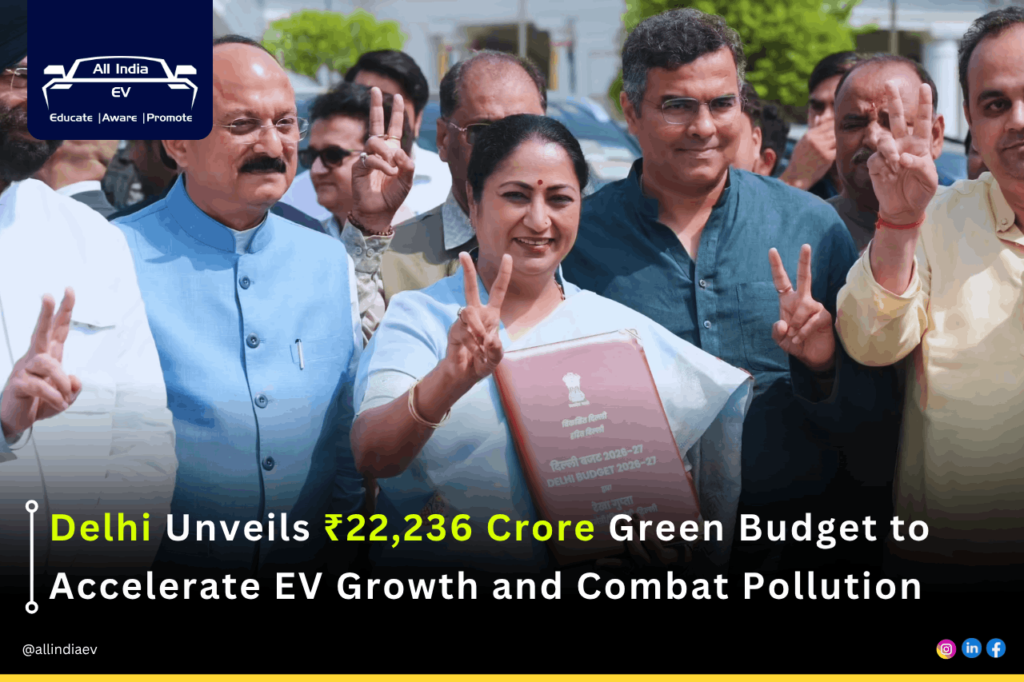
What: The Delhi green budget EV push is part of Delhi’s ₹22,236 crore green budget for 2026-27, which outlines spending across pollution control, transport, renewable energy, and environmental infrastructure.
The Number: The Delhi green budget EV push includes ₹4,758 crore for transport and a target of 32,000 EV charging points over the next four years.
The Impact: The Delhi green budget EV push matters because it ties electric buses, charging infrastructure, and last-mile connectivity into a broader urban pollution-control strategy.
The Core News
The Delhi green budget EV push is embedded within a wider ₹22,236 crore green budget for 2026-27, announced with department-wise allocations aimed at reducing pollution and improving environmental infrastructure across the capital. The largest share, ₹6,485 crore, has been allocated to the Yamuna cleanup, making river restoration the single biggest line item in the plan.
Transport is the second major focus area under the budget, with ₹4,758 crore earmarked to scale up electric buses, expand charging infrastructure, and improve last-mile connectivity. The government has said it wants to expand Delhi’s total bus fleet to 13,760 by 2028-29, while prioritising electric buses as part of the city’s effort to curb transport-related emissions.
A major infrastructure target inside the Delhi green budget EV push is the rollout of 32,000 EV charging points over the next four years. The broader budget also includes ₹3,350 crore for dust-pollution measures, ₹2,350 crore for coordinated planning of green projects, ₹2,273 crore for urban development interventions, ₹1,410 crore for solar and other renewable sources, and ₹558 crore for pollution-control programmes.
Breaking Down the Update
- Total green budget: Delhi has announced a ₹22,236 crore green budget for 2026-27.
- Biggest allocation: ₹6,485 crore has been earmarked for the Yamuna cleanup.
- Transport allocation: The Delhi green budget EV push includes ₹4,758 crore for electric buses, charging infrastructure, and last-mile connectivity.
- Charging target: Delhi plans to install 32,000 EV charging points over the next four years.
- Bus fleet target: The city aims to expand its bus fleet to 13,760 by 2028-29, with electric buses prioritised.
- Mobility integration: Metro and RRTS networks are expected to be linked more closely with feeder buses, e-autos, and shared mobility services.
- Dust control allocation: ₹3,350 crore has been allocated to the PWD for mechanised road sweeping, anti-smog measures, and greener road infrastructure.
- Renewable energy allocation: ₹1,410 crore has been earmarked for solar power and other renewable-energy initiatives.
How Delhi green budget EV push will help Indian EV Market
The Delhi green budget EV push matters for the Indian EV market because Delhi is one of the country’s most visible urban mobility battlegrounds. It is a large public-transport market, a high-pollution city, and a place where charging infrastructure, bus electrification, and last-mile connectivity can all scale in parallel. When a city like Delhi allocates ₹4,758 crore to transport electrification and related systems, it sends a wider market signal to OEMs, charging companies, software providers, and public-transport planners across India.
More EV News

The biggest strength of the Delhi green budget EV push is that it does not treat EVs as a standalone headline. It links electric buses, 32,000 charging points, and multimodal connectivity into one operating framework. That matters because India’s EV transition will move faster when public transport and charging access are built together, rather than as separate policy tracks. In dense cities, this kind of integrated planning can make EV use feel normal, daily, and system-led.
This also creates demand across a broader EV value chain. More electric buses mean stronger need for depot charging, fleet management systems, maintenance services, and power infrastructure planning. More public charging points mean bigger opportunities for CPOs, charger manufacturers, service providers, and financing partners. In practical terms, the Delhi green budget EV push can help the Indian EV market not only by adding vehicles, but by creating a larger service and infrastructure base around them.
Conclusion & Next Steps
The Delhi green budget EV push is significant because it places transport electrification inside a larger pollution-control and urban-infrastructure strategy rather than treating it as an isolated policy item. The next thing to watch will be execution: how quickly the 32,000 EV charging points are installed, how fast electric bus deployment scales, and whether last-mile integration actually reduces dependence on private vehicles. In EV policy, announcements create momentum, but delivery creates market change, and that is where the Delhi green budget EV push will ultimately be judged.
Read More: Catch up on All India EV’s related coverage on India’s evolving commercial EV subsidies and battery swapping policies at All India EV