

Delhi government data shows 204,131 e-rickshaws registered on the Vahan dashboard as of January 2026
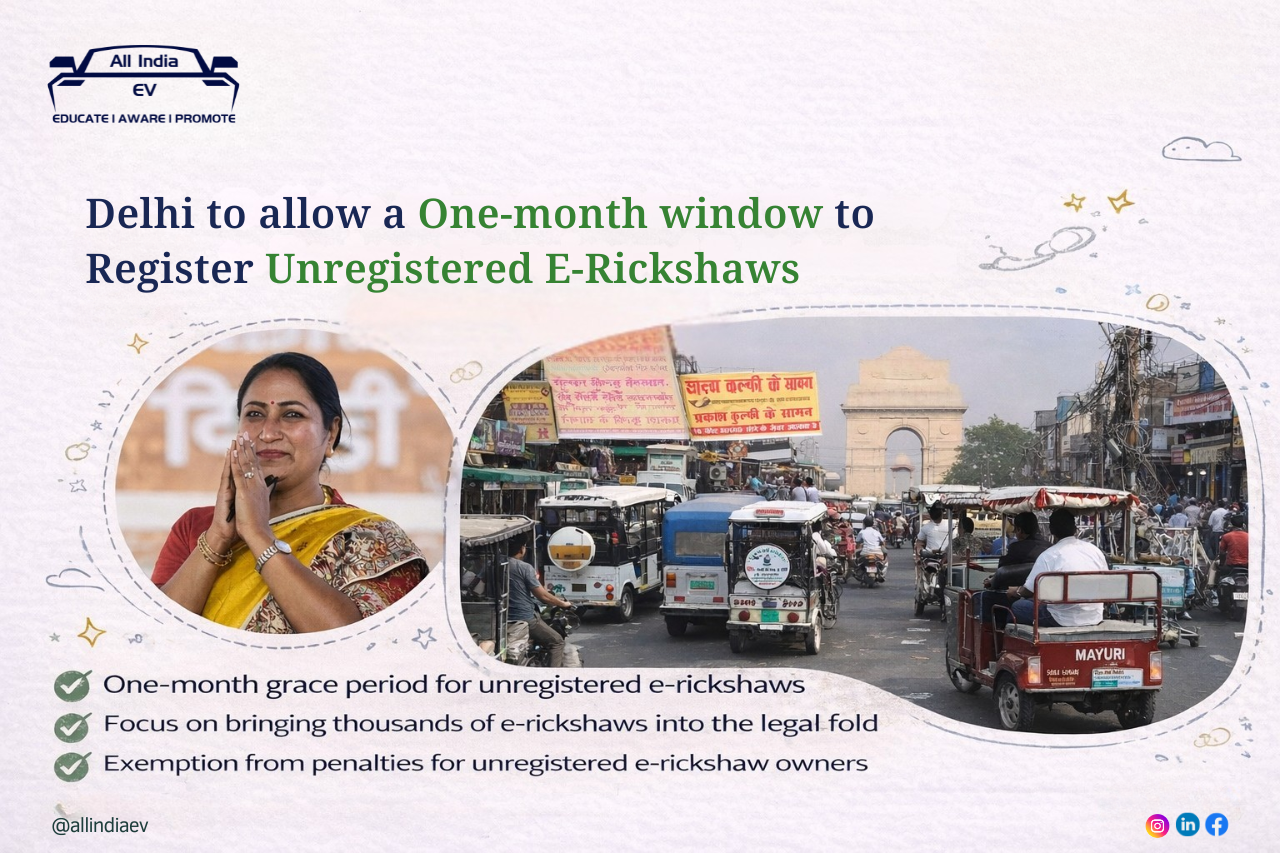
New Delhi: In a move aimed at balancing road safety concerns with livelihood protection, the Delhi transport department is considering granting a one-month registration window to owners of unregistered e-rickshaws operating in the capital, officials said on Wednesday.
E-rickshaws, which were initially promoted as an eco-friendly last-mile transport solution, have increasingly come under scrutiny due to their slow movement, traffic congestion, and rising safety risks on Delhi’s already crowded roads. The growing number of unregulated vehicles has further complicated traffic management across several parts of the city.
According to official data available on the government’s vehicle registry, 204,131 e-rickshaws are registered on the Vahan dashboard as of January 2026. However, authorities acknowledge that the actual number of e-rickshaws on Delhi roads is significantly higher, with many operating without valid registration or fitness certificates.
Responding to a query during the recent winter session of the Delhi Assembly, the transport department stated, “A plan is under consideration to give one month’s time from the date of issuance of the order to unregistered e-rickshaw owners to get their vehicles registered, so that livelihood is maintained along with safety on roads.” Officials clarified that the exact start date of the proposed window has not yet been finalised.
The issue has gained urgency following judicial intervention. Earlier this month, the Delhi High Court issued a notice to the Delhi government in connection with a public interest litigation (PIL). The plea was filed after an eight-year-old girl allegedly lost her life when an unregistered e-rickshaw overturned, highlighting the human cost of regulatory gaps.
Under the ‘E-rickshaw Sewa’ scheme introduced in 2014, battery-operated rickshaws are classified as transport vehicles. Officials reiterated that fitness certificates are issued in accordance with the Central Motor Vehicles Rules, 1989, once earlier certificates expire.

Additionally, a notification issued on December 11, 2014, regulates e-rickshaw movement across the city. It prohibits e-rickshaws from plying or parking on 236 identified roads, as part of efforts to streamline traffic flow and enhance commuter safety.
Comment by Author
The proposed one-month registration window reflects Delhi’s continuing struggle to reconcile urban mobility, safety, and livelihoods. E-rickshaws remain indispensable to last-mile connectivity, especially for low-income commuters, but years of weak enforcement have allowed a parallel, unregulated system to grow.
While the temporary amnesty may bring many vehicles into the formal net, its success will depend on what follows. Without sustained enforcement, clear zoning, and accountability for fitness and driver training, the exercise risks becoming another short-term reset rather than a structural fix.
The real test for the transport department will be whether this window marks the beginning of long-term regulatory discipline or merely postpones the problem yet again.