

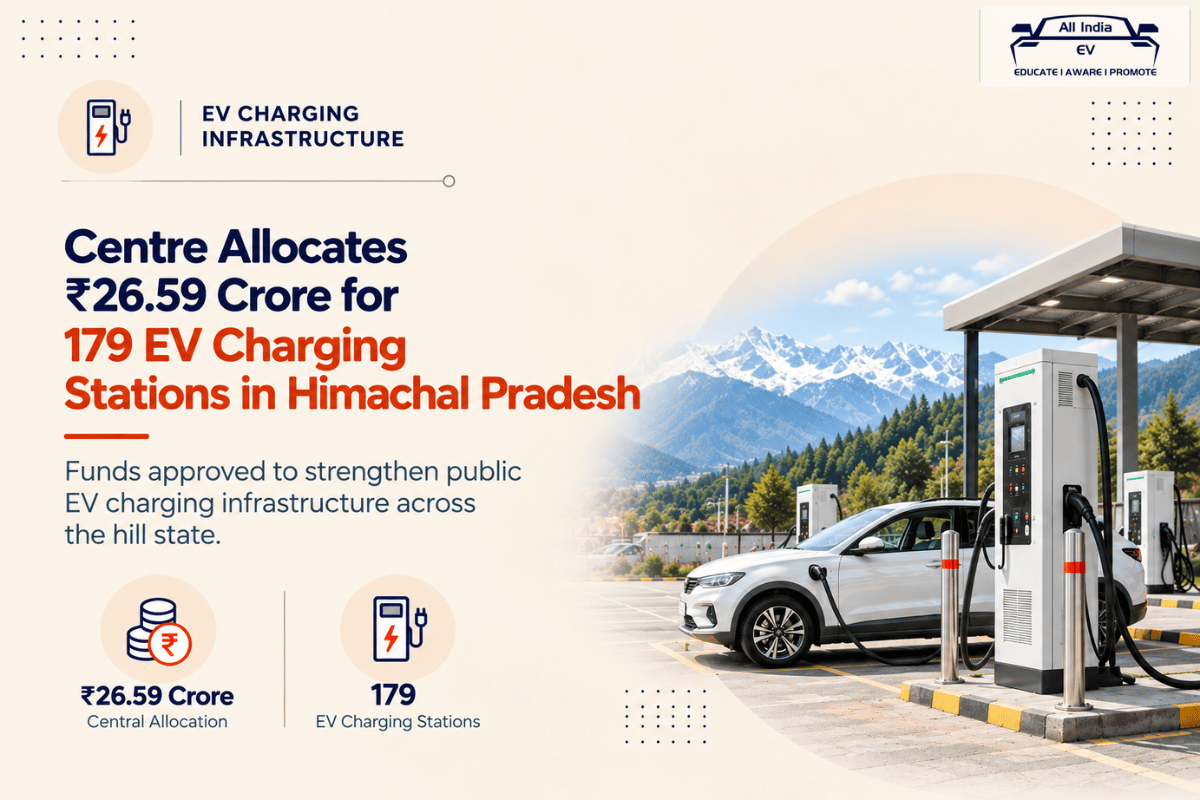
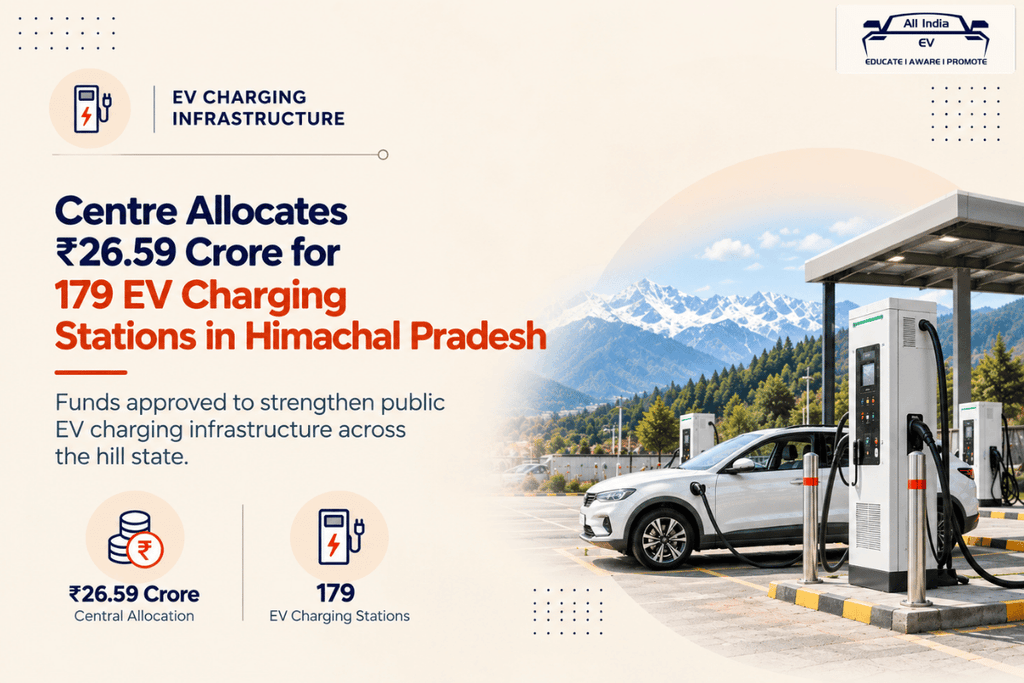
The Centre has approved ₹26.59 crore for the installation of 179 public electric vehicle (EV) charging stations across Himachal Pradesh, marking a significant step towards strengthening the state’s electric mobility infrastructure. The funding has been sanctioned by the Union Ministry of Heavy Industries, with the state Transport Department designated as the nodal agency responsible for implementing the project.
The initiative is expected to improve charging accessibility for residents, commuters and tourists travelling across the hill state, where reliable charging infrastructure is essential for encouraging wider electric vehicle adoption.
Himachal Pradesh to Get 179 New EV Charging Stations
The approved ₹26.59 crore allocation will support the development of 179 public EV charging stations in Himachal Pradesh. The Central Government has communicated the funding approval to the state Transport Department, which will coordinate the project’s implementation.
Transport Minister Mukesh Agnihotri said the allocation would help expand the public charging network and benefit both local residents and tourists. The development is particularly relevant for Himachal Pradesh, where mountainous terrain, changing road conditions and long travel distances can make charging accessibility an important consideration for electric vehicle users.
A stronger charging network could make electric cars and other compatible vehicles more practical for everyday commuting and intercity journeys. It may also support tourism-related mobility by providing additional charging options for visitors travelling between towns and popular destinations.
However, the specific locations of the proposed stations, charger capacities and installation timelines have not yet been detailed in the announcement.
PM E-DRIVE Scheme Supports EV Infrastructure Expansion
The Himachal Pradesh project forms part of the Central Government’s broader efforts to accelerate electric mobility through the PM Electric Drive Revolution in Innovative Vehicle Enhancement (PM E-DRIVE) scheme.
The programme supports the adoption of electric vehicles and the development of charging infrastructure across India. Under the scheme, ₹2,000 crore has been earmarked for public EV charging stations nationwide, reflecting the government’s commitment to building a stronger charging ecosystem.
The funding for Himachal Pradesh reflects the growing importance of public charging facilities in supporting the country’s transition towards cleaner transportation.
Why Charging Infrastructure Matters in Himachal Pradesh
Expanding charging infrastructure is particularly important in a mountainous state where EV users may have limited charging options outside major towns. A wider network could help reduce concerns about battery range and improve confidence among people considering electric vehicles.
The proposed stations could benefit several user groups:
- Local EV owners: More public charging options for daily commuting and routine travel.
- Tourists: Better charging accessibility for electric vehicles travelling across the state.
- Commercial operators: Additional opportunities to support electric taxis and other compatible fleet vehicles.
- EV industry stakeholders: Potential growth in demand for charging services and supporting infrastructure.
The actual impact will depend on the distribution of stations, charging speeds, electricity availability and the reliability of the installed equipment.
Implementation and the Road Ahead
With the state Transport Department serving as the nodal agency, the next steps will involve translating the funding approval into operational charging facilities. Site selection, equipment installation, power connections and maintenance arrangements will be important to ensure that the network meets the needs of EV users.
The announcement does not yet confirm a commissioning schedule or a complete list of charging locations. Motorists should therefore continue relying on verified operational charging stations when planning journeys.
For India’s electric mobility sector, the Himachal Pradesh allocation represents another move towards addressing one of the key barriers to EV adoption: the availability of dependable public charging infrastructure.
As the project progresses, the successful deployment of all 179 stations could improve charging access across the state and support the wider adoption of electric vehicles for personal mobility, tourism and commercial transportation.