

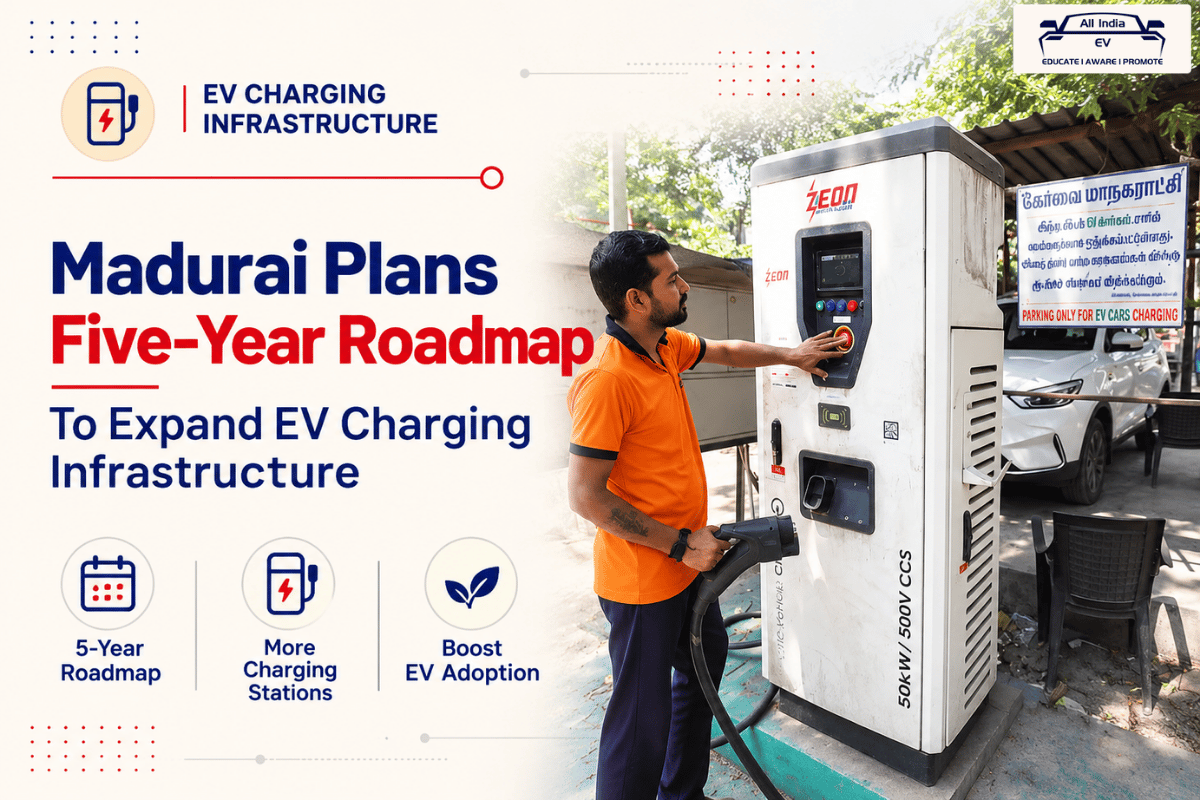
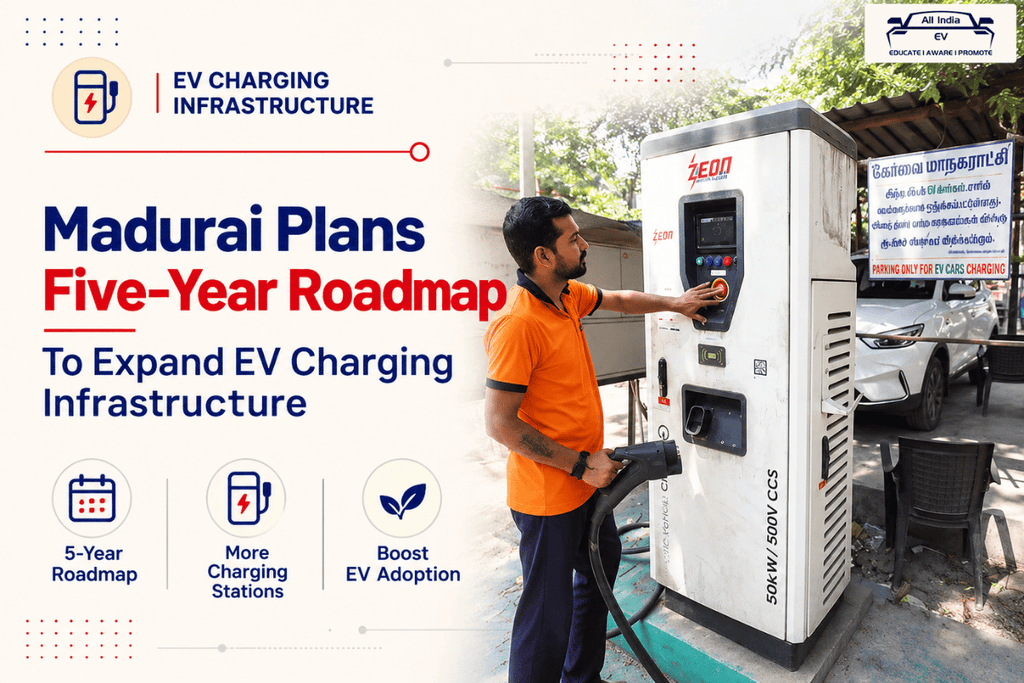
Madurai is preparing a five-year City Electric Vehicle (EV) Implementation Plan to strengthen its electric vehicle charging infrastructure and accelerate the adoption of electric mobility. The proposed roadmap will focus on identifying suitable locations for EV charging stations, evaluating electricity grid requirements and prioritising infrastructure projects with defined timelines and departmental responsibilities.
The initiative is expected to provide a structured approach to developing a reliable and accessible charging network across the city, supporting the growing number of electric vehicles on Madurai’s roads.
Madurai EV Cell Conducts Infrastructure Planning Workshop
As part of the initiative, the Madurai City Municipal Corporation organised a one-day workshop for its city-level EV Cell in collaboration with Guidance Tamil Nadu and ITDP India. Nearly 60 representatives from government departments, educational institutions and private associations participated in the programme.
The workshop focused on identifying suitable public land for charging station installations, understanding infrastructure requirements and establishing the responsibilities of different departments involved in EV development. Participants also discussed the data collection and assessment needed to prepare an effective five-year implementation strategy.
Madurai Corporation Commissioner Gaurav Kumar highlighted the importance of coordinated efforts among government agencies, industry stakeholders and other organisations to support the transition towards electric mobility. He also stated that the corporation would facilitate the development of charging infrastructure at appropriate public locations.
Electricity Grid Capacity and Charging Locations Among Key Priorities
One of the major objectives of the proposed roadmap is to assess how increasing EV adoption could affect the city’s electricity distribution network. As more electric cars, two-wheelers, three-wheelers and commercial vehicles enter the market, adequate power supply and strategically located charging facilities will become increasingly important.
The planning exercise will examine potential charging locations and associated infrastructure requirements to ensure that future installations can meet anticipated demand.
Guidance Tamil Nadu Executive Director Pallavi Verma highlighted the state’s growing electric vehicle ecosystem, noting that Tamil Nadu has attracted investments worth ₹30,000 crore and generated approximately 1.5 lakh jobs through the EV sector. She also emphasised the importance of coordination between government departments to identify suitable sites and develop practical charging infrastructure solutions.
ITDP India Programme Manager Sooraj EM stressed that expanding charging infrastructure alongside EV adoption would be essential for accelerating electric mobility. He noted that India’s EV adoption target stands at 30% by 2030, while the current adoption rate remains close to 10%. Electric vehicles account for approximately 10% of vehicle registrations in Tamil Nadu.
City-Level EV Cell to Coordinate Implementation
The Madurai EV Cell was established by the Corporation Commissioner in February to coordinate electric mobility initiatives. It includes representatives from the Regional Transport Office, Tamil Nadu Power Distribution Corporation Limited, Traffic Police, Tamil Nadu Pollution Control Board, Local Planning Authority, Thiagarajar College of Engineering and Tamil Nadu State Transport Corporation.
Chaired by the Corporation Commissioner, the EV Cell will conduct monthly meetings to review progress, coordinate departmental activities and support the implementation of planned EV infrastructure projects.
Madurai is one of six cities selected under the Tamil Nadu Electric Vehicle Policy 2023 for coordinated electric mobility initiatives. Chennai, Coimbatore, Tiruchirappalli, Salem and Tirunelveli are the other cities included in the programme.
The five-year roadmap is expected to strengthen Madurai’s EV ecosystem by improving charging accessibility, supporting electricity infrastructure planning and encouraging greater electric vehicle adoption. With coordinated planning and stakeholder participation, the city aims to establish a stronger foundation for sustainable urban transportation.