

Hero MotoCorp’s electric mobility brand VIDA is exploring new possibilities in India’s electric vehicle market with its compact electric micro-car, the VIDA NEX 3. A recently surfaced design patent in India has brought the vehicle back into the spotlight, revealing an unusual wing-type door design and indicating that the company continues to explore its micro-mobility concept.
First showcased in November 2025 under Hero MotoCorp’s VIDA Novus initiative, the NEX 3 represents the company’s vision for compact, sustainable and practical urban transportation. While VIDA is primarily known for its electric scooters, the NEX 3 concept highlights Hero’s interest in expanding beyond conventional two-wheelers and exploring the electric four-wheeler segment.
VIDA NEX 3 Features a Unique Wing-Type Door
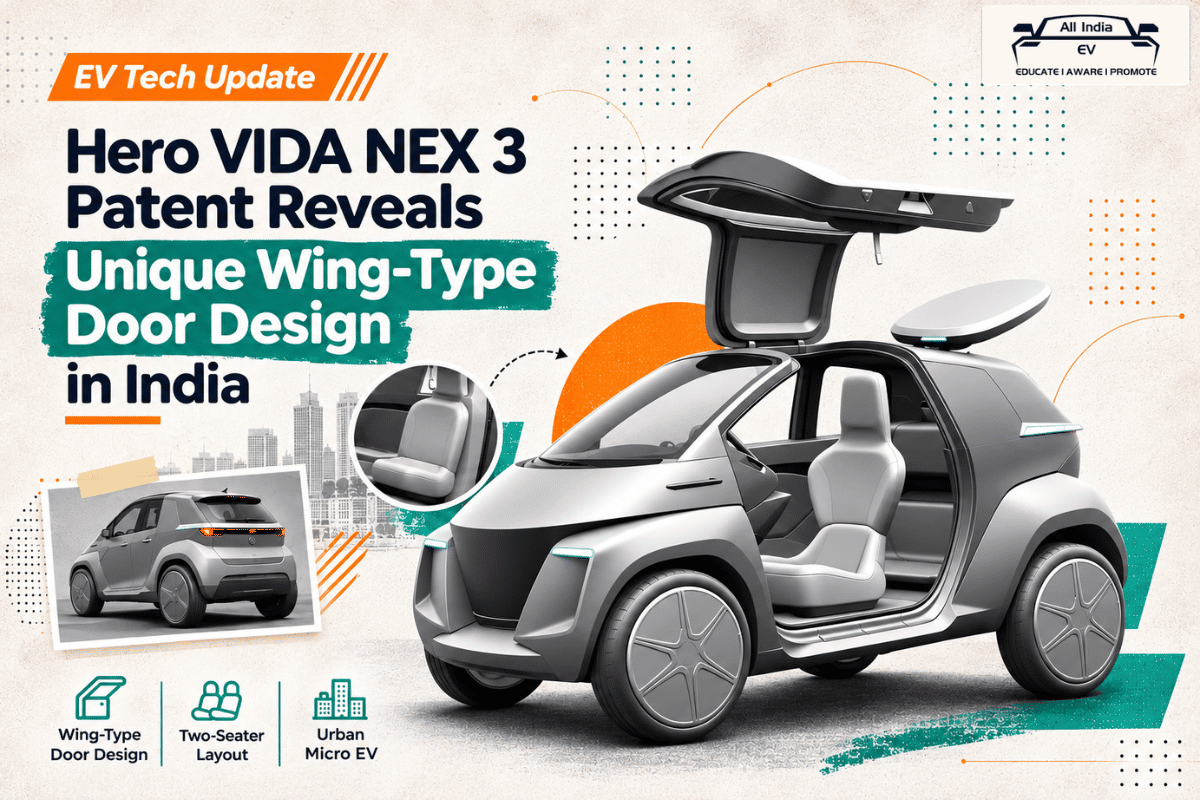
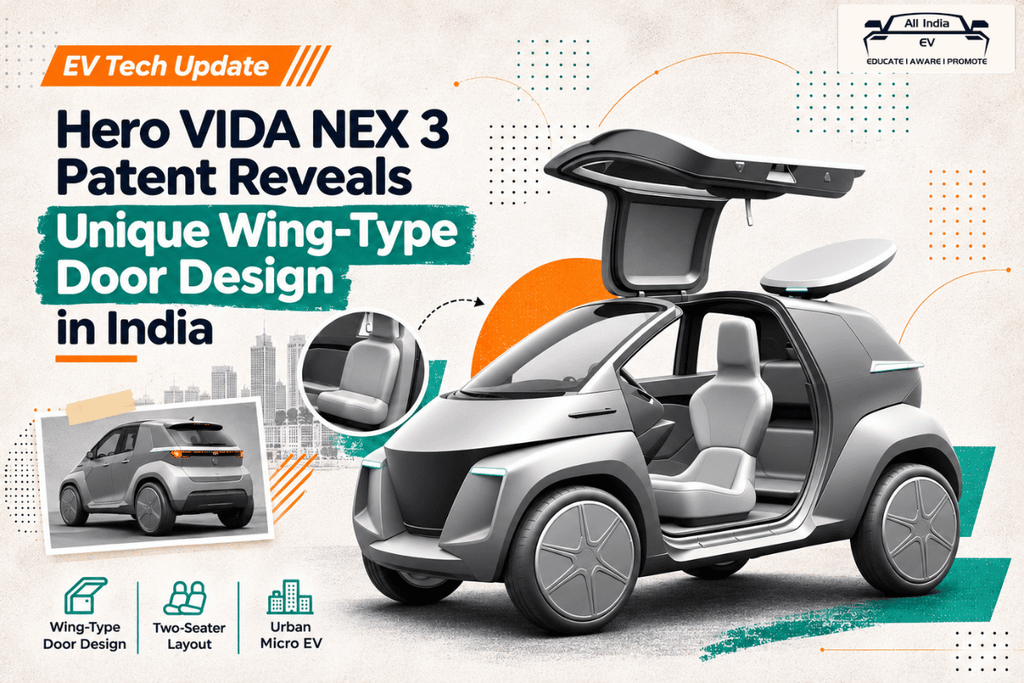
The most interesting detail revealed by the newly surfaced patent is the NEX 3’s distinctive upward-opening wing-type door. Unlike conventional car doors that open sideways, the proposed design lifts upwards, creating a distinctive entry and exit arrangement for occupants.
The patent drawings provide a closer look at the vehicle’s exterior design, although detailed technical specifications have not yet been disclosed. The concept features a compact, futuristic body structure with large glass windows, distinctive lighting elements and prominent bumpers.
The NEX 3 is designed as a two-seater micro-car, with the driver positioned in the front and the passenger seated directly behind. Its compact dimensions and seating arrangement are intended to reduce the vehicle’s overall footprint, making it suitable for crowded urban roads and areas with limited parking space.
The earlier concept showcase also indicated the possibility of different centre-screen configurations, including rectangular and circular display options.
Designed for Urban Micro-Mobility
The VIDA NEX 3 is being explored as a potential solution for everyday short-distance transportation. India’s metropolitan cities continue to experience increasing traffic congestion, rising parking challenges and growing demand for convenient personal mobility options.
While electric two-wheelers offer an affordable and convenient commuting solution, they do not provide the same weather protection and enclosed cabin experience as cars. A compact electric micro-car could potentially bridge this gap by combining the convenience of a two-wheeler with the comfort and protection of a four-wheeler.
For commuters travelling through crowded cities, a small electric vehicle could offer advantages in terms of road space utilisation and parking convenience. Its enclosed design could also make everyday commuting more comfortable during extreme heat and rainy weather.
Hero MotoCorp’s Broader VIDA Novus Strategy
The NEX 3 is part of Hero MotoCorp’s broader VIDA Novus mobility initiative, which was introduced at EICMA 2025. The initiative showcased three different concepts designed to explore alternative approaches to personal transportation.
The portfolio includes the NEX 1, a compact and portable electric mobility concept, the NEX 2, a self-balancing electric three-wheeler, and the NEX 3, a four-wheeled electric micro-car.
Through these concepts, Hero MotoCorp is exploring different mobility requirements, including last-mile connectivity, personal transportation and compact urban commuting.
The NEX 3 patent also reflects the company’s interest in protecting its innovative vehicle designs as it evaluates opportunities in emerging electric mobility categories.
Launch Timeline and Specifications Remain Unknown
Despite the latest patent development, Hero MotoCorp has not announced a confirmed production or launch timeline for the VIDA NEX 3. Details regarding its battery capacity, electric motor specifications, driving range, charging time and expected pricing also remain undisclosed.
It is important to note that filing a design patent does not necessarily confirm that a vehicle will enter mass production. The patent primarily indicates that the company is protecting the vehicle’s design.
If introduced commercially, the VIDA NEX 3 could open an interesting new opportunity for Hero MotoCorp in India’s growing electric mobility market. However, its eventual success would depend on factors such as affordability, practical driving range, safety, regulatory requirements and customer acceptance.
For now, the VIDA NEX 3 remains an interesting glimpse into Hero MotoCorp’s future mobility ambitions, with its unique wing-type door design adding another dimension to India’s evolving electric vehicle landscape.