
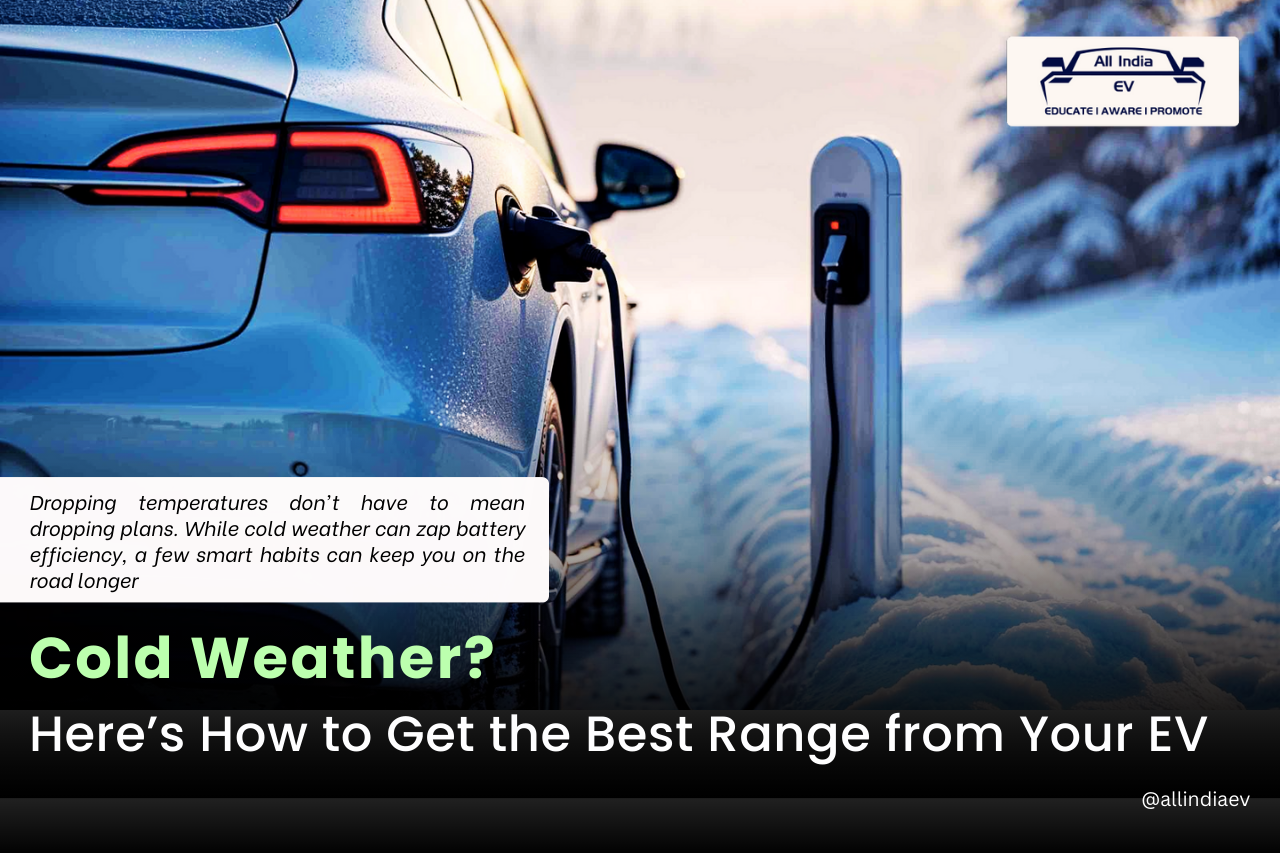

Cold Weather Reduces EV Range Fast: Simple Tips to Maximize Efficiency and Driving Range When Temperatures Drop
- Why Cold Weather Reduces EV Range
- Precondition Your EV Whenever Possible
- Prioritize Seat Heaters Over Cabin Heating
- Drive Smoothly and Maintain Moderate Speeds
- Maintain Battery Charge Above 20%
- Monitor and Maintain Tire Pressure
- Use Eco or Efficiency Driving Modes
- Plan Charging Stops Carefully
- Reduce Extra Weight and Drag
- Park Strategically to Minimize Cold Exposure
- Final Thoughts
- Comment by Author:
How to Fight Back the Cold and Keep Your EV Running Efficiently
As electric vehicles (EVs) gain popularity across India, winter brings a unique set of challenges for EV owners. While EVs are celebrated for their eco-friendliness and low operating costs, cold weather can drastically reduce battery range and efficiency. Batteries perform less efficiently in low temperatures, and energy-intensive cabin heating further eats into the miles you can travel. But with some smart practices and careful planning, EV owners can minimize range loss and continue to enjoy smooth, reliable travel even in frosty conditions.
Here’s an in-depth guide for Indian EV users on how to maximize performance during winter months.
Why Cold Weather Reduces EV Range
One of the first lessons for new EV owners is understanding how temperature affects performance. A vehicle rated for 300 km might suddenly struggle to cover 240 km or less on a cold day. This is not a sign of malfunction but a natural consequence of how lithium-ion batteries operate.
- Battery Chemistry: Lithium-ion batteries have an optimal operating temperature range. Cold temperatures slow down the chemical reactions inside the battery, reducing the amount of energy the cells can deliver and limiting regenerative braking efficiency.
- Heater Energy Demand: Unlike traditional internal combustion engines, which use waste engine heat to warm the cabin, EVs rely on battery power for heating. Running a cabin heater can consume a significant portion of your battery, further reducing range.
Understanding these factors is the first step to mitigating winter range loss and maintaining confidence in your EV.
Precondition Your EV Whenever Possible
Preconditioning is one of the most effective ways to protect your EV’s winter range. This involves warming up both the battery and the cabin before driving, ideally while the vehicle is still plugged in.
More EV News
- Battery Preheating: A warm battery delivers more consistent power, charges faster, and allows regenerative braking to work effectively.
- Cabin Heating While Plugged In: By warming the interior while charging, you save battery energy for the drive itself.
Many EVs come with features to preheat the battery and cabin automatically based on departure schedules. For owners with unpredictable routines, smartphone apps often provide manual control for preconditioning. Think of it as giving your EV a warm-up before heading into the cold.
Prioritize Seat Heaters Over Cabin Heating
Using your EV’s seat and steering wheel heaters can significantly reduce energy consumption compared to running the full cabin heater.
- Localized Comfort: Seat and wheel heaters warm the driver and passengers directly, using far less power than heating the entire cabin.
- Lower Cabin Temperature: You can keep the cabin set to a lower temperature while staying comfortable, conserving valuable battery energy for driving.
In other words, use cabin heat as a last resort, not the default setting, and rely on personal heaters for most comfort needs during winter.
Drive Smoothly and Maintain Moderate Speeds
Winter driving magnifies the effects of aggressive acceleration and hard braking. Smooth driving can recover a significant portion of range lost to cold weather.
- Gentle Throttle Inputs: Avoid sudden accelerations, which drain more energy from a cold battery.
- Moderate Speeds: Reducing highway speeds by even 10–15 km/h can add meaningful kilometers to your range.
- Focus on Charge Percentage: Real-time range estimations fluctuate in cold weather, often causing unnecessary stress. Instead, monitor your battery’s state of charge for a more reliable measure.
Driving habits directly impact battery efficiency, making careful driving one of the simplest yet most effective ways to conserve energy during winter months.
Maintain Battery Charge Above 20%
Keeping your EV battery charged above roughly 20% in cold weather ensures consistent performance.
- Low battery levels in freezing temperatures can reduce the ability to deliver power and limit regenerative braking.
- Charging indoors or in sheltered locations helps batteries warm up and charge more efficiently.
For Indian cities that experience significant temperature drops, like Shimla, Manali, or Srinagar, this step can prevent unexpected performance drops and make journeys more predictable.
Monitor and Maintain Tire Pressure
Cold weather causes tire pressure to drop by roughly 1 psi for every 10°C decrease in temperature. Underinflated tires increase rolling resistance, which drains battery power.
- Regularly check tire pressure in winter and inflate to manufacturer-recommended levels.
- Consider winter-specific tires in regions with heavy snowfall or icy roads. While winter tires may slightly reduce efficiency on dry roads, they enhance safety and maintain consistent energy usage in cold conditions.
Neglecting tires can waste precious energy, making tire maintenance an often-overlooked but critical factor in winter EV efficiency.
Use Eco or Efficiency Driving Modes
Most modern EVs offer eco or efficiency modes, which help maximize range during winter. These modes typically:
- Reduce throttle sensitivity
- Limit maximum power output
- Optimize climate control
- Adjust battery conditioning for better energy management
While not designed for spirited driving, eco modes can be extremely helpful on cold days with long stretches between charging stations. Some vehicles even allow customized winter-specific modes, combining gentle throttle mapping and reduced climate energy draw.
Plan Charging Stops Carefully
Cold weather not only affects driving range but also slows charging speeds. Fast charging a cold battery can take longer, and in some cases, the car will need a few minutes of preconditioning before the charger engages.
- Apps like A Better Routeplanner, PlugShare, or built-in vehicle navigation can help plan optimal charging routes.
- Some EVs, like Tesla models and newer EVs from other manufacturers, can preheat the battery while en route to a DC fast charger, cutting charging time significantly.
- Where possible, choose charging locations near restaurants or shops so you can stay warm while the vehicle prepares for fast charging.
Planning ahead is crucial in winter to avoid delays and maintain an efficient journey.
Reduce Extra Weight and Drag
Winter efficiency also depends on vehicle load and aerodynamics. Extra cargo, roof boxes, and bike racks increase weight and wind resistance, which drains battery power faster.
- Remove unused accessories during winter months to improve energy efficiency.
- Every little bit of reduced drag contributes to longer range, especially when the battery is already compromised by cold weather.
Park Strategically to Minimize Cold Exposure
Where you park overnight significantly impacts battery performance.
- Garages: Heated or unheated garages provide better protection than open parking, keeping the battery warmer.
- Carports or Wind-Sheltered Areas: Even partial protection can reduce cold exposure and make preconditioning more effective.
- Sun-Facing Outdoor Parking: If indoor parking isn’t available, parking with the sun on the windshield can provide passive warmth in the morning.
Smart parking helps maintain battery temperature and reduces winter range loss, especially in northern India and other cold regions.
Final Thoughts
Some winter range loss is inevitable. This is part of EV ownership in colder climates. However, by adopting a few smart strategies—preconditioning the battery, prioritizing seat heaters, driving smoothly, maintaining tire pressure, planning charging stops, and parking wisely—EV owners can mitigate most of the impact of cold weather.
- Even when your EV doesn’t hit its official EPA numbers, strategic winter habits can prevent range anxiety and ensure reliable, stress-free driving.
- Over time, these practices become second nature, turning your EV into a dependable year-round vehicle.
Winter may challenge your EV, but with preparation, you can fight back and keep your journeys smooth and efficient.
Comment by Author:
Cold weather naturally reduces EV range, but with careful planning and smart driving habits, Indian EV owners can minimize winter losses. Preconditioning the battery, using seat heaters, maintaining tire pressure, driving smoothly, and planning charging stops strategically can all help preserve efficiency. By adopting these practices, EVs remain reliable and convenient year-round, even in India’s colder regions.